



Top 3 Causes of Equipment Failure in the Utility Sector
The utility industry, like many modern industries, relies heavily on the use of equipment to facilitate service delivery to customers. But in the utility sector, equipment failure can be catastrophic, causing widespread outages that hinder customers (businesses and homeowners alike) from going about their day-to-day activities. Yet, the utility industry struggles with outdated equipment and legacy systems that are often stressed to the max. In these conditions, the slightest influence can wreak havoc on entire utility systems and communities.
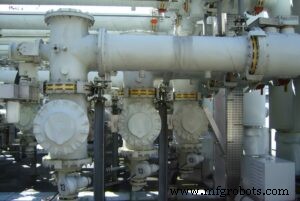 Equipment failures have far-reaching effects, resulting in loss of capacity, profit, jobs, frustration, etc. Obviously, mitigating equipment failures is a top priority for utility companies. But is it possible? In order to answer this question, it’s first necessary to understand the various reasons why equipment fails. Below, we outline the top three reasons for equipment failure.
- Operators not operating the equipment to specifications.
If you want to reduce or mitigate a functional failure, then operating the equipment to specification is a must. Specifications include rate and speed, quality, and other variables, all of which must be met in order to reduce the likelihood of failure.
Operators should, of course, receive adequate training, which can be a significant factor in companies making budget cuts to functions such as training and onboarding. A single out-of-range variable is enough to lead to premature equipment failure requiring costly repairs or, in the worst-case scenario, necessitating total replacement. Proper training is difficult to quantify.
“Measure what you manage.”
- Maintenance personnel not performing Preventive Maintenance (PM) to specifications.
If PM is to be effective, companies must follow repeatable procedures to ensure everyone performs the PM to specifications. Examples include tolerances, specifications, and other factors that must be carefully addressed during every routine maintenance procedure.
The European Agency for Safety and Health at Work explains that proper maintenance includes a variety of steps including inspection and testing, measurement, repair and upkeep, fault detection, cleaning, parts replacement, and other servicing functions. The specific steps in preventative maintenance vary by industry and machine, but in any case, it’s a complex, multi-step process that must be carried out with diligence in order to ensure equipment longevity.
Preventative maintenance is one of the most critical steps for maximizing the usable lifespan of assets but also for optimizing output. Equipment that has not been adequately or appropriately maintained may suffer from a loss of performance over time (lower outputs) – which may at times be rectified by performing maintenance, even if delayed – that contributes to reduced operational efficiency and hinders service delivery.
- No one measuring the true impact of the two previous problems.
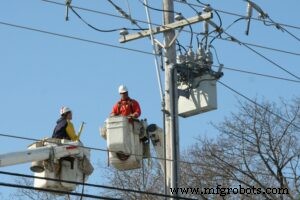 Dr. Deming once stated, “You cannot manage something you do not measure.” This rings especially true within the context of equipment failure. The most successful utility companies rely on data to drive decision-making, to regularly monitor performance, and conduct periodic audits to ensure that ongoing functions such as equipment operations and preventative maintenance are not just performed, but performed to specification, benefit from better overall efficiency, equipment longevity, and employee and customer satisfaction.
These benefits all contribute to a healthier bottom line, enabling utilities to realize cost efficiencies that are passed on to customers in terms of savings or, in some cases, investments in modern equipment that will serve to provide the top-quality, seamless services the communities they serve have come to expect.
Take a moment to reflect on the “Top 3 Reasons why Equipment Fails,” and develop a plan to resolve any of previously discussed issues, measure the plan, and manage the plan.
Good luck and please post your comments or share your experiences with others.
Industrial Technology
- Maximize Plant Uptime with ATS’s Expert Third‑Party Maintenance Solutions
- The Critical Role of Maintenance in Research Laboratories
- 7 Key Benefits of Maintaining an Equipment Maintenance Log
- Top 3 Reasons to Upgrade Your Industrial Equipment Today
- Why Equipment Testing & Inspection Is Essential: 4 Key Reasons
- The Critical Role of a Structured Equipment Maintenance Workflow
- 5 Proven Strategies to Slash Equipment Maintenance Costs
- Top 10 Benefits of Studying Electrical Engineering Abroad
- The Critical Role of Proactive Machinery Maintenance for Efficiency and Cost Savings
- The Critical Role of Preventative Maintenance in Manufacturing Equipment