



Progressive vs. Transfer Die Stamping: Choosing the Right Metal‑Stamping Process
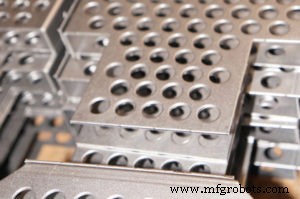
The two types of die stamping processes you may encounter are progressive die stamping and transfer die stamping. What do these different types of stamping entail, and what are the advantages and disadvantages of each? What types of applications are most common to transfer die vs. progressive die stamping and vice versa?
What Is Progressive Die Stamping?
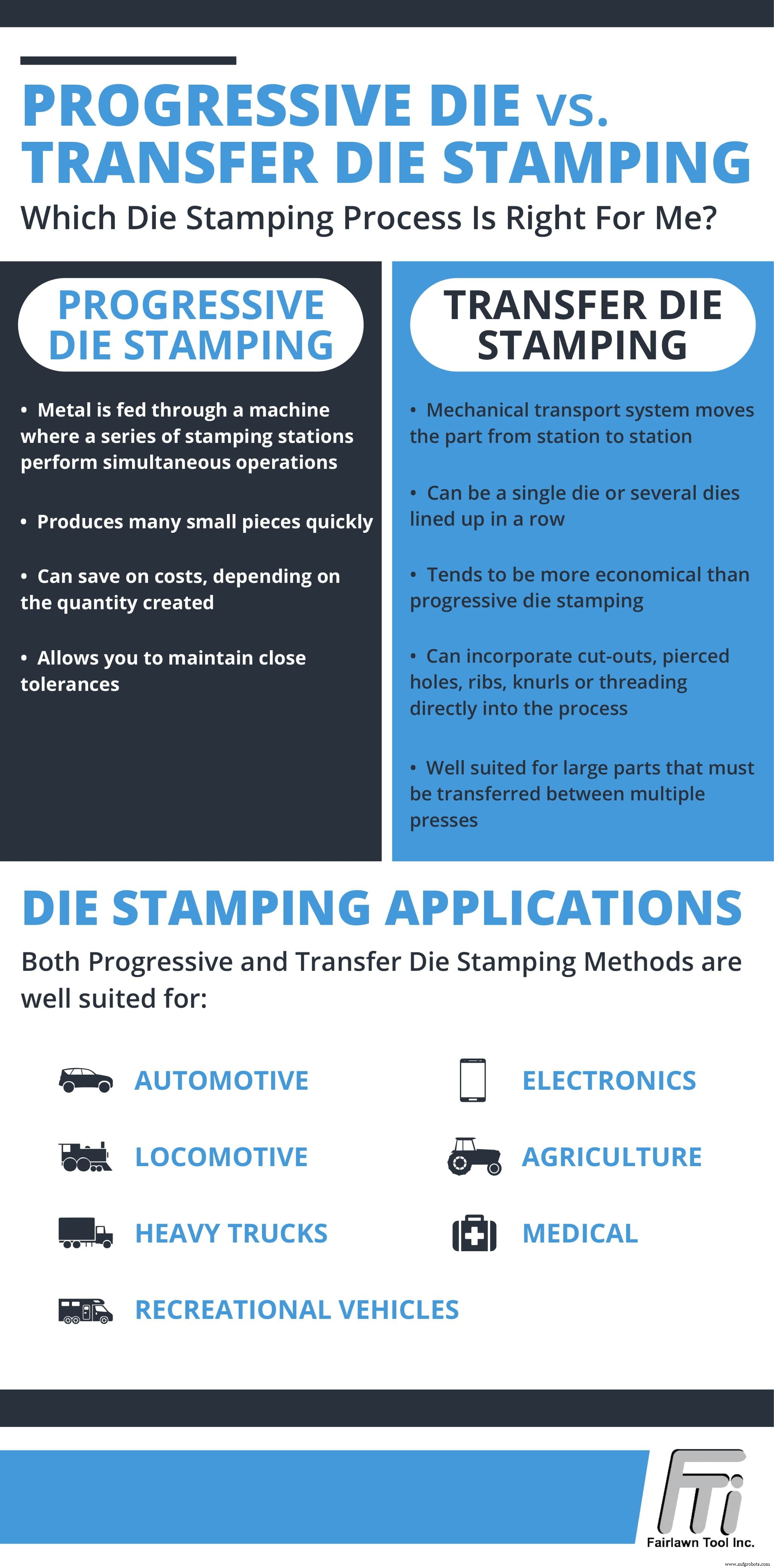
In progressive die stamping, a coil of metal is fed through a machine that consists of a series of stamping stations that perform simultaneous operations. The metal strip moves through the drawing process, with each progressive die station altering the configuration on the metal from the previous station. Once the metal has gone through the entire machine and all the stamping stations, the piece will be complete.
What Are the Advantages of Progressive Die Stamping?
Progressive die stamping is well-suited to operations needing to produce many small pieces quickly, since you can perform multiple cutting and forming operations simultaneously. This combining of operations can also save on costs, although you will have to pay for permanent tool steel die sets. Progressive die stamping can also allow you to maintain close tolerances if you have the right tools.
What Applications Typically Use Progressive Die Stamping?
You can find progressive die stamping in a variety of industries, including automotive, locomotive, heavy trucks and RVs, electronics and agriculture.
What Is Transfer Die Stamping?
In transfer die stamping, rather than feed the metal part through a series of stations, a mechanical transport system transfers the part from station to station. The transfer die can be a single die or part of several dies lined up in a row. Transfer die stamping is used to perform operations on the part free from the strip.
What Are the Advantages of Transfer Die Stamping?
Transfer die stamping tends to be more economical than progressive die stamping. It is also much more versatile than progressive die stamping. If your part has features like cut-outs, pierced holes, ribs, knurls or threading, you can use transfer die stamping to work these into regular press operations so that you don’t need secondary operations at added cost.
What Applications Typically Use Transfer Die Stamping?
You will use transfer die stamping when you have large parts you need to transfer between multiple presses to complete them, such as shells, tube applications, frames and structural components. You can find transfer die stamping in all the industries where you find progressive die stamping. It all depends on the specific type of part you are stamping and your requirements for that part.

Learn More
Whatever your metal stamping or fabrication needs are, contact Fairlawn Tool, a customer driven company with unparalleled manufacturing solutions. Get in touch today!
Industrial Technology
- Maximum Power Transfer Theorem Explained: Design, Examples, and Common Misconceptions
- 16 Essential Insights into the Sheet Metal Stamping Process – Practical Guide
- Effective PCB Heat Management: Techniques for Optimal Thermal Performance
- Forging, Stamping & Casting: Understanding Their Key Differences
- Laser Cutting vs. Die Stamping: Choosing the Right Metal Fabrication Technique
- Metal Stamping: Emerging Trends & Market Growth Forecast
- Die Casting vs. Stamping: Key Differences Explained
- Understanding Progressive Stamping Dies: How They Shape High-Volume Production
- Progressive Stamping Dies: Precision's Crucial Role in Fabrication Excellence
- Progressive vs. Transfer Die Stamping: Key Differences Explained