



Distinguishing FFC vs FPC: 9 Expert Tips
FFC (Flexible flat cable)
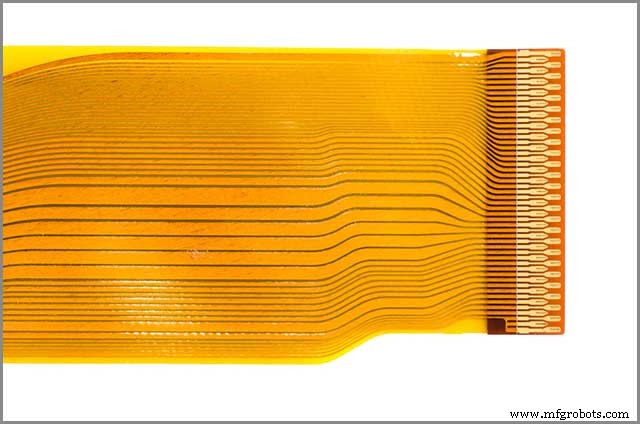
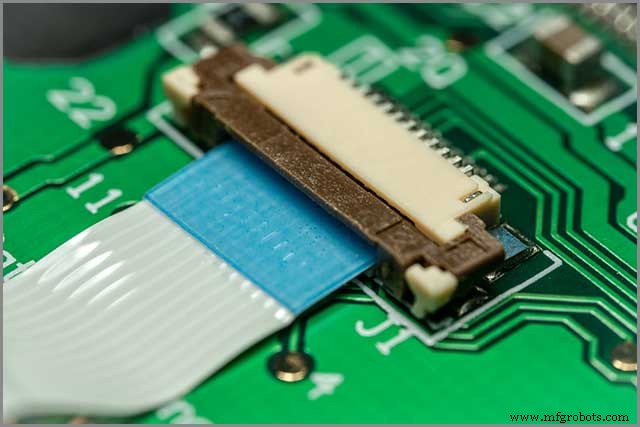
Flexible flat cable or FFC, in short, is an electric cable that’s both flexible and flat. This cable is a descendant of ribbon cables but in miniature forms. Some of the most basic uses of such types of wires are high-density consumer electronics. These include cell phones and laptops and consist of pitch options that range from 0.5mm to 2.54mm.
FFCs gain a reputation for significantly bringing about excellent cable management. They come with a flexible and flat film base made of plastic, with several metal conductors. Then connect these conductors to one surface. FFCs fit into small spaces as opposed to their round counterparts. They also come with the promise of improved RFI/EMI suppression and zero wire coupling problems.
Flexible flat cables find much use in several applications. A majority of them designed to operate in high-temperate conditions. For instance, some FFCs can function in high-temp jumper systems without failure in temperatures of about 150 ℃. They include those in cars, a moving printer, or folding mobile devices. They also find use in situations where there are challenges to do with space and weight.
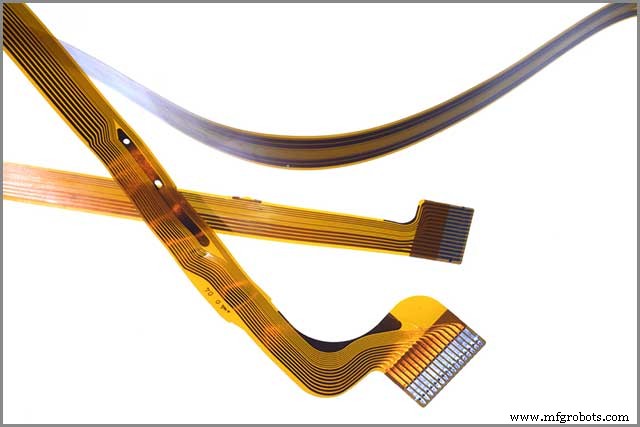
Flexible Printed Circuit (FPC)
A flexible printed circuit or an FPC, in short, is somewhat a little bit complex as compared to the FFC circuit. These describe those circuits that can effectively incorporate components. Build them on flexible materials.
FPC is typically made of the copper conductor circuit and etching a polyimide material. While FFCs can function well in harsh conditions, FPCs can easily handle even more tough conditions and found in 0.3mm versions.
Flexible printed circuits find usage in almost all rigid printed circuit boards. The main aim is to provide excellent flexibility to the board or electronic packages tightly assembled. There are several different types of FPCs, such as a double-sided, single layer, and flex multilayer circuits.
Single-sided flex circuits- consist of only one conductor layer. Double-sided FPCs – are those flexible circuits that come with two layers of conductors.
Flexible circuits – are those that have three or more conducting layers. They are also known as multilayer flexible circuit boards.
Mostly, plated through-holes interconnect all these layers. Even though such is not necessary as there’s a possibility of making openings to find access to lower parts of the circuit.

Application Differences Between FFC and FPC
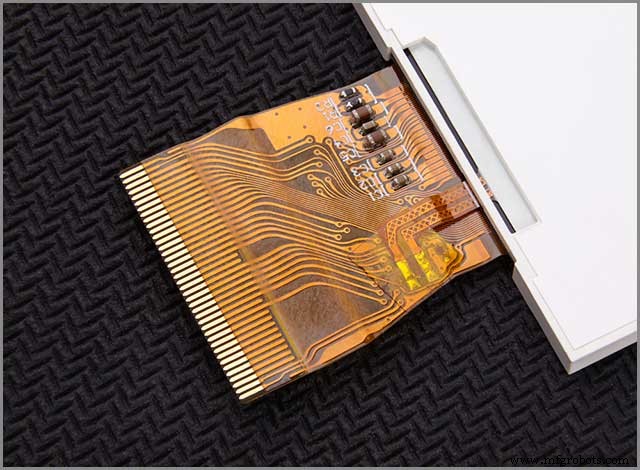
There are several separate roles of both FFC and FPC cables, beginning with their difference application, FFC cables find substantial use in high-flex applications. Their use extends more so in almost all electrical devices that we use in modern times. Other application areas of FFC cables are in plotters, copiers, scanners, fax machines, stereos, and LCD appliances.
FPC finds use in antennas, hearing aids, LCD televisions, cameras, laptops, and printers. They are also prevalent in the field of aviation. For years, FPCs have evolved, providing reliability and durability.
Production Difference Between FFC and FPC
When it comes to the production methods, Flexible flat cables also differ from Flexible printed circuits. FPCs are manufactured by etching on the Flexible Copper Clad Laminate (FCCL) and then laminated into different layers. But, FFC entails a simple lamination of polyethylene terephthalate (PET) and copper wires that are flat.
For this reason, you will notice that flexible flat cables tend to be a little bit thicker and more significant when compared to flexible printed cables. Unlike FPCs, FFCs are made with such wires using two layers that sandwich the insulating foil on its flat copper conductor.
The Thickness Difference Between FFC and FPC
As mentioned earlier, there are several application areas where FFCs would work well. It is when compared to flexible printed circuits. For instance, tight fields need cables of a more significant thickness compared to using such cables in applications that are not highly demanding.
For FFC cables designed to work in harsh environmental conditions, the ideal space of their thickness is 0.5mm, 0.8mm,1.0mm,1.25mm,1.27mm,1.5mm,2.0mm, and 2.54mm. On the other hand, FPC cables take little space, with plenty of them having a thickness that ranges between 0.15 mm and 0.2 mm.
FPC has Strict Standards
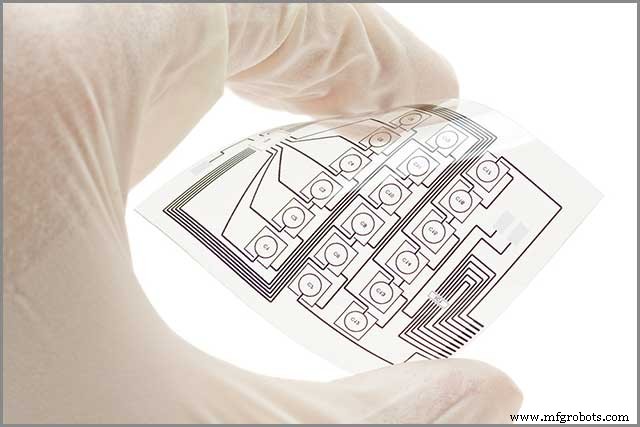
As you can remember, flexible printed circuits are conventional within a majority of people and applications across the. For this reason, their manufacturing standards are a little bit strict when compared to flexible flat cables. You will most definitely find a majority of military and medical applications relying heavily on FPCs as opposed to FFCs.
Manufacturers have to ensure that they employ the required standards when producing FPC. The idea behind this is a majority of them serve in critical medical, aerospace, or even medical appliances. Equipment that may end up saving human life. A majority of FPCs undergo stringent quality tests before their release to the market. FFCs aren’t a subject of strict production and quality measures.

There are Many Types of FPCs
Unlike flexible flat cables, there are several types of flexible printed circuits, as highlighted below
1. Single-layer circuits – also known as single-sided circuits. These come with only a single conductor layer made of metal-filled polymer or metal on a flexible dielectric film. These are cheap to manufacture compared to the rest.
2. Double-sided – as the name suggests, these are flexible circuits. They consist of two layers of conductors.
3. Multilayer flexible circuits – these have got three or more additional layers of conductors. Some have four layers. Others up to six layers, while others may have even more than ten layers of conductors in them. They are expensive to manufacture compared to single and double-layer flex circuits. Additionally, multilayer flex circuits can come in a variety of shapes and sizes.
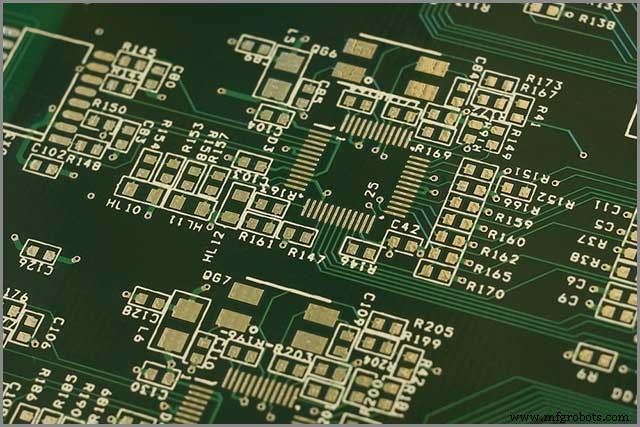
Differences in Line Layout Between FFC and FPC
If you are keen enough, You will notice that there are some differences in the line layout between FFCs and FPCs. A matter to do with line layout is another key difference that separates these two types of circuits. Flexible printed circuit boards are for use where there are much bending and twisting. You will notice that the line layout is somewhat horizontal.
But, most of the flexible flat cables have a vertical line layout in them. The reason is that a majority of them are familiar in flexible printed circuit boards where bending or twisting is uncommon. Again, differences when it comes to line layout between flexible flat cables and flexible printed circuits come in as another notable differentiating factor between the two.

Inability to Replace Each Other
Lastly, the failure to replace each other or fit where another can work while functioning as desired differentiates flexible printed circuits from flexible flat cables. For instance, their production systems are different from each other. Also, flexible printed circuits are a little bit vulnerable when compared to flexible flat cables.
Still, flexible flat cables encompass materials that are good conductors of heat. As such, it’s almost impossible for one to fit into the role of another one. Thus, the inability to replace each other is another essential factor between FFCs and FPCs.
Summary
Are you in need of either flexible printed circuits or flexible flat cables for your next project? If so, you can trust us at WellPCB to deliver the wires of your liking. We offer a selection of wires of different pitch options that are suitable for your project.
Let us know your specific or unique requirements, such as the number of connectors, terminal type, pitch length, and let out team of experienced technicians assist you with a quote for cables that you need. Call us today and let us provide you with the wires that you desire for your next project.
Industrial Technology
- Exploring 6G: The Future of Ultra-Fast Connectivity
- Mastering Cable and Harness Manufacturing: Setting Accurate Lengths in E3.series
- Effective Documentation for Cable and Harness Design: Best Practices & Process Guidance
- Mastering Collet Identification: Spotting Model and Size Differences for CNC Tooling
- Quickly Identify Up-Cut vs. Down-Cut Spiral Bits
- Joining vs Welding: Key Differences Explained
- Copper Brazing Explained: Techniques & Tips for Strong, Reliable Connections
- Key Differences Between Ships and Boats Explained
- Mastering 120V/240V Switching for Electric Water Heaters: Easy Steps & Savings
- Band Saw vs. Circular Saw: Key Differences Explained