



IRFZ44N MOSFET: Expert Guide to Application and Performance
We all agree that transistors have taken newer shapes and specifications since their invention. Talk about the BJT and MOSFET transistors. These are modifications that have well-improved technology over time. However, our attention is on the IRFZ44N MOSFET here.
But, why this particular MOSFET? Like other equivalents, the IRFZ44N offers a wide range of applications. For instance, when you need to regulate motor speeds, lighting intensity, etc., the IRFZ44N transistor is your best bet.
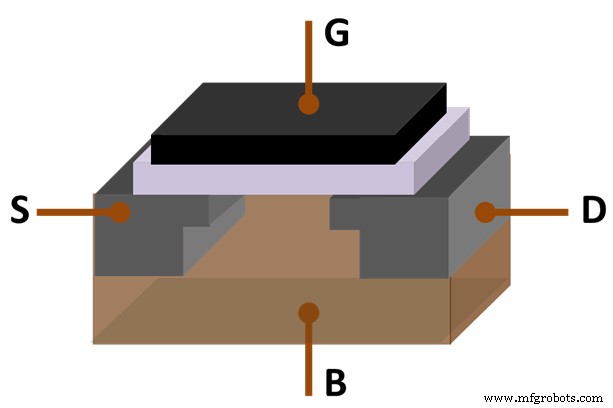
(A 3-D model structure of the MOSFET transistor showing the three-terminal points and the base).
1. What is IRFZ44N?
The IRFZ44N is an N-channel MOSFET and is best known for its use in high drain current. Therefore, the IRFZ44N is ideal for switching circuits as its Rds value is low.
Usually, the IRFZ544N N-channel MOSFET uses a gate voltage as low as 4V. But, to keep the drain current at a maximum, you need a threshold voltage capability of up to 10V. It is why you need a gate driver circuit to achieve complete switching in the transistor.
Frequently, we use the MOSFET N-channel in conjunction with a microcontroller such as Arduino. Other times, a logic level IRLZ44N MOSFET is ideal.

( MOSFET illustration)
2. IRFZ44N Features/technical Specifications
Some peculiar properties that make this transistor stand out include:
- It is an N-channel MOSFET with a little gate signal.
- At 25°C, the ID or continuous drain current is 49A.
- On the other hand, the ID-peak or pulsed drain current is 160A.
- The threshold voltage, VGS-that its minimum, is 2V.
- While the max threshold voltage is 4V.
- The drain-source voltage, VDS, is 55V.
- The gate-source voltage, VGS, is at a max of ±20V.
- Another feature is the power dissipation which is at 94W Max.
- The rise time is around 60ns, while the fall time is approximately 45ns.
- Because of the low threshold current, the IRFZ44N N-channel MOSFET transistor works with Arduino in most cases.
- It is available in TO-220 packages.
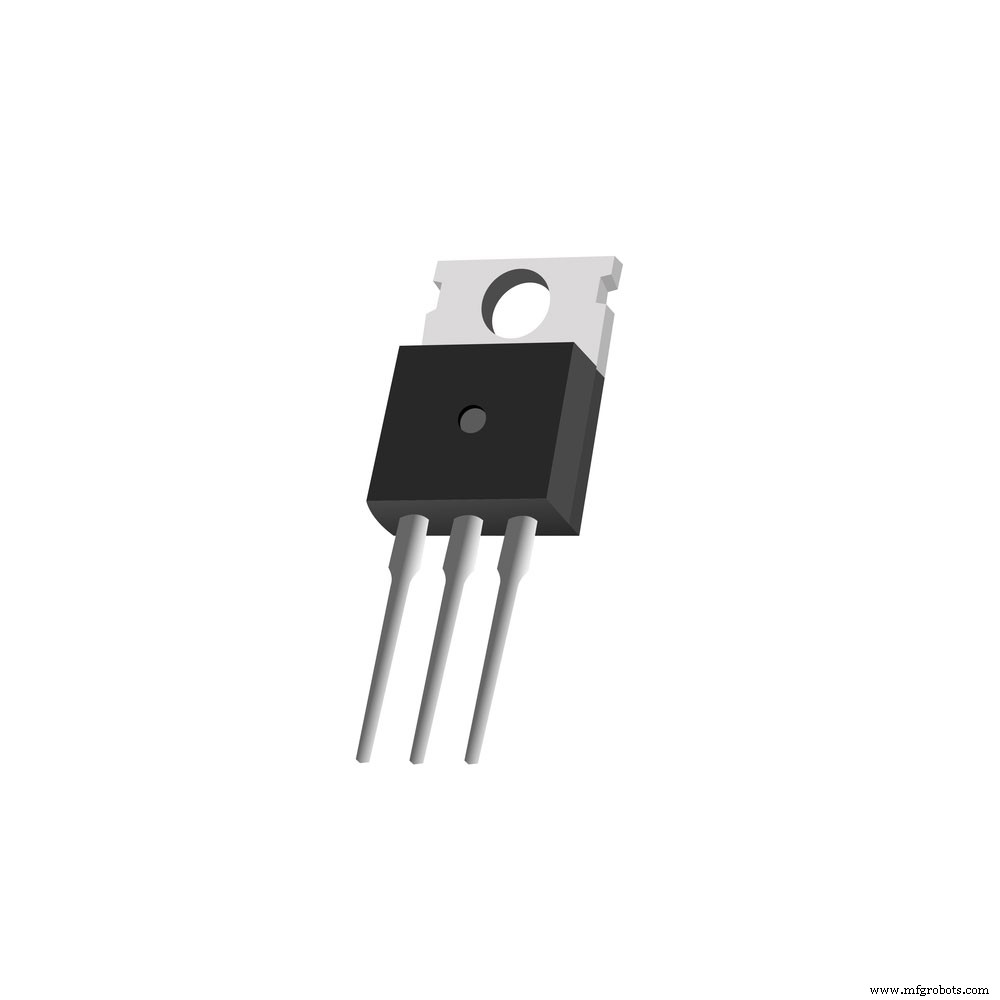
(IRFZ44N Features and specifications)
3. Pin Configuration
The IRFZ44N transistor comprises three primary pins/terminals. We also go on to describe the functions of these terminals.
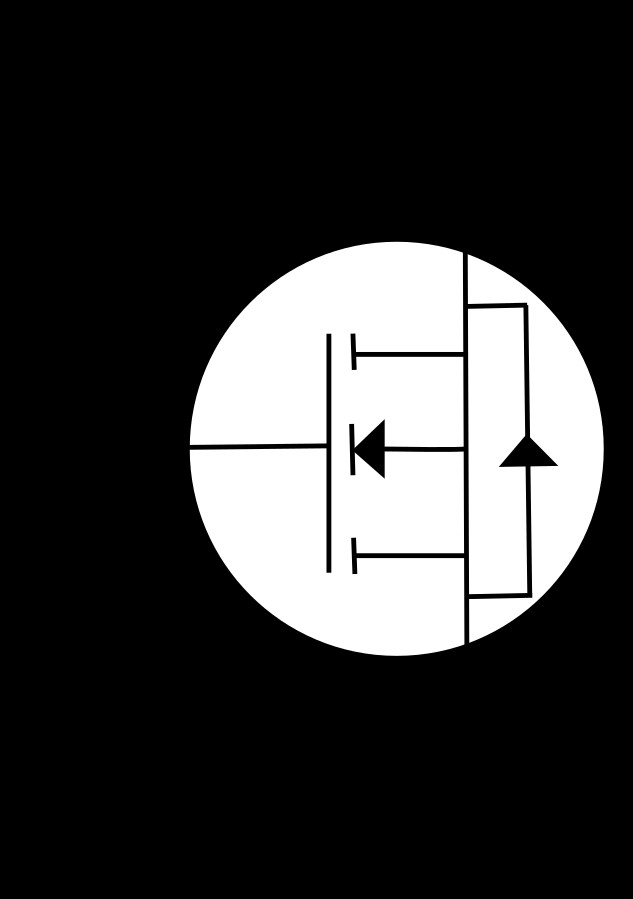
(A diagram showing the Drain, Source, and Gate pin of a MOSFET).
| Pin Number | Pin Name | Description |
| 1 | Gate | This terminal is responsible for the controlled biasing of the MOSFET. |
| 2 | Drain | On this part, the terminal controls the inflow of current. |
| 3 | Source | While on this end, the current flows out. |
4. IRFZ44N Replacements
The following are ICs that serve the same purpose as the IRFZ44N:
- IRF1010A.
- HBUZ 102S.
- 2SK2376.
- 2SK2312.
- STP50N06.
- BUK456-60H.
- STP55N06.
- IRFZ46N.
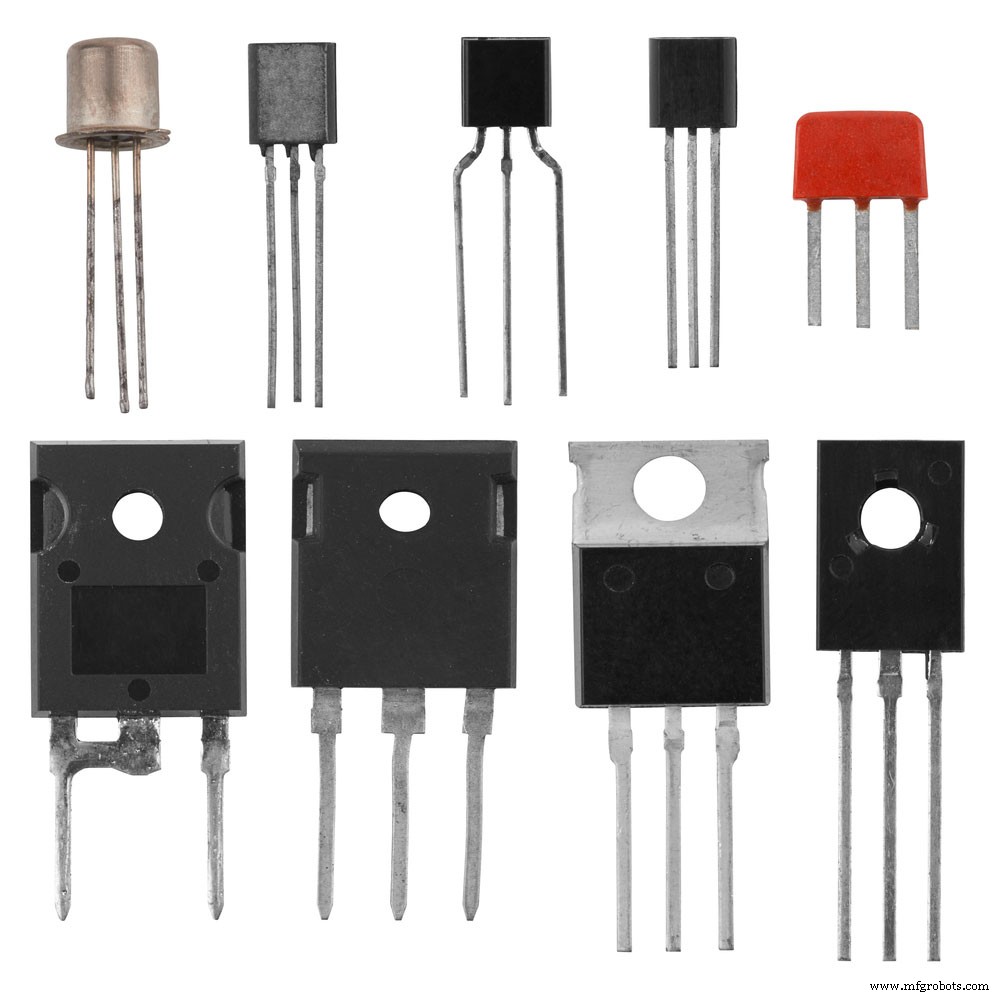
(Other Transistors effectively replace the IRFZ44N)
5. How to use an IRFZ44N MOSFET?
Although these devices act like conventional transistors, they are specific to voltage control. To begin, you only need to apply the correct gate threshold voltage, VGth, to turn the MOSFET off or on.
The source and drain terminals are open without gate threshold voltage by default. However, applying a voltage to the gate closes the source and drain.
In most cases, you need an Arduino to trigger the MOSFET N-channel gate. Other times, you may need a MOSFET N-channel driver circuit in conjunction if you are working on circuits that require high power switching and amplification.
Other IRF-Z44N real-life applications include connecting/disconnecting a power source to a building. Usually, the go-to solution is to use a relay or classic switch.
However, a significant advantage of this IRFZ44N N-channel power MOSFET is the switching process’s automation. Using electrical signals, you possess variable control of the load.

(The IRFZ44N Mosfet is integral in voltage control)
6. IRFZ44N Circuit (On-Off Switch)
For a practical application of N-channel power MOSFETs, we are looking at building an ON-OFF touch switch circuit. The essential components you need are:
- IRFZ44N transistor.
- 12V relay switch.
- 104f ceramic capacitor.
- 1n4007 diode.
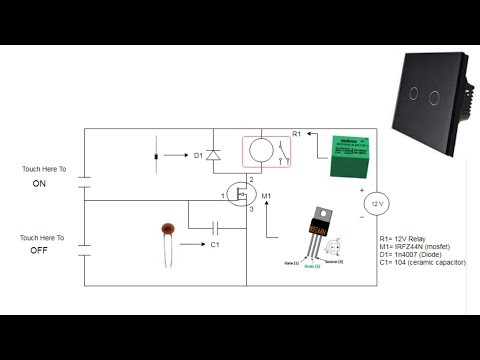
(The video above guides you through the circuit building process, from start to finish)
7. How to Safely run IRF44N for Long Hours in a Circuit?
The first safety measure to take is to avoid using it on the maximum ratings.
Any device running at its maximum all the time is liable to fail, eventually. The stress posed on the device from using the maximum rating causes weak circuitry. In the end, the performance level drops.
The professional thing to do is never exceed 80% of the maximum rating capacity. That is, exclude 20% from the full specifications while using the component.
It is no different from the IRFZ44 N-channel MOSFET transistor. For example, if the MOSFET amplifier drains current rating has a maximum of 49 amps, resist applying a load above 39 amps. In addition, always try to keep the transistor between -55°C to 175°C.
(A trans-impedance MOSFET amplifier circuit diagram).
8. IRFZ44N Applications
- For use in battery chargers.
- Also, they apply in solar battery charging and operation.
- Applicable in UPS (Uninterrupted power supply) devices.
- Another application is in motor driver circuits.
- They are suitable for LED flashers and dimmer switches, as well.
- Finally, they are helpful for typical applications that require fast switching.
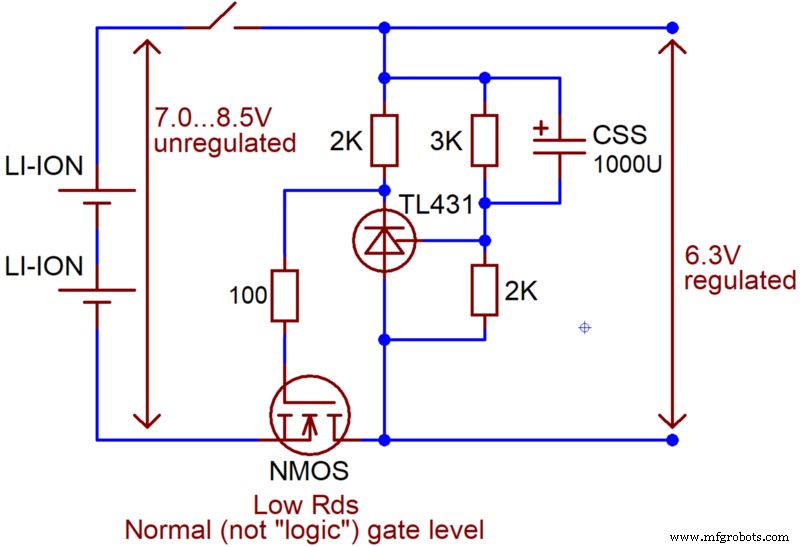
(A circuit application of the MOSFET transistor used to regulate a heater).
9. IRLZ44N and IRFZ44N MOSFET Differences
Although sometimes used in place of the other, the IRLZ44N and IRFZ44N are different.
The IRLZ44N, on the one hand, is a logic-level MOSFET. This version uses a gate threshold voltage as low as 5V. In other words, it takes little effort to trigger this MOSFET. Therefore you don’t need a driver IC for this purpose.
Not for the IRFZ44N, though. Instead, this MOSFET IC needs to work with a gate driver and a microcontroller such as Arduino Uno. That way, you trigger the MOSFET entirely. Otherwise, you only get a partial ON time via the I/O Pin when applying a direct 5V power supply. There will be limitations to the output drain current, though.
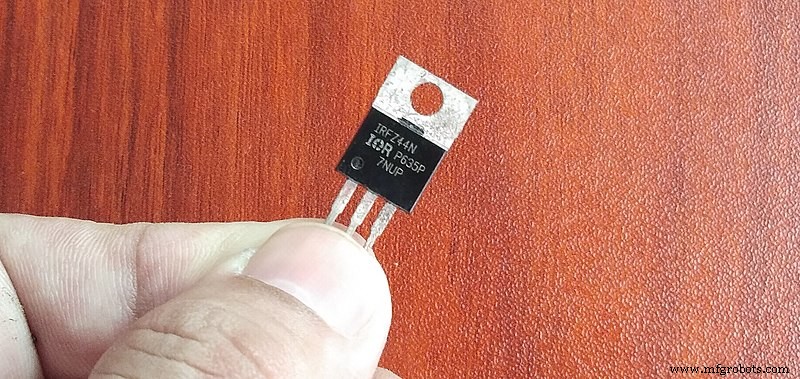
( The IRLZ44N and IRFZ44N have few differences)
Conclusion
In a nutshell, the IRFZ44N is a metal-oxide-semiconductor field-effect-transistor of the N-channel type. Widely preferred for its high switching speed, it is ideal for devices like the UPS. Also, it sometimes needs a microcontroller like Arduino or Raspberry Pi and a driver IC for efficient functionality.
To fully understand how the MOSFET works, put what you have learned into practice. Our contact page is one click away for any further inquiries.
Industrial Technology
- Mastering Stainless Steel Welding: A Comprehensive Guide
- Mastering Aluminum Soldering: Expert Techniques & Tips
- Mastering Inventory Management: Proven Strategies for Every Business
- Master Robotic Welding: A Comprehensive Guide to Quality, Efficiency, and Cost Savings
- IC4017 Decade Counter: Complete Beginner's Guide
- Potentiometer Types Explained: A Complete Guide
- Mastering Ultrasonic Sensor Circuits: The Ultimate Guide
- The IRF740 MOSFET: Comprehensive Overview & Practical Applications
- CD4027 Dual JK Flip‑Flop: Comprehensive User Guide
- Mastering the PYNQ Board: A Comprehensive Guide for Programmable Projects