



Industrial Etching & Chemical Milling: Precision Surface Finishing for CNC Metal Parts
What is industrial etching and how does it work? In this guide, CNClathing.com will bring details of this surface finishing service for CNC metal parts, with the industrial etching process, materials, applications, and benefits.
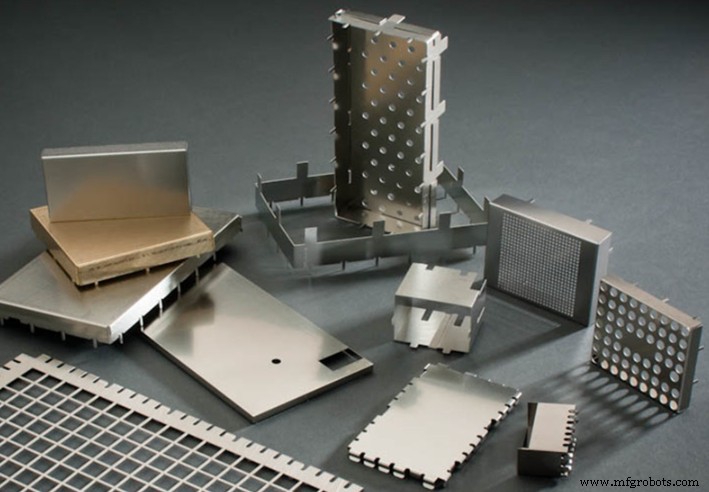
What is Industrial Etching?
Industrial Etching, also known as chemical milling, chemical etching, or photo etching, it’s a subtractive manufacturing process of removing materials in baths of temperature-regulated etching chemicals, to produce a high precision metal parts with the desired shape. Chemical etching is mostly used on metals, though other materials can be processed as well.
How Does Industrial Etching Work?
The industrial etching process involves the cutting area (metal workpiece) in the chemical solution, reacts with the material in the area to be cut and dissolve the solid material. A cleaned sheet of substrate laminated with a layer of light-sensitive resist, then exposed to ultraviolet light to transfer the CAD design to a positive image of the workpiece, expose the patterned substrate to an etching solution and remove the unprotected materials accurately. Chemical etching is performed in a set of five steps: cleaning, masking, scribing, etching, and demasking.
Chemical Milling Materials
The chemical etching can work with a large selection of materials, including stainless steel, carbon steel, mild steel, aluminum, nickel alloys, copper, brass, bronze, silver, gold, zinc, titanium, magnesium, etc.
Industrial Etching Applications
- 1. Electronics industry. Washers, filters, shims, spacers, printed circuit boards, EMI/RFI shielding, heat sinks, etc.
- 2. Print industry. Cutting dies, stamping dies, embossing cylinders, intaglio printmaking, etc.
- 3. Medical equipment and tools. Surgical blades, needles, lancets, etc.
- 4. Automotive and car parts. Flat springs, speaker grilles, etc.
- 5. Industrial signs, labels, and nameplates, trophies, guideposts, memorial products, etc.
- 6. Aeropsapce and semiconductor fields.
Benefits of Chemical Milling/Etching
- – Cost-effective with shorter lead time than lots of other processes like stamping.
- – Complex, burr-free metal products can be produced, no need for deburring.
- – Design and production flexibility, rapid prototyping to large batch manufacturing.
- – Physical performance of the metal parts will not be affected.
- – Exceptional durability of the industrial labels and signs.
- – High precision, tight tolerances, complex geometries can be realized.
Industrial Technology
- Explore Professional Metal Finishing Options for Durability and Aesthetic Excellence
- Passivation & Conversion Coating: Enhancing Stainless Steel Corrosion Resistance – CNCLATHING Surface Finishing
- Painting & Wet Painting Explained: CNC Machining Surface Finishing Guide
- Linishing Explained: Benefits and Applications for CNC Metal Parts by Junying Surface Finishing
- Electropolishing Explained: Benefits, Applications & Junying's Expert Metal Finishing Services
- Abrasive Blasting Explained: Techniques, Benefits & Applications – CNCLATHING Metal Finishing
- Black Oxide (Blackening) Explained: Benefits, Types & Applications – Junying Custom Metal Finishing
- Anodizing Explained: Types, Benefits & Applications – Junying Custom Metal Finishing Services
- Professional Surface Finishing Techniques for Machined Metal Parts
- CNC Milling Pricing Explained: What You Really Pay For