



Top Soft Metals Ideal for CNC Machining: A Practical Guide
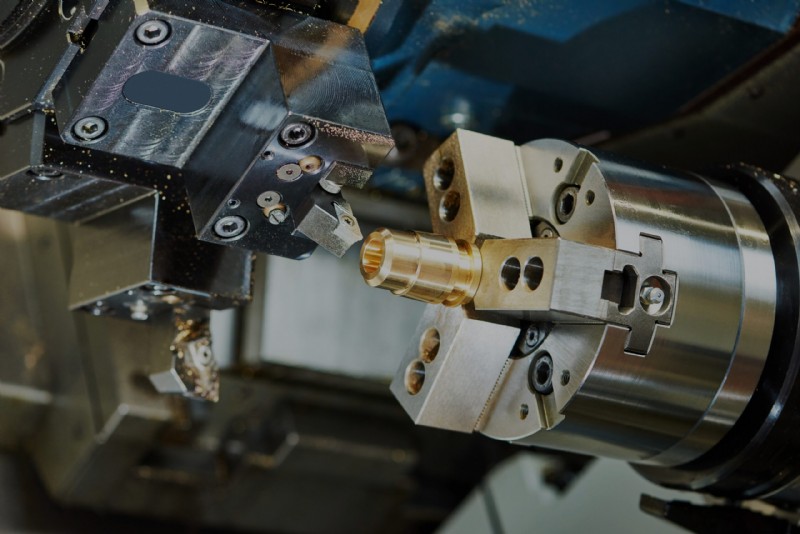
Naturally hard metals like tungsten and chromium are fairly rare in the manufacturing industry. In fact, most metals are naturally soft, relatively speaking, but made strong enough for manufacturing by adding alloys or bending, stretching, or hammering the material.
Soft, nonferrous (lacking iron) metals can be easy to cut and easy to machine, with only a minimal amount of post-process heat treating required. The most common soft metals for CNC machining are copper alloys, and common applications include jewelry making, plating, and electrical conduits. Aluminum often fills a similar role in CNC machining as these soft metals, but aluminum is widely-used enough to warrant its own conversation.
Soft metals are compatible with a number of manufacturing processes, but engineers and product teams frequently create parts with soft metals via CNC machining. Here’s everything that product teams need to know about machining with copper, bronze, and brass, the top three soft metals on the market today.
1. Copper
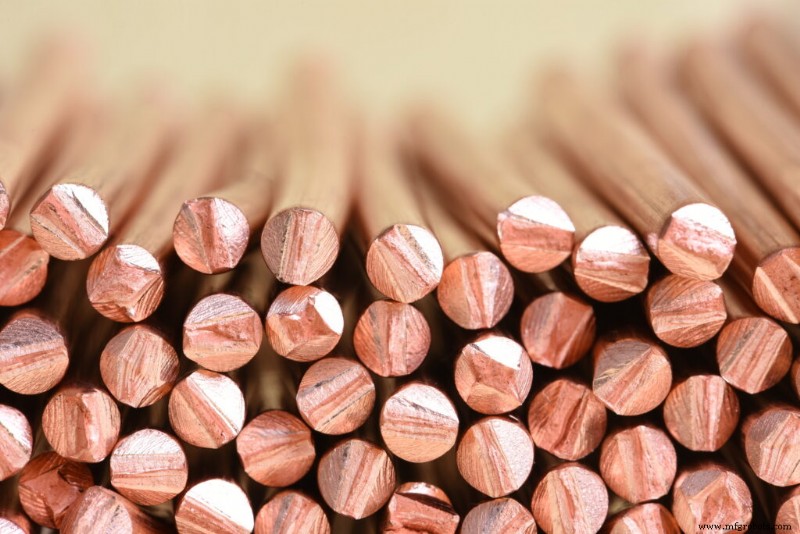
Copper C101 is also unique due to its antimicrobial properties — testing conducted by the Environmental Protection Agency found that 355 copper alloys, including C101, killed more than 99.9% of bacteria within two hours of contact.
For that reason, copper is commonly found in high-contact points in the medical industry like bed rails, sinks, faucets, and toilet hardware. Other popular applications include electrical wires, electromagnets, and circuit boards in the semiconductor industry.
Although copper is corrosion-resistant in most marine and industrial environments, it can be corroded by halogens, sulfides, and ammonia-based solutions. Also, C101 is particularly susceptible to hydrogen embrittlement at elevated temperatures due to its high oxygen content.
Mechanical specifications:
- Ultimate tensile strength: 310-380 MPa
- Modulus of elasticity: 125 – 135 GPa
- Elongation at break: 6-25%
- Hardness: 27 HV
- Thermal conductivity: 390 – 398 W/(m⋅°C)
2. Brass
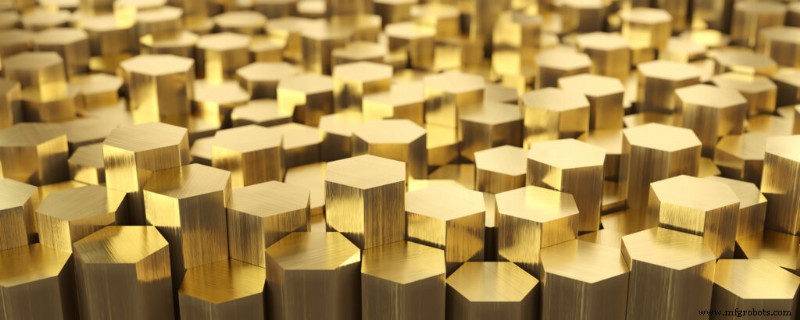
For example, a brass alloy containing 32-39% zinc is likely to have good hot-working capabilities but poor cold-working capabilities. Engineers and product teams should make a note of a brass alloy’s zinc content before making a final decision.
Many product teams work with 360 Brass because it has good tensile strength and natural corrosion-resistance. Plus, this material is highly machinable, weldable, and won’t cause undue wear and tear on the CNC machine.
However, this material does have its drawbacks. When brass comes into contact with ammonia or ammonia-based solutions, it becomes susceptible to stress corrosion cracking. In most cases, this limitation can be resolved by annealing during post-processing. From a financial standpoint, brass is one of the more expensive soft metals.
360 brass is ideal for low-friction applications and commonly used to make musical instruments, lock components, and gears. Since brass bears such a strong resemblance to gold, it also has a wide range of purely ornamental applications.
Mechanical specifications:
- Ultimate tensile strength: 140 MPa
- Elongation at break: 23%
- Hardness: Rockwell B35
- Density: 0.307 lbs / cu. in.
- Maximum temperature: 1650°F
3. Bronze
Like brass, bronze alloys are composed of a copper base combined with other alloys. Tin is among the most common additions. The mechanical and physical properties of bronze change when phosphorus, aluminum, manganese, silicon, and other materials are added, which engineers and designers should keep in mind.
642 bronze is ductile, resistant to corrosion, galling, and fatigue, and has the highest machinability out of all brass and bronze alloys. Also, bronze outpaces copper when it comes to strength and corrosion resistance. Common applications for bronze alloys include musical instruments, medals, marine applications, and industrial applications such as aircraft bushings where a low friction metal is required. Unfortunately, bronze is expensive to work with due to its high copper content.
Mechanical specifications:
- Tensile strength 517-621 MPa
- Modulus of elasticity: 16,000 ksi
- Modulus of rigidity: 6,000 ksi
- Density: 0.278 lb/in3 at 68 °F
- Electrical conductivity: 8% IACS at 68 °F
Selecting the right material for the job
Soft metals offer many advantageous properties to CNC machined parts. They’re generally easy to machine, naturally corrosion-resistant, and well-suited for a wide range of applications across industries. With brass and bronze in particular, engineers and product teams should be sure to double-check the alloy content of these soft metals, as adding additional elements is sure to affect the mechanical and physical properties of the final part.
For engineers and product teams, choosing the best-suited material for a given project is one of the most important decisions they must make during the development process. Product teams must do their due diligence to ensure they achieve their desired results, and an expert manufacturing and design partner like Fast Radius can help.
Fast Radius is a one-stop-shop for manufacturing innovation. Our experienced team can help engineers and product teams ensure their material choice will fulfill all critical requirements — at a price point and timeline that suits them. Let’s make new things possible, together. Contact us today.
Stay tuned for the next installment in the CNC material families series! In the meantime, check out the other material selection guides for processes like injection molding and 3D printing in the Fast Radius learning center.
Industrial Technology
- CNC Machining in Precious Metal Jewelry: Precision Crafting Techniques
- Advanced CNC Machining Solutions for Ceramics
- CNC Machining vs Additive Manufacturing: Choosing the Best for Metal Prototypes
- 6 Essential Factors for Selecting Hard vs Soft Metals in CNC Machining
- Key Copper Alloys for Precision Machining: Brass, Bronze, and Beryllium Copper
- 4 Proven Best Practices for CNC Prototyping Success
- Expert Guidelines for Precision Plastic CNC Machining
- Master Brass CNC Machining: The Ultimate Guide to Custom Parts
- Top Affordable Metals for Precision CNC Machining Projects
- Top Metals for Precision Machining: A Professional Guide