



Explore LOCTITE 3D IND405 Clear – The Optimal Choice for Precision 3D Printed Parts
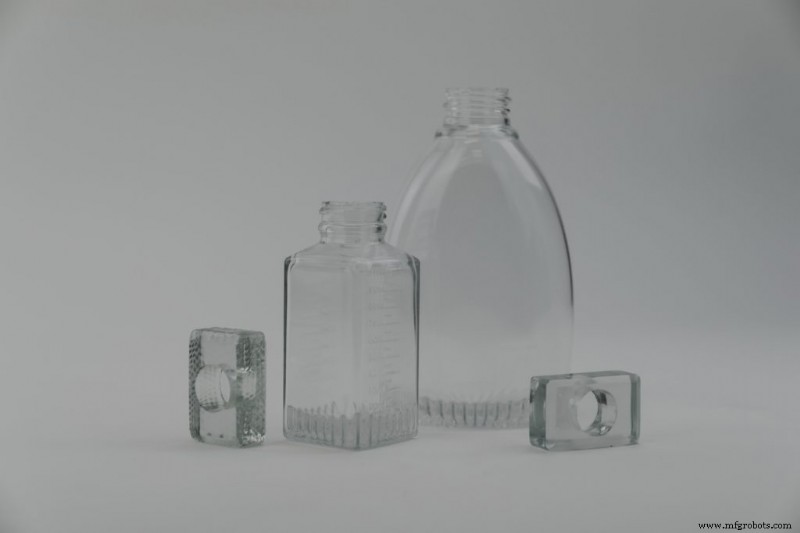
When developing 3D printed parts, engineers and product teams assess potential 3D printing materials by carefully considering their project requirements and the qualities that the finished part must possess. This process of elimination helps teams whittle down a sea of material options and zero-in on the plastic or flexible resin that will take their project to the next level. Now, Carbon Digital Light Synthesis (DLS)® customers have a new material option to add to the mix.
Carbon, the California-based additive manufacturing technology company, together with Henkel, the global adhesive and sealants conglomerate, is proud to unveil their new resin — LOCTITE 3D IND405. Here’s everything that engineers and product teams need to know about this tough, semi-rigid, and exceptionally clear 3D printing resin:
How is LOCTITE 3D IND405 Clear made?
Plastic resins are created by first heating hydrocarbons during a process called “cracking,” which breaks down the larger molecules into ethylene, propylene, or another type of hydrocarbon. After the cracking process, these monomers are transformed into polymers via a process called polymerization.
The polymers are then combined into plastic resins with characteristics suitable for a variety of applications, depending on which additives have been added. Once the resin is created, it can become a usable plastic — this is done through photopolymerization in the case of IND405 and other similar resins.
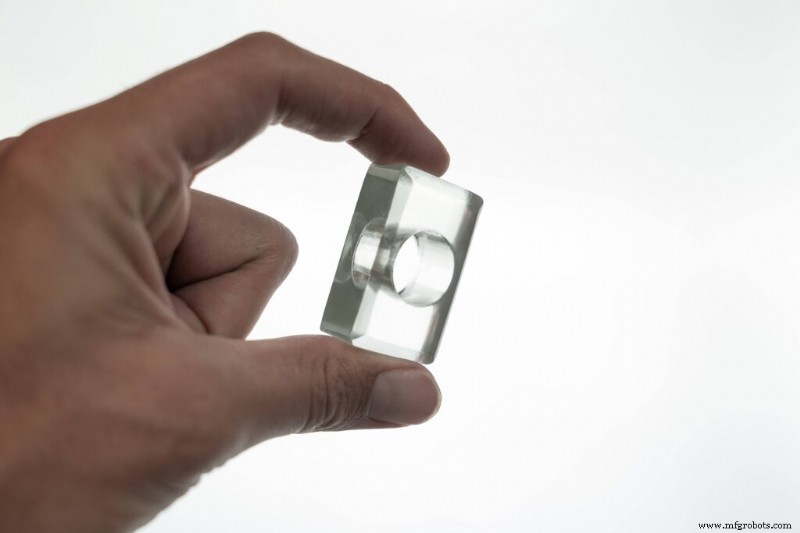
LOCTITE 3D IND405 is unique because it is produced as a one-part resin, meaning the clear polymer is quickly and easily printable using Carbon DLS.
Applications and mechanical specifications
LOCTITE 3D IND405 is a clear, durable, and impact-resistant one-part material with high elongation and an outstanding surface finish. Property-wise, its unique performance attributes make it comparable to an unfilled thermoplastic like polypropylene.
Mechanical specifications for IND405 include:
- Tensile strength at break: 42 MPa
- Young’s modulus: 1500 MPa
- Elongation at failure: 120%
- Impact strength — IZOD Notched: 50 J/m
- Heat deflection temperature at 0.455 MPa: 53 °C
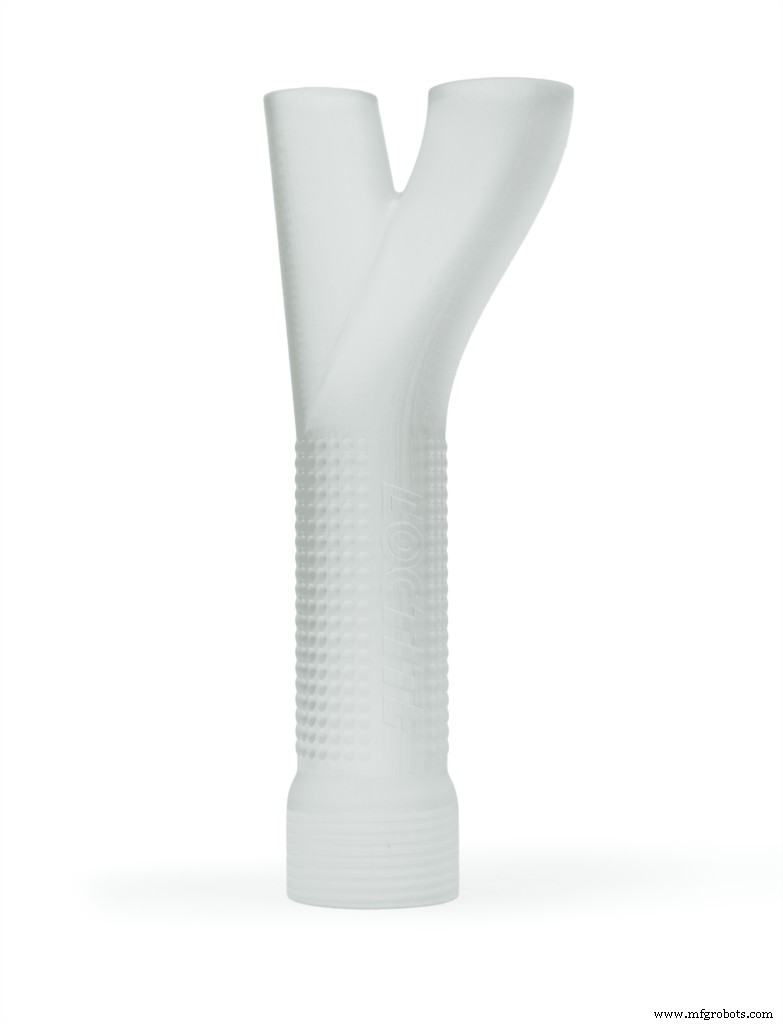
This material’s stiffness and toughness makes it suitable for a wide range of applications, including fluid ducts and fluid analysis devices, surgical guides, small kitchen appliances, lens prototypes, enclosures, and housings.

LOCTITE IND405 is also ideal for manufacturing jigs and fixtures. In some cases, engineers need to see into jigs to ensure that everything is in place during manufacturing, and this 3D printing material offers the transparency they need.
Why choose LOCTITE 3D IND405 Clear?
Carbon and Henkel developed LOCTITE 3D IND405 in direct response to customer feedback. Engineers wanted an easy-to-use on-part 3D printing material that was more durable and impact-resistant than its counterparts, and suitable for a wider range of applications. Designers wanted a transparent resin that was truly clear and offered increased design flexibility. LOCTITE 3D IND405 delivers on all of these fronts and represents the latest in a long line of innovative materials for additive manufacturing.
Getting started with LOCTITE 3D IND405 Clear
There’s a lot for engineers, designers, and product teams to like about LOCTITE 3D IN 405. It’s tough, versatile, and gives end-parts a crystal clear finish that’s unmatched by other 3D printing materials on the market today.
Still, product teams shouldn’t jump into material selection without doing their due diligence. With the help of an experienced manufacturing partner, this process becomes a lot easier.
Fast Radius is the manufacturing partner of choice for product teams building cutting-edge products with the latest 3D printing materials. We have years of experience working with a wide breadth of innovative materials for additive manufacturing, and our team of engineers, design consultants, and advisors can guide your team through the material selection process to ensure you deliver superior products each and every time.
We’re eager to see what our customers will make possible with this new material. Contact us if you’d like to try it for your next project.
To find other in-depth material guides, check out the other Know Your Materials articles in the Fast Radius learning center—including Whip Mix Surgical Guide, PA 12, and UMA.
Ready to make your parts with Fast Radius?
Start your quoteIndustrial Technology
- Understanding Flexible Resin: Properties, Uses, and Best Practices
- Elastic Resin: Formlabs Silicone‑Like Material for SLA Printing
- Elastomeric Polyurethane (EPU): Key Features and Applications
- Exploring PA12 (Nylon 12): Properties, Applications, and Industry Insights
- MPU 100: The Premium Biocompatible Polyurethane for Digital Light Synthesis
- CE 221 – High‑Temperature Composite for Advanced Applications
- EPX 82: Carbon’s High-Strength Epoxy for Advanced Applications
- Explore RPU 70: Carbon’s High-Performance, Heat‑Resistant Rigid Polyurethane
- Discover SIL 30: Carbon's Biocompatible Silicone Urethane for Digital Light Synthesis
- Polystyrene (PS) Explained: Types, Properties, and Applications