



Titanium Thermal Properties: Why It Matters for High-Performance Applications
Titanium and its alloys are widely used for structural applications in aerospace, automotive, defense, sporting equipment, and healthcare because of their high strength, low weight, excellent corrosion resistance, and generally stable properties at high and low temperatures. However, titanium’s unique thermal properties make it unsuitable for certain applications, while it excels at others.
Titanium behaves somewhat differently than most metals at extreme temperatures, so it’s important to understand titanium’s thermal properties before using it in such an environment. For example, although titanium remains strong at high temperatures, it doesn’t easily dissipate heat, which can cause heat build-up in the metal. However, some titanium alloys can also perform extraordinarily well at cryogenic temperatures.
In this post, we’ll explore the thermal properties of titanium at high temperatures and cryogenic temperatures and how they affect its ability to perform in common applications.
Titanium Thermal Properties at High Temperatures
Titanium can perform well in extreme temperature environments due to its high melting point and high-cycle fatigue strength. It’s preferred in applications such as aircraft engines, naval ships, spacecraft, missiles, and pipes for power plants because of its excellent corrosion resistance caused by a protective oxidation process that occurs when it’s exposed to high temperatures. This temperature oxidation is lowered in pure oxygen atmospheres.
Below, we look more in-depth at the thermal properties of commercially pure titanium and titanium alloys.
Commercially Pure Titanium
Commercially pure titanium has a high strength-to-weight ratio and is an excellent choice for use in components that operate at high temperatures, as it has a melting point of around 3,034°F and a density of approximately 4.5 g/cm3. However, its applications can sometimes be limited, as titanium can catch fire and cause extreme damage if exposed to situations where it rubs against other metals at elevated temperatures.
Commercially pure titanium is corrosion-resistant, forming a protective oxide coating when exposed to high temperatures. This can be a positive when it’s reactive with water or at ambient temperatures anywhere on Earth. However, titanium also reacts with oxygen and carbon at high temperatures, which creates challenges when preparing titanium metal, crystals, or powder. If titanium powder is heated with oxygen present, it can become an explosion hazard in processes such as 3D printing and powder sintering metallurgy. These properties excel in pipes but are unsuitable for jet engines and rocket motors.
Because of its high strength and creep resistance, commercially pure titanium can remain stable at temperatures up to approximately 572°F. Compared to other metals such as aluminum, titanium has low thermal and electrical conductivity, which can result in excessive heat build-up.
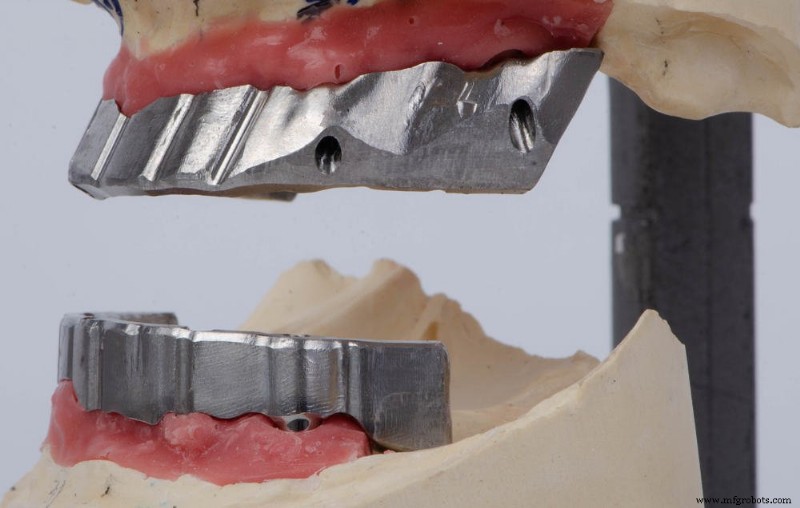
Titanium is not soluble in water, and its hydrogen solubility decreases even further with elevated temperatures, making it a good candidate for magnetically confined fusion reactors. Titanium is also often used in orthopedic and dental implants—however, for most applications, other metals are often added to titanium to create stronger, tougher alloys.
Titanium Alloys
Pure titanium is often mixed with other metals to create alloys that provide increased tensile strength and toughness, even at high temperatures. These alloys are split into three different categories—alpha, beta, and alpha+beta. A brief description of each titanium alloy category is described below.
- Alpha alloys contain metals such as aluminum and tin and have an exceptional creep resistance at temperatures up to 1,100°F. Because of this, alpha alloys are often preferred for high-temperature applications. However, they have low-to-medium strength that cannot be increased by heat treatment.
- Beta alloys, which contain elements such as molybdenum, vanadium, and niobium, have excellent hardenability and can easily be heat-treated to increase their strength. These alloys have high fracture toughness and are highly forgeable. However, beta alloys cannot withstand as high of temperatures as alpha alloys.
- Alpha+beta alloys are also heat treatable and offer medium-to-high strength. These alloys can also operate at higher temperatures than commercially pure titanium grades and have a creep resistance up to 500-800°F.
Some titanium alloys with higher complexities display high strength at temperatures up to around 932°F. Titanium alloys also generally have lower thermal conductivities than commercially pure titanium.
Titanium Thermal Properties at Cryogenic Temperatures
Titanium and its alloys are also different from other metals in that some of them can maintain their strength and ductility incredibly well at cryogenic temperatures. In particular, alpha alloys are suitable for cryogenic applications because of the absence of the ductile-to-brittle transition that is featured in beta alloys. Beta alloys are generally not considered for use in environments with cryogenic temperatures due to this ductile-to-brittle transition. However, alpha-beta alloys, which contain both alpha and beta phase crystalline structures, also have high strength characteristics in cryogenic environments. In particular, the Ti-6Al-4V alpha+beta alloy can be used at cryogenic temperatures up to around 800°F and is used for many airframe and engine parts.
Your Local Titanium Source
Industrial Metal Service has been supplying specialty metals to manufacturers, machinists, and fabricators in the San Francisco Bay Area and nationwide for more than two decades, and we’ve built a reputation for professionalism, reliability, and customer-focused service. We offer both new and recycled remnant metals, such as titanium, aluminum, steel, and copper, verified with x-ray fluorescence analyzers to ensure the quality of the metals you purchase.
Industrial Technology
- Titanium: Key Physical Properties and Industrial Significance
- Titanium: Key Chemical Properties and Corrosion Behavior
- Arithmetic Properties: Associative, Commutative & Distributive Explained
- Key Thermal Properties of Plastics: HDT, Service Temp, Melting/Glass Transition, and Expansion
- Mastering C# Properties: A Complete Guide
- CNC Machining Titanium Grade 5 (Ti‑6Al‑4V): Properties, Pricing, and Grade 2 vs Grade 5 Comparison
- Mastering 3D Printed Lattice Structures: Design, Properties, and Performance Insights
- Inconel vs Titanium: Choosing the Right High‑Performance Metal for Extreme Conditions
- Thermal Energy Explained: Definition, Examples & How It Works
- Wood: Key Properties for Construction & Design