



Enhancing Investment Castings: Precision Heat Treatment for Superior Performance
Though investment cast parts typically require little-to-no machining they often need to undergo heat treatment. Controlled heating and cooling releases internal stresses, optimizes mechanical properties and modifies surface hardness to improve durability and performance.
Impro maintains an extensive range of heat treatment capabilities. These are used to impart the required properties to parts produced by investment casting. Here’s an overview of what heat treatment does, why it’s used and the capabilities Impro can offer customers.
Metal Casting and Solidification
As soon as it’s poured into the ceramic shell or mold, molten metal begins to cool. As it transitions from liquid to solid crystals or grains form and grow in the metal. The speed of grain formation is determined largely by cooling rate. Metal in contact with the ceramic shell cools fastest while that deep in the interior of the part being cast is the last to solidify. Mold pre-heating slows the solidification rate, allowing larger grains to form.
This progressive cooling creates a structure where the hardness and toughness vary throughout the casting. In addition, contraction creates internal stresses that distort the part from the intended geometry. These undesirable characteristics are addressed by heat treatment.
Heat Treatment Processes
Heat treatment consists of raising the temperature of casting to a predefined level, holding it there while metallurgical changes take place, then cooling it at a controlled rate. The various processes are defined primarily by the peak or soak temperature attained, soak duration and the rate of cooling. In addition, some processes are performed in a vacuum or a controlled atmosphere.
Metals commonly investment cast are aluminum, steel and nickel-based superalloys. Their different compositions mean they go through different heat treatment processes.
Aluminum alloys can go through a tempering process to modify hardness and ductility and improve machinability. The most widely used processes are defined as T4, T6 and T61, each of which imparts a form of accelerated aging.
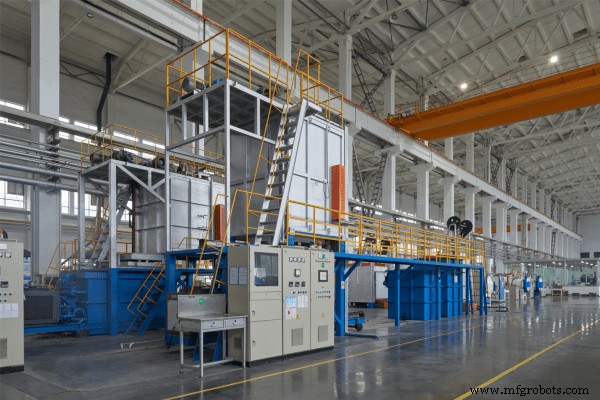
Investment cast low alloy steels and superalloys often undergo one or more of the following heat treatment processes:
- Homogenization — the casting is held at a temperature high enough to let the alloying elements to diffuse throughout the body
- Solution heat treatment and precipitation hardening – similar to homogenization but performed at a temperature that raises overall hardness
- Stress equalizing/relieving — the casting is heated to below the recrystallization temperature and allowed to soak while internal stresses are released
- Surface hardening — common processes are gas nitriding and carbonitriding which are performed in controlled atmospheres to raise surface hardness
- Tempering/annealing — more often applied to work-hardened metals than investment castings but may be used to lower hardness and promote recrystallization
Investment Casting Heat Treatment Capabilities at Impro
We operate an automated, multipurpose heat treatment line capable of:
- Carburizing
- Carbon restoration
- Normalizing
- Carbonitriding
- Low alloy steel tempering
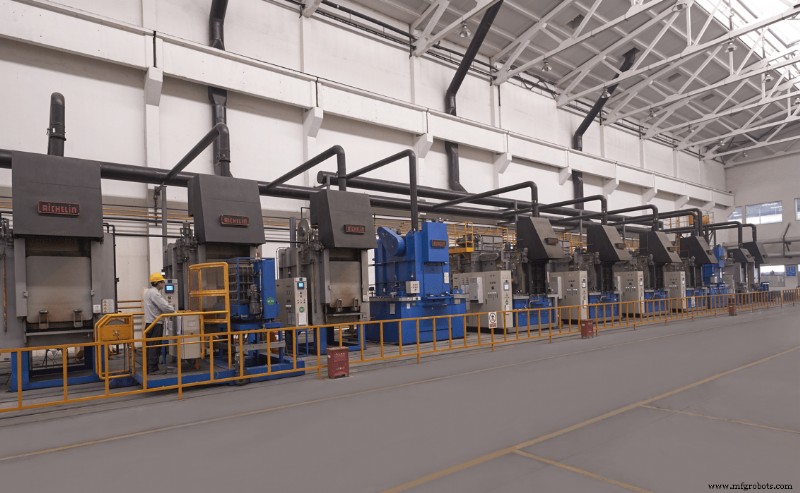
We can also heat treat aluminum and have furnaces for vacuum heat treatment, gas nitriding, annealing and stress-relieving.
An alternative to furnace heat treatment is induction heating. In this process the part to be treated is placed inside an induction coil and heated and cooled as needed. Induction is used for both hardening and softening. It is especially useful for castings where it can provide local modification of strength, hardness and ductility.
Discuss Heat Treatment benefits and Options With Us
Investment casting produces near-net shape parts that need little to no machining. However, parts produced this way may not have all the mechanical properties required.
Heat treatment provides a way of modifying surface and bulk properties without changing part dimensions. As a one-stop-shop, Impro can perform an extensive range of heat treatment processes to meet the needs and expectations of our customers. Contact us to learn more.
Industrial Technology
- Titanium Alloy Heat Treatment: Optimizing Strength, Stability, and Process Control
- Heat Treatment Processes: Enhancing Metal Strength & Performance
- Heat Treatment Techniques for Ferrous Foundries: Enhancing Strength & Durability
- Precision Turned Parts: Advanced Heat Treatment for Optimal Strength and Performance
- Accelerated Prototyping for Precise Investment Castings
- Heat Treatment Methods for Sand Castings: Enhancing Strength and Durability
- Precision Heat Treatment: Boosting Hardness, Strength, and Wear Resistance
- Precision Heat Treatment for Aluminum Castings: Enhancing Strength & Ductility
- Steel Heat Treatment: Hardening, Tempering, Annealing & More for Durable Knives
- The Three Essential Stages of Heat Treatment Explained