



Expert Sand Casting with Cores: Precision Metal Parts for Any Complexity
Sand casting is a cost-effective manufacturing option for customers who seek parts using a wide variety of metals. This versatility allows customers to obtain simple and complex parts in a range of sizes and weights. The process involves using molds produced in the shape of the part as the molten metal fills the mold and solidifies.
For some applications, the part will consist of less complex internal configuration. So, the mold’s cavity will be entirely filled with the molten materials. Other applications require the part to have thin exterior walls or intricate internal designs where there may be voids. Parts manufacturers use cores to create these internal designs.
Sand Casting Cores
Cores used in sand casting are internal inserts made into the desired shapes that cannot be produced when creating the initial mold. These cores may make angles or empty chambers within the mold. So the part used on an engine will have the necessary empty areas for the combustion chamber.
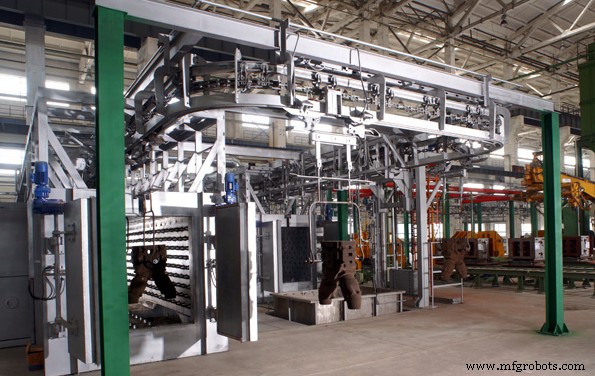
Sand is used to produce the mold. This process allows the manufacturer to shake the core out once the casting hardens. So there will be a hole in the casting where the sand can be removed as the hole will be left open or plugged later depending on the part’s design.
Core Technologies
Cores need to be strong enough to withstand the molten metal and stay in place. Sand binders are essential in this process. For modern technologies, the binders may consist of linseed oil, furan binders, phenol-formaldehyde, urea-formaldehyde, or sodium silicate.
To set the resin binder, there are five different processes that a manufacturer may use: cold box, hot box, no-bake, 3D print, and shell.
- Cold box: This process relies on a gas such as carbon dioxide or sulfur dioxide to harden the resin. The gas causes the resin to undergo a chemical reaction to begin the hardening process.
- Hot box: Hot box processes use heat and a catalyst to harden the core’s sand. The resin used may consist of phenolic or furan resins along with an acid salt catalyst. Linseed core oil is a traditional binder used with hot curing processes.
- No bake: This method uses resin binders along with a curing catalyst to obtain core mechanical properties by a chemical reaction at room temperature. It does not use a gas to initiate the hardening of the core.
- 3D Print: The 3D printing process relies on binder jetting technologies to place a binder polymer with silica sand and ceramics to create the mold.
- Shell: Shell technology uses heated core machines as sand is blown or packed inside. A binder polymerizes as the sand grains lock together while curing.
The type of core technology and resins used will depend on the part’s specifications and the metal materials used. Working closely with the manufacturer helps customers to determine if cores are necessary for the design of their part. A customer also gains a greater understanding regarding the core design timeline so they may adjust and modify their deadlines for receiving the finished parts.
For more information regarding sand casting cores, reach out to Impro.
Industrial Technology
- Revolutionizing Sand Casting with Stratasys FDM Technology
- Moulding Sand in Metallurgical Casting: Types, Constituents, and Key Characteristics
- Understanding Sand Moulds: Definitions, Types, and Metal Casting Fundamentals
- Post-Mold Processing: Shakeout, Cleaning, and Machining of Metal Castings
- Understanding Cores in Sand Casting: Their Role & Benefits
- Expert Resin Sand Casting: Advanced Capabilities & Precise Processes
- Sand Casting vs. Centrifugal Casting: Choosing the Right Metal Part Production Method
- Sand Casting vs Forging: Choosing the Right Metal Fabrication Method
- Expert Sand Casting with Cores: Precision Metal Parts for Any Complexity
- Enhancing Sand Casting with 3D Printing: Faster Tooling and Reduced Lead Times