



The Nike Effect: How Industry 4.0 Accelerates Real-World Innovation
Industrial Internet vs. Industry 4.0
In English‑speaking regions the term “Industrial Internet” is common, while German‑speaking areas prefer “Industry 4.0”. We use both terms interchangeably.
In Europe, the transition from concept to practice is still uneven. While the Industrial Internet Consortium (IIC) and U.S. companies began deploying the Industrial Internet months ago, German‑based initiatives continue to focus on standards and terminology. Richard Soley, Executive Director of the IIC, champions a “Just do it” mentality – the Nike Effect – urging rapid, hands‑on experimentation.
At Bosch Group, we are running over 70 projects worldwide that test the feasibility of Industry 4.0. With 220+ manufacturing plants as end‑users and a comprehensive product portfolio that spans machines, components, and software solutions, we are uniquely positioned to evaluate how the Industrial Internet can be embedded in production.
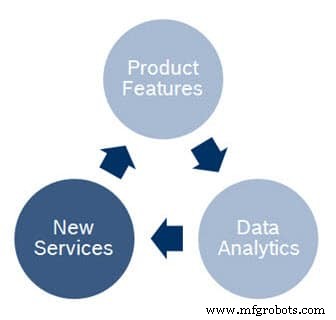
Industry 4.0 Innovation Cycle
“Industry 4.0 is a reality” – and that’s not just our viewpoint. The Industry 4.0 innovation cycle (see figure) illustrates a continuous process that guides suppliers—from machine and component manufacturers—to evolve their offerings into new, data‑driven services. It also addresses the common question: where should a company, department, or unit begin?
Source: Bosch.IO
How to Apply the Industry 4.0 Innovation Cycle
The cycle comprises three core phases, which can be pursued sequentially or in parallel when appropriate.
1) Product Features Phase
Equip machines and components with Industry 4.0 capabilities: sensors, actuators, embedded information‑processing, and machine‑level software. Enable network connectivity so field‑operational data can be collected, processed on‑device, and acted upon. Secure remote access with clear access rights is essential.
What’s achievable now? Real‑time, centralized quality data from production lines allows instant visibility and decision‑making.
2) Data Analytics Phase
Collect relevant data from in‑use equipment, analyze it to uncover insights, and feed findings back into the system. Focus on data that directly supports defined goals—such as reducing maintenance calls or cutting deviation costs—avoiding the pitfalls of big data overload.
What’s achievable now? Quality deviations are detected through advanced analytics, triggering proactive alerts to service teams for rapid resolution.
3) New Services Phase
Leverage insights to design value‑adding services. While ROI may take time to materialize, the foundation is set for sustainable growth.
What’s achievable now? Condition‑based monitoring services can be offered with automated maintenance triggers, using real‑time data to predict wear, prevent failures, and optimize service agreements—benefiting both suppliers and customers.
Industry 4.0 Is Good for You – Seize New Opportunities
Whether you’re a machine or component manufacturer looking to diversify revenue with new services, or a production lead targeting defect‑free output, Industry 4.0 solutions empower you to meet those goals today.
Industrial Technology
- Understanding the Skin Effect: Impact on AC Conductors and RF Applications
- Implementing Industry 4.0: Practical Steps for Machine and Component Manufacturers
- IACMI: Pioneering Innovation in Advanced Composite Manufacturing
- Cyber‑Physical Systems: The Driving Force Behind Industry 4.0
- Industry 4.0 & Sustainability: Navigating Environmental Challenges
- Industry 5.0: Redefining Manufacturing for the Future
- Implementing a Quality Strategy to Drive Industry Competitiveness
- Effective Knowledge Sharing Between Generations in Modern Industries
- How Industry 4.0 Revolutionizes Manufacturing: Benefits & Opportunities
- Driving Success: How Innovation Transforms Metal Fabrication