



Industry 4.0 & IoT in Germany: Current Landscape & Strategic Insights
The Industry 4.0 and IoT landscape in Germany is advancing at a breathtaking pace. In 2015 we conducted an extensive survey of market participants, culminating in the first German Vendor Benchmark on Industry 4.0 and IoT, released in 2016. The benchmark offers a clear snapshot of the sector and the strategic directions companies should pursue.
Aligning Definitions: Industry 4.0, IoT, and Digitalisation
In recent years the terms Industry 4.0, IoT, and digitalisation have proliferated, each with dozens of interpretations. A 2015 survey by the digital association Bitkom identified roughly 130 distinct definitions, highlighting the need for a shared language.
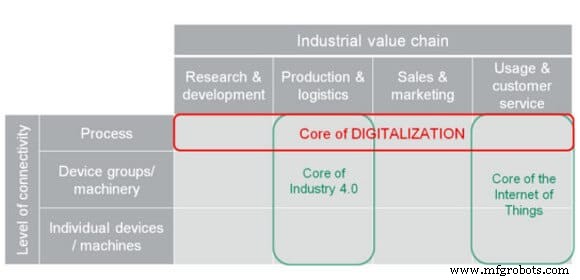
During the benchmark’s preparation we distilled these overlapping concepts to their core. Most participants agreed that all three terms revolve around increased connectivity and automation, but they differ in focus:
- Industry 4.0: Digital production and logistics through machine and component connectivity.
- IoT: Connected products that digitalise customer service and the entire product lifecycle.
- Digitalisation: End‑to‑end digital processes that enable automated value creation.
Source: Experton Group, 2015
Key Findings from the 2016 Vendor Benchmark
- Market segmentation remains fluid: pure hardware/software providers coexist with consulting and system‑integration firms, many offering hybrid solutions and strong demand for advisory services.
- New entrants focus on reducing the technical complexity of Industry 4.0/IoT solutions, aiming for plug‑and‑play integration.
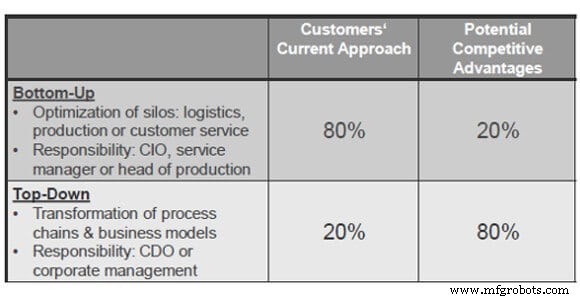
- Current digitalisation efforts are predominantly bottom‑up, driven by specialist departments (production, logistics, customer service). Strategic top‑down initiatives are expected to grow.
- Partner ecosystems are a common strategy, allowing solution and integration companies to present themselves as end‑to‑end providers.
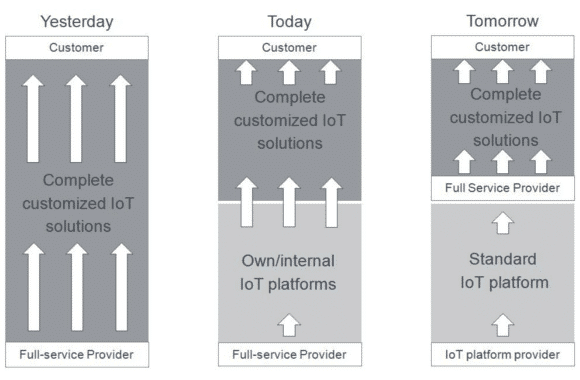
- Over 100 IoT platforms were identified; many are “platform‑for‑platform” white‑label solutions used by full‑service providers.
- The sector will likely experience consolidation in 2016‑2017 as larger players absorb niche platforms.
- Future full‑service offerings will increasingly rely on standard IoT platforms rather than proprietary stacks.
Source: Experton Group, 2015
From Pilot Projects to Strategic Digital Business Models
Most companies start with small, focused pilot projects that demonstrate tangible ROI. While valuable, these initiatives often remain isolated. The benchmark recommends scaling from these pilots to strategic, top‑down transformations that embed digital capabilities across the entire organization.
Source: Experton Group, 2015
Conclusion
Adopting Industry 4.0 and IoT is the first step toward digital transformation. To stay ahead, companies must evolve from incremental optimisations to fully digital business models, leveraging strategic top‑down initiatives and learning from global competitors in Silicon Valley and beyond.
The 2016 Vendor Benchmark offers a comprehensive overview of market segments and key players in Germany, serving as a valuable reference for executives and IT leaders.
Industrial Technology
- Industry 4.0 & IoT: Key Market Trends Shaping the Next Two Years
- Industry 4.0 Today: Current Landscape and 2017 Outlook
- Industrial IoT: Key Building Blocks Driving Industry 4.0
- Harnessing IoT to Transform Oil & Gas Operations
- Navigating the Food & Beverage Industry: Challenges & Opportunities for 2024
- Navigating Challenges and Seizing Opportunities in the Aerospace Industry
- Supply Chain IoT Today and Its Future Trajectory
- Driving the Future: How Digital Transformation & IoT Revolutionize Automotive Manufacturing
- IoT, AI, and Edge Computing Revolutionize Oil Industry Operations
- Assessing Manufacturing Companies' Progress in Industry 4.0 Implementation