



Urethane Casting: From Prototype to Production—Fast, Cost‑Effective, Design‑Flexible Solutions
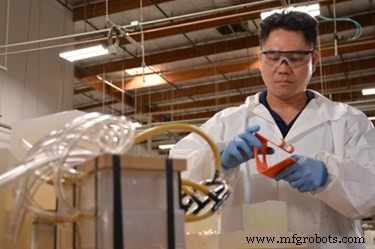
Urethanes Casting Benefits from Prototypes to Production
Determining the path to production is a significant challenge for designers, engineers and product development teams. The long-leads, costs and design limits of traditional manufacturing methods can stifle creative, cutting-edge concepts, budgets and timelines.
At Stratasys Direct Manufacturing, we offer a traditional production method, Urethane Casting, with proprietary evolutions, to address these problems early in the product development life cycle.
Our Urethane Casting process yields strong and stable components ideal for a variety of applications.
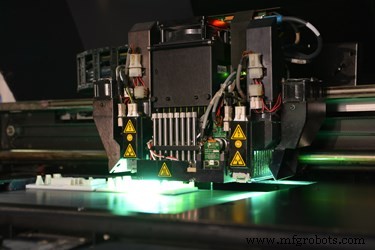
Our casting process begins with a 3D printed master pattern, built with our fastest technologies, Stereolithography and PolyJet. High-grade silicone is poured over the pattern and allowed to cure before removal of the pattern. Polymer is injected into the cavity left from the pattern, and the cast part solidifies and goes through a proprietary series of controlled steps involving heat and pressure that produces greater yield and higher quality output to each mold produced.
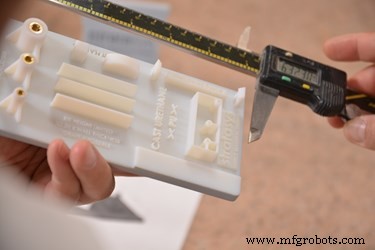
Urethane casting at Stratasys Direct Manufacturing begins with 3D printed master pattern finished and quality checked before a mold is cast.
Our Urethane Casting process yields strong and stable components ideal for a variety of applications. Our urethane materials were co-developed in-house to yield enhanced mechanical and physical properties. The resulting advanced formula properties result in castings that are accurate, strong, and able to meet customer requirements for flammability UL 94 VO, impact tests and MRI imaging.
Eliminating Hard Tooling Costs
Frequently, engineers will use cast urethanes when they need to develop lower quantities quickly and are unsure about long-term quantities for the market and therefore cannot make the significant capital investments in production tooling. Cast urethanes allow for the production of parts quarter by quarter, with the added benefit of easy design changes.
Speed to market continues to be key for industries, especially medical, aerospace and transportation, and the improved production time possible with Urethane Casting allows for early revenue generation. Due to the quick production of silicone molds, cast urethanes have low overhead tooling costs. At Stratasys Direct, parts can be delivered in as little as 7 days.
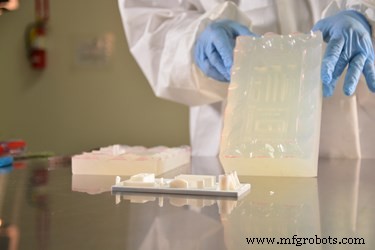
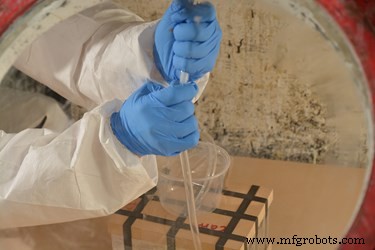
After a mold is created, polymer is injected into the cavity and undergoes a series of steps involving heat and pressure.
Urethane Casting produces applications early in the product development life cycle, such as cosmetic units and assembly line development units, while longer lead time production tooling is produced. Product components can meet industry standards and requirements while engineers and designers wait for tooling to be manufactured.
Creating Complex Designs
At Stratasys Direct we utilize the design freedom possible with 3D printed master patterns for complex casts. Unlike Injection Molding, Urethane Casting allows for varying wall thickness and does not require draft. Production with a PolyJet or Stereolithography master pattern allows designers to incorporate organic shapes, embossed text and consolidated part designs into a cast.
If a product development team is still in the process of finalizing design, cast urethane production, with its shorter mold life and rapid turn-around times, provides a perfect way to work through iterations that best suit rapidly changing market demands. For products that go through yearly redesigns due to aesthetics or test marketing cycles, cast urethane is a perfect solution.
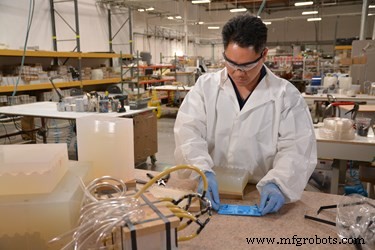
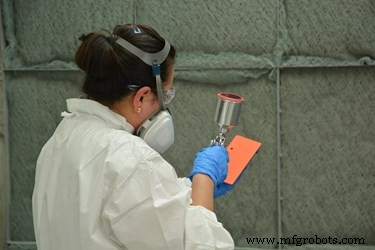
After the cast part is removed from the mold, we apply paint or texture per customer specifications.
For products that need to meet high quality standards, such as urethane housings and enclosures for medical carts or equipment, but don’t need the high volumes injection molding typically services, urethane casting is an ideal fit.
Due to the soft silicone molding process, Stratasys Direct can produce very large parts. Industries like transportation can take advantage of the lack of size restraint to produce large parts for test vehicles. We also provide full finishing and post-processing of casts, including painting and texture, EMI/RFI shielding and micro-welded inserts.
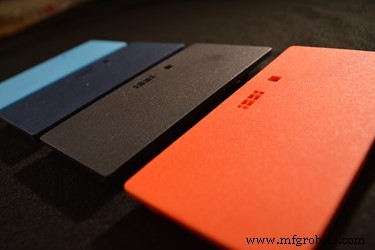
Ultimately, cast urethane production has evolved to be a legitimate production solution for custom, complex parts, early market applications and smaller-volume products.
Interested in ordering cast urethanes? Get a Quote
Industrial Technology
- Sodium Silicate: Enhancing Efficiency and Quality in Casting Production
- Urethane Casting vs. Injection Molding: Choosing the Right Manufacturing Method
- Discover 5 Key Advantages of Urethane Casting for Efficient Production
- Urethane Casting Materials Explained: Silicones, Elastomers, and Rigid Urethanes
- Choosing Urethane Casting: Ideal Applications & Benefits
- Rapid Bridge Tooling via Urethane Casting: Fast, Precise, Cost‑Effective
- Urethane Casting: Advancing Robotics Manufacturing
- Ensuring Quality in Casting Production: Proven Traceability Practices
- Why Low‑Volume Manufacturing Accelerates Custom CNC Innovation
- From Prototypes to Production: Precision CNC Machining for Small Parts