



Reducing CNC Part Production Costs with Advanced Design Strategies
How design affects cost: CNC machining
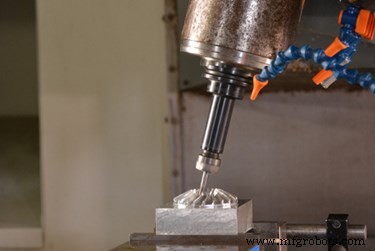
Stratasys Direct Manufacturing utilizes more than 20 state-of-the-art 3-axis and 5-axis milling CNC (computer numeric controlled) machines and lathes. Our CNC machining centers also utilize cutting edge 5-axis machines, which substantially reduce turnaround time by eliminating intermediate setups and enabling undercuts and off-axis features.
CNC machining can be an efficient manufacturing method for production parts and prototyping but may lose cost-effectiveness if key design details and machining capabilities aren’t well balanced. We’ve broken down considerations when getting ready to order CNC machining at Stratasys Direct to help ensure cost-effectiveness and quick-turnarounds.
Top factors that affect cost
CNC machining materials
Materials tend to be the second most influential factor in CNC machining costs. The most cost-efficient machining occurs when you can strike a balance with the cost of the material and its machinability. When it comes to machinability, or the ease with which the material yields to the process, the more machinable the material is, the faster parts can be made and the cheaper the services. Plastic materials and softer metal alloys are typically easier to machine. To determine the inherent machinability of material, you can reference the individual material properties in the CNC machining chart.
CNC machining time and labor
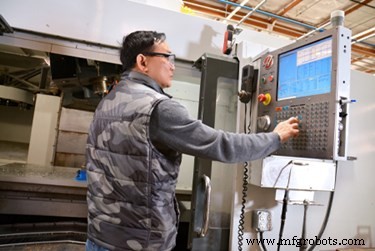
Often the biggest cost factor when utilizing CNC machining for manufacturing is the time it takes to build a part. Complex, large parts require longer machining time, adding to your overall costs.
Complex geometries that require multi-axis machining take longer to produce and more complicated builds often rely on manual fabrication and post-finishing. If a part design includes certain features on each side, often manual reposition, and sometimes new fixtures to accommodate the relocated part, are necessary to access those features. The more labor associated with achieving your design, the more expensive the part becomes.
CNC machining set-up costs go down considerably with higher quantities of parts. In early project stages, it may be advantageous to consider the lower unit price points that arise from higher quantities of machined parts.
CNC part design
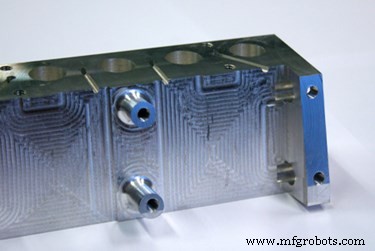
By optimizing your design for fast production with little manual reposition required, you can significantly reduce costs for your machined parts. Specifically, you should consider the following key design features:
- Design features with a width-to-height ratio of less than 4 are ideal. Smaller features require more passes of the machine and are prone to vibrations, making accuracy more difficult and machining time longer.
- Cavity depth tools typically work best when cutting cavities with a depth of up to 2-3 times their diameter. If possible, make the pocket with depth less than 4 times the tool diameter.
- Wall thickness should be between 0.03 - 0.06 in (0.8 - 1.5 mm). Thinner walls require multiple passes with the tool at low cutting depths. Thin features are prone to vibrations, so machining them accurately is challenging and increases the machining time.
- Holes at standard drill bit sizes are fast to accomplish, but non-standard sized holes must be machined using an end mill tool, adding to overall cost and machining time.
- Threads should be designed with a minimum length of 1.5 times and maximum length 3 times the hole diameter.
- Radius inside corners that have a length to diameter of 3:1 or less ensure fewer passes of the mill, no tool changes and less overall machining time.
When trying to reduce costs on a CNC machining order, its best to strike a balance with cheaper material with easy machinability and optimized, standardized design. Ensure all the features in your design are critical for your project or if you can simplify the overall scope. The more complex, the more required from your machinist, the less efficient the solution becomes.
Industrial Technology
- Choosing Between 3D Printing and CNC Machining for Plastic Parts
- Cut CNC Machining Costs: Proven Strategies to Reduce Time and Save Money
- Precision CNC Machining for Custom Parts – Fast, Accurate, Tailored Solutions
- CNC Machining Large Parts: Strategies for Overcoming Size Constraints
- CNC Machining Fixed Costs: Why Tooling Is Key to Accurate Pricing
- 7 Expert Tips for Crafting High-Precision CNC Machined Parts
- CNC Machining Essentials: Key Features & Benefits for Precision Lock Parts
- Preventing Deformation of Aluminum CNC Parts: Proven Strategies
- Reducing CNC Part Production Costs with Advanced Design Strategies
- From Big to Micro: Mastering Small Parts in CNC Metal Cutting