



Why TPU Is the Ideal Choice for Elastomeric Part Design
So, you’re designing a part that requires flexibility and you need to choose a material. You might first spring to your familiar list of thermoplastic elastomers, but don’t forget about thermoplastic polyurethane materials, commonly known as TPU. Depending on your application’s requirements, TPU might be your best option.
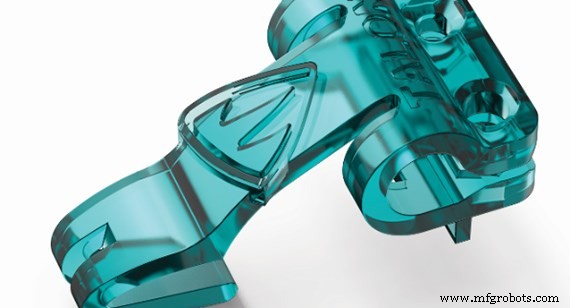 Thermoplastic polyurethane has excellent chemical and abrasion resistance.
What is TPU?
TPU is an elastic thermoplastic material with high abrasion and chemical resistance. Like most elastomers, it’s commonly used for seals, gaskets, and hoses. It can also be found on overmolded plastic parts due to its ability to add grip or dampen vibration. It’s similar to TPE, but offers more durability for parts that will experience wear and tear.
TPU Advantages
The chemical and abrasion resistance of TPU material makes it suitable for applications in rugged environments. For example, gaskets in under-the-hood automotive applications or industrial machinery are often made from TPU since it holds up well when it comes in contact with oil and fuel. The material’s high impact resistance has also made it a popular option for protective smartphone cases and other electronics housings.
Choosing the Right TPU
Chemical composition of the TPU material will vary based on whether it is a polyester- or polyether-based TPU. A polyether-based TPU is generally used when high hydrolysis and microbial resistance is critical or when fluctuating temperatures are present, especially at low temperatures. With many trade names and options on the market, it’s important to read through the material data sheets when choosing TPU—or better yet, contact a resin supplier and discuss your application with an expert. The chart below can get you pointed in the right direction.
| Material Property | Polyester-Based TPU | Polyether-Based TPU |
|---|---|---|
|
Abrasion resistance |
Excellent |
OK |
|
Mechanical properties |
Excellent |
Good |
|
Low temperature flexibility |
OK |
Excellent |
|
Chemical resistance |
Excellent |
Poor |
|
Hydrolysis resistance |
Very Poor |
Excellent |
|
Microbial resistance |
Very Poor |
Good |
TPU and Other Flexible Material Options
Primarily, TPU materials are molded, which offers you a range of material and quantity options. If you’re prototyping a TPU design, 3D printing can be a valuable low-volume solution. Selective laser sintering (SLS) at Protolabs now offers TPU-70A. The powder-based TPU has an elongation up to 350 percent, good chemical resistance, is flexible and smooth, and provides high detail resolution.
Read this design tip to explore elastomers further and learn more about your flexible material options. If you have a need for or have questions if your parts may benefit from TPU, please contact an application engineers at 877-479-3680 or ADMIN@MFGROBOTS.COM, or visit our material comparison guide.
Industrial Technology
- Why Leveling Feet Are Essential for Machine Stability and Workplace Safety
- Unlock the Power of Organic Aloe Vera Powder: Proven Health & Skincare Benefits
- How CNC Machinery Revolutionizes Manufacturing: Accuracy, Efficiency, and Reliability
- How Capping Machines Drive Efficiency & Profit in Modern Manufacturing
- Why Sumitomo Inline Drives Boost Efficiency and Reliability
- Why Manufacturing in the USA Drives Growth: Key Benefits for U.S. Companies
- Why Choose Iron Ductile Pipes: Strength, Durability, and Efficiency
- Why Fanuc Programmable Machine Control (PMC) Is Essential for Modern Automation
- Why Choose the Rexorth A4VG Hydraulic Pump: Key Advantages
- How a Powder Coating Line Enhances Efficiency, Durability, and Cost Savings