



Boost Referrals with Inbound Marketing: A Proven Strategy for Modern Manufacturers
According to HubSpot, 90% of people trust brand recommendations from friends, and 61% of consumers search online before making a purchase. With social media and digital transformation reshaping sales, many businesses are moving beyond traditional word‑of‑mouth.

Below are the key reasons why supplementing referrals with an inbound marketing strategy is essential.
Is Word‑of‑mouth a Good Marketing Strategy?
Word‑of‑mouth has long been a free, organic way for small industrial companies to acquire leads and build brand awareness. It relies on customers sharing their experiences, but it can be slow to spread, may contain inaccuracies, and often lacks credibility.
In contrast, an online strategy gives you control over the brand narrative and provides data‑driven insights to measure results.
Expanding to New Markets Is Challenging
Word‑of‑mouth typically reaches only a narrow circle—clients refer within their industry and region. Relying solely on this channel can pigeonhole your business and limit access to new markets or geographies. If your core industry faces a downturn, your pipeline risks stagnating.
You Have Less Control Over Lead Generation
When you depend on clients to spread the word, lead flow can be erratic, making sales forecasting difficult. A proactive inbound approach offers consistency and empowers you to drive growth.
Case study: CJ Winters, a cold‑root rolling company, achieved an average 113% quarterly growth after revamping its lead‑generation tactics.
Even loyal customers have competing priorities. You know your services best, and your team is uniquely positioned to market them effectively.
Read more: 32 Lead Generation Tips, Tricks, and Ideas
You Lack Data to Optimize Efforts
Tracking user interactions—through your website, emails, social media, SEO, or PPC—is critical for scaling. Word‑of‑mouth alone offers no analytics, making it hard to understand what prospects seek or how they engage.
While customer testimonials are valuable, you need a strategy to collect, analyze, and promote them. Data‑driven insights help refine messaging and prioritize high‑impact channels.
How to Supplement Word‑of‑mouth with Inbound Marketing
The challenge for many companies is turning client testimonials into active marketing assets. Start simple and follow these steps.
1. Add Reviews and Testimonials to Your Website
Send review‑request emails to satisfied customers and feature their feedback prominently on your site. Interview key clients, ask how your solutions solve their problems, and publish the results—with permission, of course.
A Demand Gen Report survey found that 97% of B2B buyers expect vendor websites to provide easy access to content. Showcasing reviews, case studies, or featured work signals expertise and builds trust.
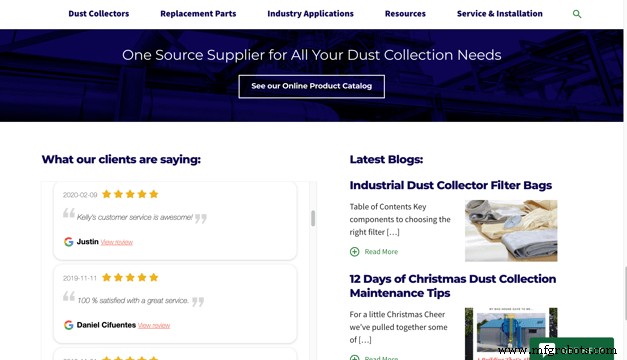
U.S. Air Filtrations, for example, highlights a “What our clients are saying” section on its homepage and About Us page to demonstrate service excellence.
Learn more: The Must‑Haves on Your About Us Page
Consider creating narrative case studies or video testimonials. These formats boost SEO, drive organic traffic, and reinforce your brand’s authority. Incorporate relevant keywords—such as “precision CNC machining” or “injection molding Central Pennsylvania”—to align with buyer searches.
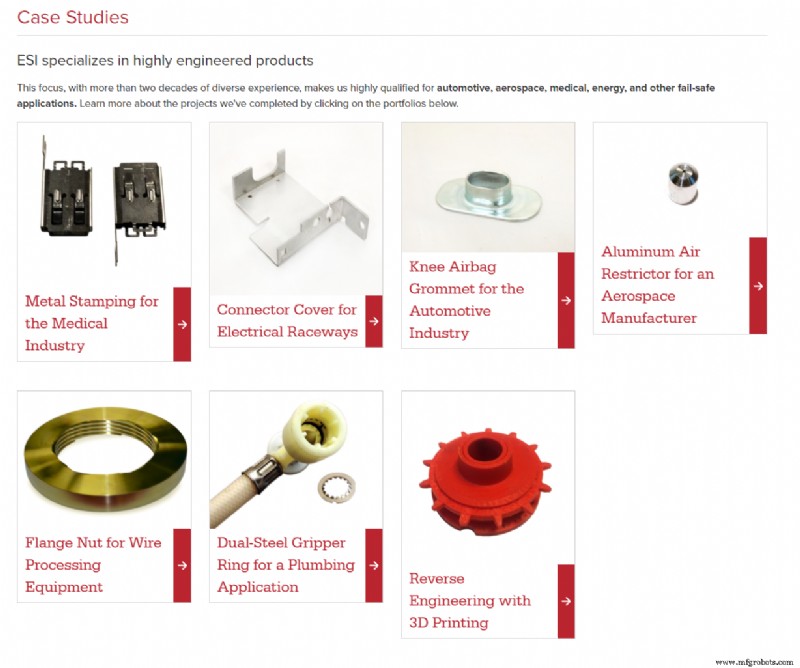
ESI, a custom metal stamping company, published a library of case studies that attract qualified leads.
2. Leverage Social Media
Social platforms—Facebook, Twitter, LinkedIn—are powerful channels for amplifying positive feedback. 20% of millennial buyers begin research on vendor sites, and 17% rely on peer reviews.
Maintain an up‑to‑date Google My Business profile and consistent contact details across all channels. Engaging content sparks word‑of‑mouth and drives discoverability.
Learn more: How Manufacturers Can Write Case Studies and Client Testimonials
3. Enhance Your Online Presence on Industry Directories
Your Thomasnet.com company profile is a goldmine for in‑market buyers. Fill the listing with dynamic content—eBooks, resources, videos—to help prospects solve their challenges.
Although free, a robust Thomasnet profile yields unmatched visibility for manufacturing firms.


Fuel Your Lead Generation with a Multi‑Platform Strategy
Integrating word‑of‑mouth with digital marketing strengthens your customer base and boosts profitability. The manufacturing sector has accelerated its digital adoption; a 2020 industrial survey found that 84% of companies invest more heavily in their websites to stay connected with customers.
Ready to build a tailored digital plan? Contact our team—supported by degreed engineers—to align strategy with your budget and goals.
“I don’t have a sales team on the street. I have Thomasnet.com. It’s an efficient way of getting qualified leads, and my program pays for itself every year.”
Additional Resources:

Industrial Technology
- Circuit With a Switch: A Practical Guide to Basic Electrical Circuits
- Extend Industrial Fluid System Life: Proven Cost‑Saving Component Strategies
- Three Key Route‑Planning Strategies for Large‑Scale Retailers
- Next-Gen Semiconductor Manufacturing: Innovating for the Digital Future
- Key Factors to Consider When Choosing Pump Couplings for Optimal Performance
- How COVID-19 Accelerated Kiosk Adoption Across Industries
- Recession Looms, But Not Imminent: Optimistic Economist Offers Insight
- U.S. Manufacturing Reshoring: Current Trends and Impact
- Accelerated Prototyping for Precise Investment Castings
- Mastering OTA Updates: 5 Common Challenges & Proven Solutions for Industrial IoT