



Harnessing Wired Connectivity: The Role of Ethernet and IoT Protocols in Smart Factory Efficiency
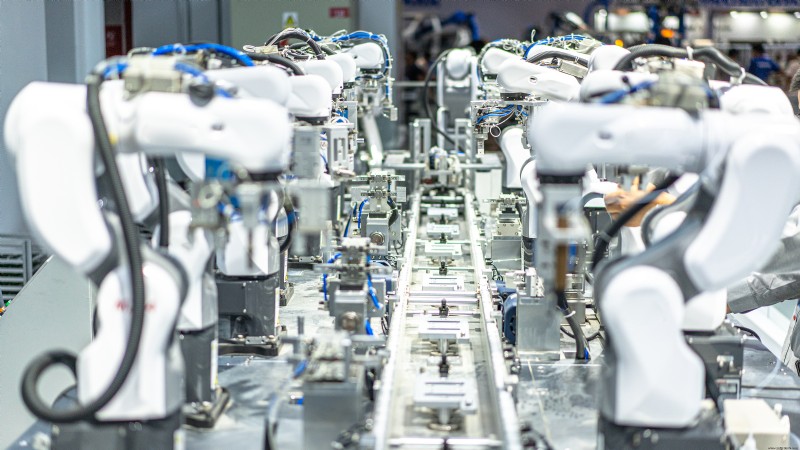
Industry 4.0 is reshaping modern factories, driving digital transformation and smart manufacturing. Interfaces—whether wired or wireless—are the backbone that safely and seamlessly routes data between sensors, actuators, and cloud services, unlocking higher efficiency, reduced costs, and lower carbon footprints.
Think of interfaces as the joints in a body: when they function correctly, everything moves smoothly. Yet many engineers overlook the full potential of today’s interface technologies, especially in the harsh, noisy environments of production lines.
Data flows through a layered stack: Wi‑Fi and Ethernet aggregate information in central hubs, while field‑level protocols such as IO‑Link and RS‑485 deliver real‑time signals to controllers. High‑speed connectivity is essential for cloud‑based analytics that blend historical and live data, and robust security protects against cyber threats and ensures data integrity.
Ethernet is the linchpin of industrial automation. Internally it links sensors and PLCs in resilient, time‑critical networks; externally it connects to cloud platforms at high bandwidth while safeguarding against cyber risks. This dual role demands PHYs that combine low latency, deterministic performance, and compliance with IEC 61000‑4‑x electromagnetic‑compatibility standards.
Industrial Ethernet also powers mission‑critical control loops in printing, milling, and multi‑axis CNC machines, which require sub‑millisecond cycle times and jitter below 1 µs. These stringent requirements drive the design of low‑latency, highly deterministic PHYs and the development of specialized integrated circuits.
Single‑pair Ethernet PHYs based on IEEE 802.3cg extend cable reach to 2 km, enabling long‑reach applications without sacrificing speed or reliability.
Maintaining data integrity amid heat, vibration, and electromagnetic noise is a perennial challenge. IO‑Link addresses this by offering a standardized, bidirectional protocol that brings sensor health data to plant‑level dashboards, enabling predictive maintenance and reducing downtime.
IO‑Link’s backward compatibility and simple three‑wire unshielded cabling make it easy to retrofit existing lines, allowing manufacturers to mix devices from multiple vendors without costly rewiring.
In every automated step, sensors stream real‑time data and actuators respond instantly. PLC modules aggregate these signals, continuously monitor processes, and adjust operations to keep production at peak efficiency.
Microcontrollers cannot directly tolerate the high‑voltage, noisy conditions on the factory floor. Digital isolators, opto‑emulators, and isolated input ICs provide the necessary voltage translation and electromagnetic shielding, ensuring reliable communication between the “brain” and the “brawn” of the plant.
By overcoming these connectivity hurdles, factories can scale automated production, improve uptime, and accelerate the adoption of Industry 4.0 solutions that keep our world running smoothly.
By GigaDevice 06.11.2026
By Marc Biehn, Head of Product Group Industrial Consumer Magnetic Sensing; Sebastian Maerz, Business Developer Magnetic Sensing, Infineon Technologies AG 06.09.2026
By Sifiso Gambahaya, Senior Director of Engineering at Ignion 06.08.2026
CONNECTIVITY, ETHERNET, INDUSTRIAL, INDUSTRY 4.0, IO‑LINK, SMART FACTORY, WIRELESS
Industrial Technology
- 10 Expert Resources for Utility Pole Identification & Numbering Systems
- Understanding Simple Series Circuits: Key Principles and Practical Examples
- Strengthen Your Supply Chain with DVIRC’s Expert Supplier Scouting
- Automation for Small to Medium Manufacturers: Unlocking Efficiency & Profit Growth
- Three Proven Strategies for Service Providers to Drive Genuine Sustainability
- Top 10 Essential Warehouse KPIs Every Manager Must Track
- 5 Proven Strategies for Shippers to Track and Reduce UPS Shipping Costs
- Insulated Hoses: Enhancing Precision & Cleanliness in Semiconductor Fabrication
- UNS Threads Explained: Meaning, Standards, Fit Classes, and Dimension Chart
- Leverage Edge AI to Optimize Operations for Warehouse and Manufacturing Success