



Equipment Tagging 101: Types, Uses, and Strategic Benefits for Asset Management

Facility Management Market Leader
Updated February 23rd, 2025
Table of Contents
- What are Equipment Tags?
- The Two Main Types of Equipment
- Equipment Tagging & Strategic Planning
- Business Functions Supported by Tags
- How to Choose the Right Equipment Tags
- Where to Place Your Equipment Tags
- Industries That Need Equipment ID Tags
- Common Uses for Equipment ID Tags
- Important Considerations When Buying Tags
- Final Thoughts on Equipment Tags
- Frequently Asked Questions
Key Takeaway
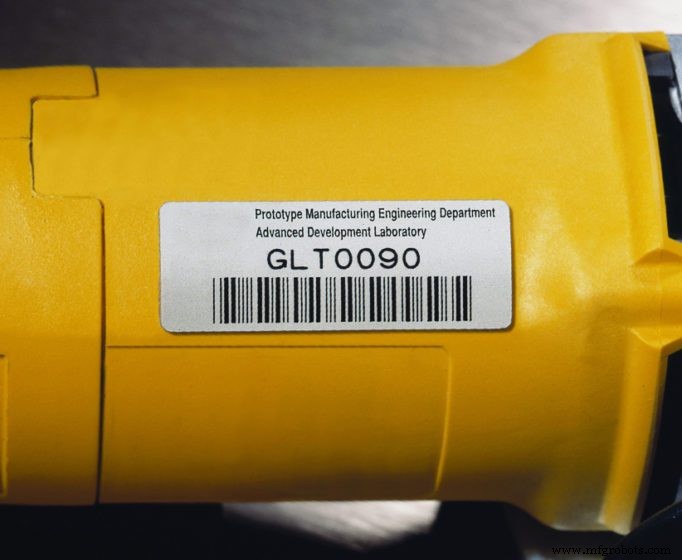
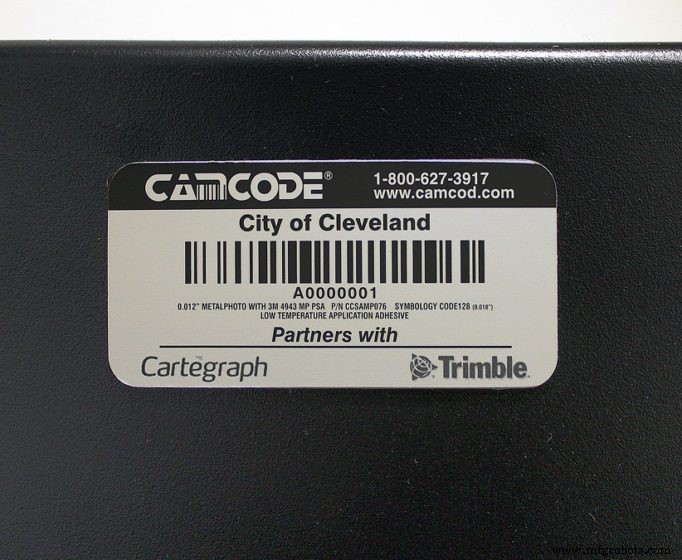
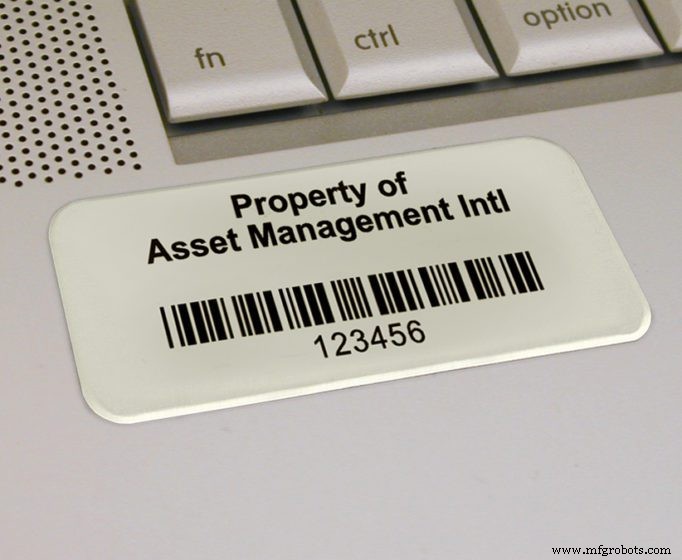
An equipment tag is a barcode label or plate affixed to a device for instant identification and data retrieval. When paired with asset‑tracking software, tags provide end‑to‑end visibility for maintenance, inventory, and compliance.
Tags embed essential data—serial numbers, supplier details, maintenance history, and location—so that each asset can be tracked throughout its lifecycle.
Equipment tags can be fully customized to meet your company’s specific needs, ensuring consistent labeling and efficient asset management.
Want a FREE Asset Management Checklist?
Download our PDF checklist to guide you through every step of a successful tagging project and accelerate your facility management rollout.
The Two Main Types of Equipment
Before you can tag, you need an inventory. Equipment falls into two broad categories:
- Movable equipment—devices that travel between locations (e.g., laptops, portable scanners). Tags help with assignment, inventory, and loss prevention.
- Fixed equipment—assets that remain in a single location (e.g., HVAC units, industrial machinery). Tags enable mapping, real‑time tracking, and maintenance planning.
Collecting detailed data over time informs buying decisions, replacement timing, and cost‑optimization strategies.
Equipment Tagging & Strategic Planning
Implementing an effective tagging system requires a thoughtful approach:
- Understand your equipment—review regulatory, vendor, and operational requirements that shape label format, barcode type, and material.
- Procure quality labels—choose substrates that withstand your environment, whether harsh chemicals, extreme temperatures, or high humidity.
- Apply labels uniformly—standardize placement rules so that each tag is visible and scannable in all operating contexts.
- Review periodically—adjust processes as business needs evolve to avoid inefficiencies.
Benefits of a robust tagging system include:
- Locate equipment quickly—instant access during audits or inventory cycles.
- Automate tracking—eliminate manual counts and reduce labor costs.
- Enhance visibility—data-driven decisions across maintenance, finance, and operations.
- Extend asset life—track performance, predict failures, and decide between repair or replacement.
- Support compliance—meet stringent industry standards with clear, tamper‑evident labeling.
Choosing the Right Tag for Your Application
Camcode offers a range of tags tailored to different environments. Below are our most popular options:
Metal Foil Labels
- Durable .003″–.005″ anodized aluminum.
- Readable barcode and print throughout the asset’s life.
- Resistant to chemicals, UV, extreme cold, and heat.
- Ideal for healthcare, education, government, and manufacturing.
Rigid Metalphoto Tags
- Ultra‑durable, .020″ anodized aluminum (optional thicknesses .008″–.063″).
- Attach via holes or pressure‑sensitive adhesive.
- Survives chemicals, abrasives, UV, and temperatures for >20 years.
- Common in healthcare, oil & gas, telecom, and chemical processing.
Premium Polyester Inventory Labels
- Ultra‑thin, 2.0 mil gloss white polyester with 1.0 mil clear laminate.
- Adheres to high/low surface energy plastics and slightly textured surfaces.
- Resists cleaners, mild acids, oil, and water; lifespan up to 2 years.
- Best for indoor office environments across all industries.
Tamper‑Evident Polyester Labels
- Same construction as Premium Polyester, but reveals a “VOID” message when removed.
- Protects sensitive equipment from unauthorized tampering.
- Durability up to 2 years.
Destructible Vinyl Inventory Labels
- 2.0 mil white cast vinyl with 0.8 mil pressure‑sensitive adhesive.
- Breaks apart when removed to deter tampering.
- Resists cleaners, acids, oil, and water; 2‑year lifespan.
Two‑Part Polyester Labels
- Primary label stays on the asset; a detachable tab attaches to records.
- Same material and durability as Premium Polyester.
- Ideal for audit trails and documentation.
Removable Inventory Tags
- 3.5 mil biaxially‑oriented polypropylene.
- Designed for short‑term labeling with repositioning capability.
- Resists cleaners, acids, oil, and water; 2‑year lifespan.
- Suitable for indoor or outdoor short‑term use.
For more details, refer to our Expert’s Guide to Inventory Tags.
Optimal Placement of Equipment Tags
Place tags in the most visible, unobtrusive spot—usually the front or top of the equipment. Specific recommendations include:
- Desktop PCs – front or top of the tower; side if necessary.
- Laptops – top of the closed unit.
- Scientific instruments – front or top; otherwise bottom or back.
- Ceiling projectors – bottom, visible from floor level.
- Monitors – front.
- Large appliances – front or back right side.
- General electronics – back or bottom right side.
- Mirrors – back right side.
- Desks – under the right drawer.
- Tables – under the right side.
- Chairs – under the right side.
Industries That Benefit from Equipment ID Tags
- Healthcare – safeguards expensive, time‑sensitive equipment and supports calibration schedules.
- Education – tracks shared AV gear, preventing double‑booking and redundancy.
- Government – optimizes use of public‑service equipment and simplifies maintenance programs.
- Oil & Gas – monitors 24/7 operations and manages spare parts for critical infrastructure.
- Utilities – withstands harsh outdoor conditions for long‑term asset visibility.
- Telecom & Cable – supports field‑service inventory and quick fault resolution.
- Manufacturing – tracks heavy‑duty machinery, parts, and maintenance schedules.
- Warehouse – manages equipment used for inventory handling and logistics.
Why Metal Labels Are a Top Choice
Metal labels offer unmatched durability for harsh environments. Key factors when selecting metal tags:
- Compatibility – match the substrate to environmental demands (e.g., XHT labels withstand up to 1200°F for ovens).
- Attachment Method – rigid tags need flat surfaces and adhesives or mechanical fastening; foil tags can adhere to textured or curved surfaces.
Choosing the right tag ensures legibility and longevity, minimizing costly replacements and audit delays.
Frequently Asked Questions
Questions about implementation, maintenance, and compliance are answered in our comprehensive FAQ section.
Industrial Technology
- Selecting the Ideal Solid Carbide Round Tool for Peak Machining Performance
- Contactor vs. Relay: Key Differences Explained for Engineers
- Medical-Grade Materials: Driving Innovation in COVID-19 Device Development
- Electrochemical Machining (ECM): Kinematics, Dynamics & Tool Design Demystified
- Key Advantages of Crosshead Engines for Power and Efficiency
- Four Proven Strategies to Eliminate Counterfeit Aircraft Parts
- Band‑Stop Filters: Design, Twin‑T Implementation, and Notch Frequency Analysis
- Shaft Keys: Types, Sizes, Materials, Design Formulas & Calculations
- Top 4 Power Sources & Control Systems for Modern Production Facilities
- NJ Manufacturing News: NNMI Highlights Innovation