



Flexible Flat Cables: Elevate Your Designs with Lightweight, High‑Performance Connectivity
Do you want to replace bulky wiring with a lightweight, highly flexible solution? Flexible flat cables (FFC) let designers achieve compact, robust connectivity in tight spaces. They’re the go‑to choice for smartphones, laptops, automotive harnesses, and industrial automation where space and reliability are paramount.
What Are Flexible Flat Cables?
As the name implies, flexible flat cables are thin, flat electrical interconnects that can bend without losing performance. They belong to the family of flexible electronics or flex circuits and are commonly found in high‑density consumer electronics. While the term flexible printed circuit (FPC) is sometimes used interchangeably, FPCs actually involve circuitry printed on a flexible substrate; FFCs are simply the wire connections themselves.
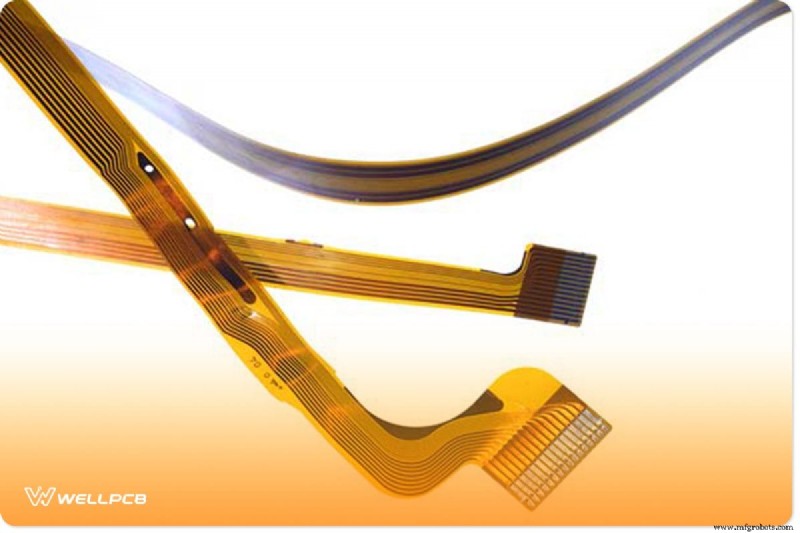
Figure 1 shows three ribbons of flexible flat cables, illustrating the compact, parallel‑wire layout that delivers consistent electrical characteristics.
Key Features of Ultra‑Flexible Flat Cables
- Unmatched Flexibility: Ultra‑flexible copper conductors with silicone or tin coatings enable a minimum bend radius of 0.25 in, ideal for cramped enclosures.
- Durability: Designed for up to 10 million flex cycles, FFCs maintain integrity even under repeated motion.
- Harsh‑Environment Tolerance: Operate from –65 °C to 260 °C and resist salt spray, steam, and chemicals, making them suitable for clean rooms and vacuum systems.
- Fire‑Resistant: Meets UL‑94 vertical flame standards, providing an extra layer of safety for high‑temperature applications.
- Clear, Robust Insulation: High‑quality dielectric materials keep conductors insulated without adding bulk.
These attributes make FFCs the preferred choice when reliability and space savings are critical.
Common Specifications
Exposure Length
The exposed length at each termination where the cable connects to a board or connector.
Pitch
Pitch is the center‑to‑center distance between adjacent conductors. Typical values are 1 mm or 0.5 mm, but the pitch can be customized to meet specific design requirements.
Types
Most manufacturers offer two primary styles: Type A (or Type 1) where all terminations face the same side, and Type D (or Type 2) where terminations alternate sides. This distinction influences how cables are routed in a circuit.
Conductor Size
Refers to the cross‑sectional area of each wire, directly affecting current‑carrying capacity and impedance.
Stiffener
Some FFCs include a thin stiffening layer on the exposed end to ease insertion into connectors, reducing insertion force and preventing damage.

Advantages Over Traditional Round Cables
- Reliability: Parallel conductors eliminate many wiring errors common in bundle assemblies.
- Weight & Strength: Lighter than twisted‑pair or cable‑bundle designs while maintaining mechanical stability.
- Space Efficiency: Minimal bulk allows placement in tight enclosures.
- Consistent Electrical Parameters: Fixed geometry yields uniform inductance, impedance, and minimal crosstalk.
- High Current Capacity: Large surface area improves heat dissipation, enabling higher currents for the same conductor size.
- Low Skew: Signals travel in parallel, minimizing timing differences.
- High‑Density Interconnections: More conductors can be packed into the same footprint.
- Ease of Use: Flexible enough to be routed in almost any shape.
Typical Applications
Flexible flat cables are ubiquitous across industries:
- Consumer electronics – scanners, copiers, LCDs, DVD players, and gaming consoles.
- Automotive and aerospace harnesses.
- Industrial automation, pulp & paper, food & beverage processing.
- Medical diagnostic equipment.
- Semiconductor manufacturing and packaging.
WellPCB offers custom FFC assembly services tailored to your project’s needs, from prototype to mass production.

Conclusion
When space, weight, and reliability are non‑negotiable, flexible flat cables outperform traditional round cables. Their durability, consistent performance, and ease of integration make them the smart choice for next‑generation designs. Contact WellPCB today to discuss how our FFC solutions can bring your product to market faster and more efficiently.
Industrial Technology
- Low‑Volume PCB Assembly: A Complete Guide to Quality, Cost Savings, and Production Success
- Revolutionizing Distribution Centers for the Modern Omnichannel Era
- Challenges of Updating Paper-Based Work Instructions in Modern Industries
- Effective Strategies to Reduce Creep and Stress Relaxation in Elastomeric Parts
- Essential Mechanical Properties Every Mechanical Engineer Must Master
- 18 Game-Changing Microsoft Research Projects Shaping Tomorrow
- Navigating the Challenges of Aluminum Welding
- Your Expert Guide to Choosing the Right Barcode Scanner
- LoPy: Comprehensive Guide to Features, Pin Configuration, and IoT Applications
- Boost Your CNC Machine Shop's Revenue: Proven Sales Strategies