



Edge Connector Beveling – Gold Finger Plating for Reliable PCB Connections
In today’s mobile‑first world, seamless data transfer between circuit boards is essential. Gold‑finger edge connectors provide the reliable, low‑resistance contact needed to keep devices like sound cards, graphics cards, and motherboards communicating smoothly.
Why Gold Plating Is Essential for Edge‑Connector Fingers
Every time a board is inserted or removed, the contact pads endure constant mechanical stress. A durable, corrosion‑resistant surface is therefore critical to prevent wear, failure, and costly downtime. Gold meets these demands thanks to its unparalleled electrical conductivity, resistance to oxidation, and excellent compatibility with other metals when alloyed with nickel or cobalt.
Multiple studies confirm that gold has one of the lowest electrical resistances of any metal and remains inert even when exposed to harsh environments. These properties make it the industry standard for high‑performance, long‑life connectors.
Materials Commonly Used to Manufacture Gold Fingers
Gold fingers are typically produced from flash gold—a hardened, high‑purity alloy that can withstand the insertion forces required in industrial and consumer electronics. Precise specifications are vital: the plating thickness must fall within the 3 µm to 50 µm range to balance durability with manufacturability.
Flash gold’s high hardness allows it to endure repeated actuation cycles—often exceeding 1,000 insertions—while remaining easy to solder. This combination of strength and workability has made flash gold the preferred choice for manufacturers worldwide.

Limitations of Gold‑Finger Technology
Gold‑plating is a surface‑level process that requires precise electroplating setups. Consequently, many manufacturers limit finger lengths to about 40 mm, with longer or custom sizes demanding more complex production steps.
Additional constraints include the need for copper‑free inner layers to avoid exposing bare copper during beveling. In flexible PCBs, the minimum separation between the top and bottom layers should not exceed 150 µm, and the overall length should remain under 40 mm to maintain structural integrity.
When finger lengths deviate from the standard, misalignment can occur, compromising electrical continuity and mechanical fit.
Primary Applications of Gold Fingers
Gold‑finger edge connectors serve as the primary contact points between adjacent PCBs. Their key benefits include:
- Edge Connector Beveling – facilitates the integration of special adapters and modular enhancements.
- Interconnection Points – enables reliable signal transfer via ISA, AGP, PCI, and other slots when a secondary PCB connects to a motherboard.
- External Connections – supports robust contacts in industrial machinery and automated systems.
What Is an Edge Connector?
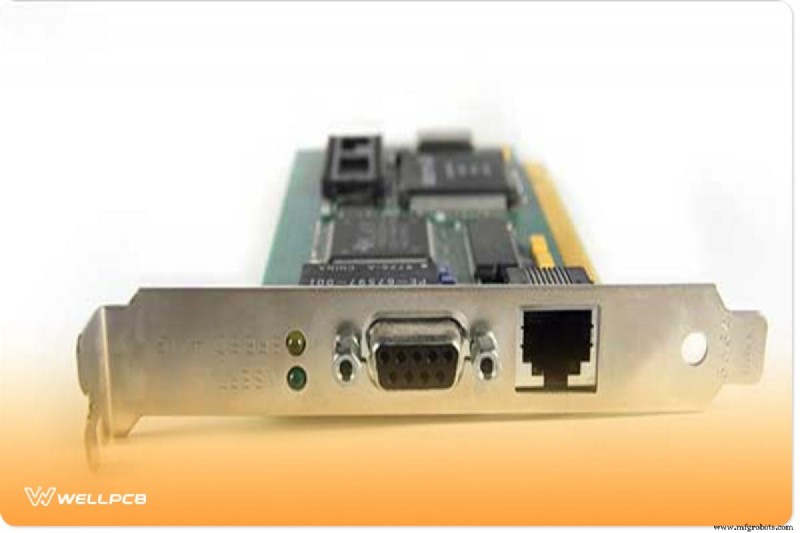
An edge connector is the peripheral of a PCB designed to mate with a matching socket. Typically, it features continuous metallic tracks that ensure low‑resistance contact. Edge connectors are favored for their cost‑effectiveness, robustness, and simplicity.
Beveling the Edge Connector
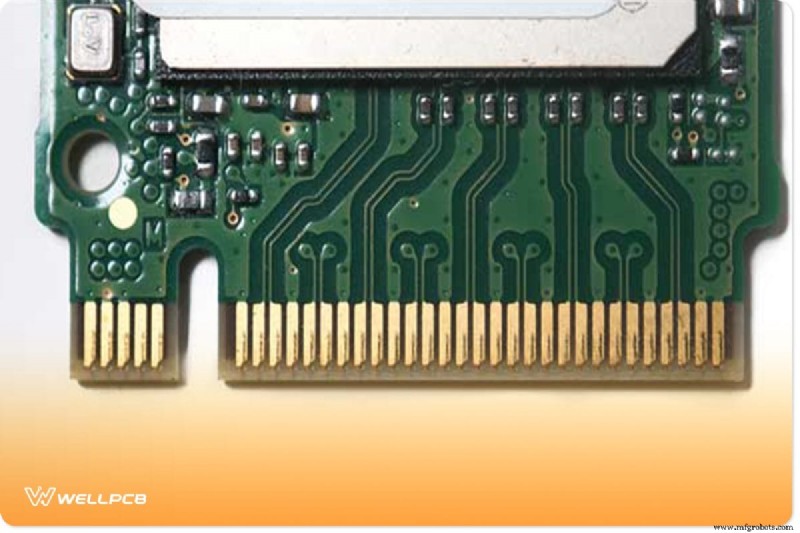
Beveling involves trimming a square edge to a sloped profile, usually between 30° and 45°, to improve insertion ease and alignment. This step is performed after the solder mask is applied but before the final surface finish. Proper beveling ensures that gold fingers snap into place securely, reducing the risk of misalignment or partial contact.
Guidelines, Standards & Regulations for Gold Fingers
The Association for Packaging and Interconnection Technologies (APIT), formerly IPC, publishes the IPC‑7221 standard that governs gold‑finger manufacturing. Key requirements include:
- Thickness – 3 µm to 50 µm.
- Visual Inspection – edges must be clean, smooth, and free of defects.
- Chemical Composition – a minimum of 10 % cobalt in the alloy.
- Adhesion Test – tape testing to verify gold adhesion to the substrate.
Conclusion
Gold‑finger edge connectors remain a cornerstone of high‑reliability electronic assemblies. Their resistance to corrosion, superior conductivity, and proven durability make them indispensable, especially in precision environments. While certain production challenges exist—such as size limitations and stringent plating requirements—industry standards ensure consistent quality. Armed with this knowledge, designers and manufacturers can confidently select the optimal gold‑finger solutions for their applications.
Industrial Technology
- Get Prepared: Essential Strategies for Staying Safe and Organized as Hurricane Season Approaches
- The Best CNC Machining Designs We Admire
- How to Build an RGB LED Controller Circuit: Principles & DIY Guide
- Japanese Steel Quality Scandal Shakes Global Supply Chains
- Mastering Industry 4.0: Proven Steps to Future-Proof Your Business
- Understanding Wire Saw Guide Rollers: Key Role in Precision Cutting
- Flexible Polyurethane (FPU 50): High-Impact, Versatile 3D Printing Resin
- Build a High‑Quality DIY Digital‑Analog Converter: Complete Step‑by‑Step Guide
- Robotics & Automation: The Key to Solving Labor Cost and Staffing Challenges for Small & Medium Manufacturers
- Parallel Resistor–Capacitor AC Circuits: Analysis, Impedance, and Ohm’s Law