



Expert Guide to PS4 Controller PCB Design, Components, and Purchasing
In this comprehensive guide, we break down the DualShock 4’s printed circuit board (PCB)—from its early iterations to the latest revisions, detailing key components, wiring strategies, and how to source or fabricate replacements.
Understanding the DualShock 4 PCB Architecture
The DualShock 4, released in 2013 as Sony model CUH‑ZCT1, is a wireless controller that connects to PlayStation 3 and 4 consoles via a micro‑USB cable. It features a headphone jack, mono stereo speaker, and a 2‑point touchpad—all routed through the PCB.
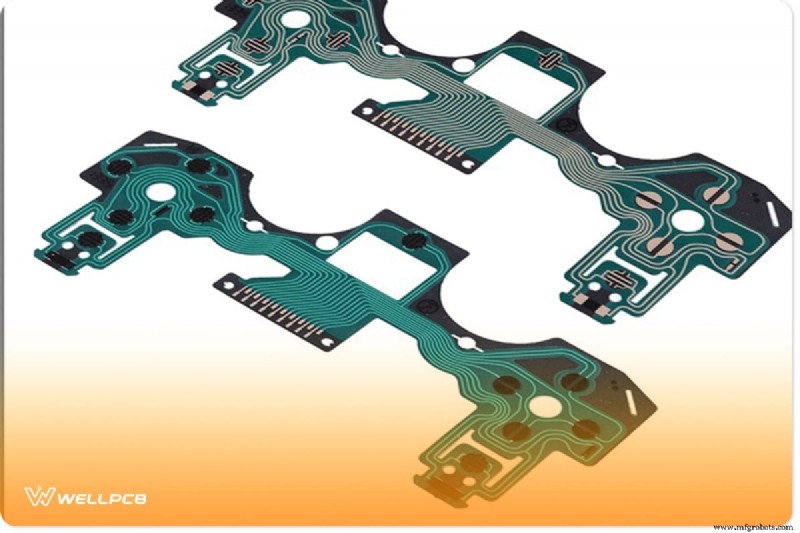
While the console itself uses standard PCBs, the controller relies on a proprietary, flexible ribbon‑like board that combines a lightweight, fiberglass‑like substrate with a protective solder mask and conductive copper layers. This structure allows the controller to be compact yet robust enough for intense gaming sessions.
Core PCB Construction
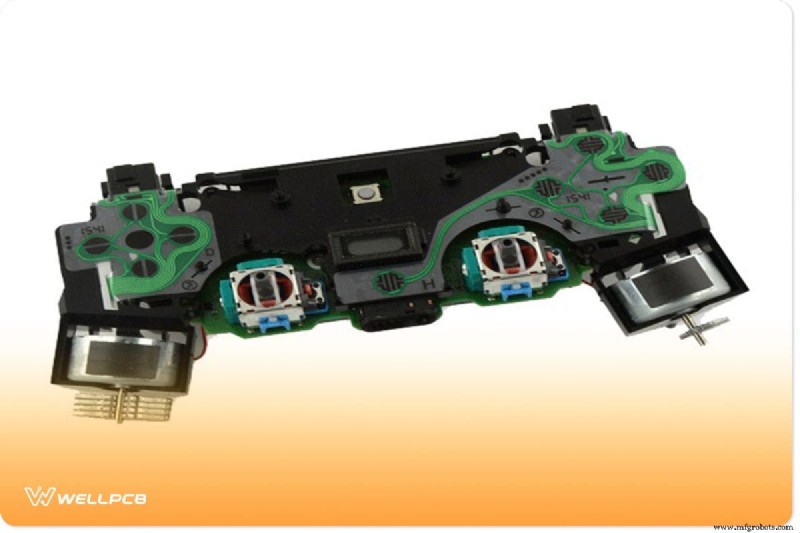
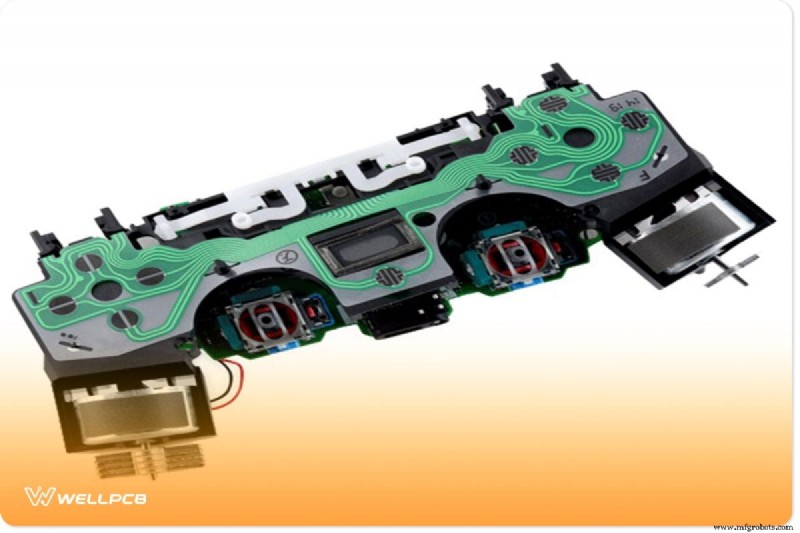
The PCB is built in two stacked panels: the main board houses the processor, analog stick potentiometers, USB port, battery connector, and heat sink; the daughter board contains the button matrix, triggers, and touchpad. Conductive rubber plates beneath each button complete the circuit when pressed, enabling reliable input transmission.
Two PCBs are positioned to maintain ergonomic button placement and ensure consistent signal integrity across the controller’s surface. The design also incorporates a green LED for normal operation and a red LED that illuminates when battery levels fall below 10 %.
Evolution of DualShock 4 PCB Variants
Over the years, Sony released seven distinct PCB variants, each improving upon the last in terms of manufacturing efficiency and feature set. Below is a quick reference:
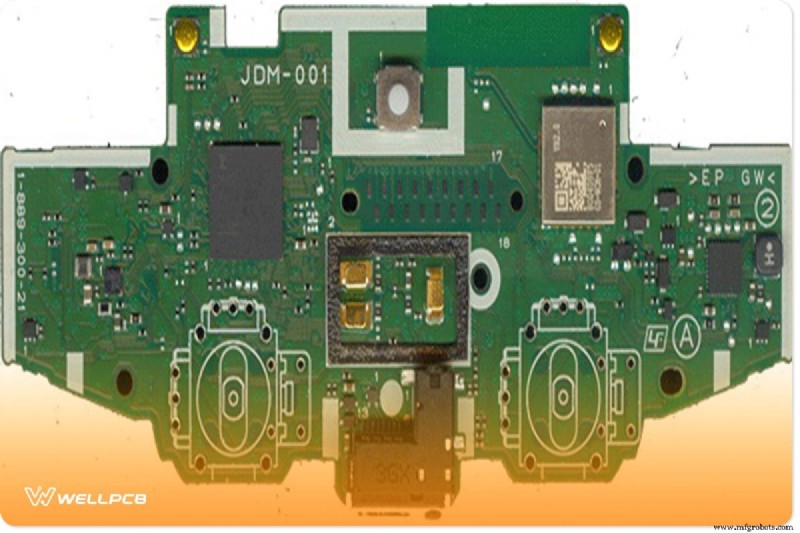
JDM‑001 (Launch Version)
Found in green or blue, the JDM‑001 board is the most detailed. Button switches on the D‑pad, cross, circle, square, and triangle are directly grounded. Left‑1 and Right‑1 triggers connect to a 3.2 V line; Left‑2 and Right‑2 require a PWM signal.
JDM‑011
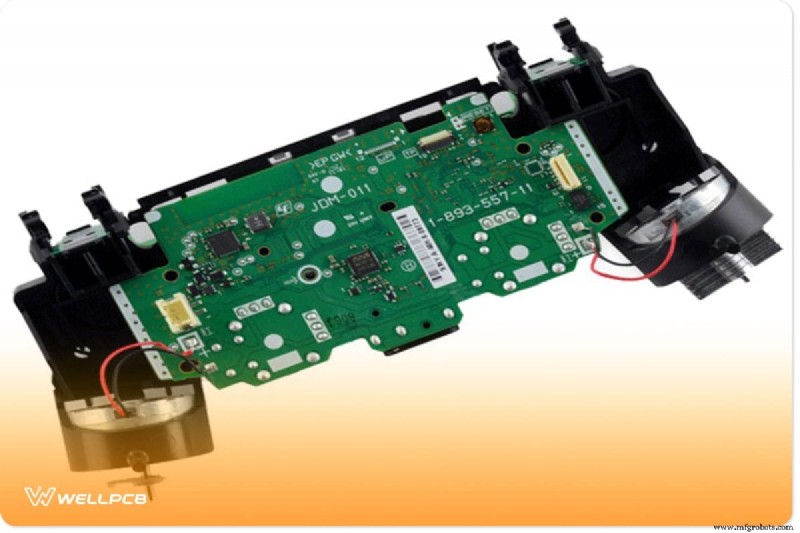
Smaller than JDM‑001, this variant repositions a few components and redesigns the USB/LED daughter board with fewer connections, making direct replacement more difficult.
JDM‑020
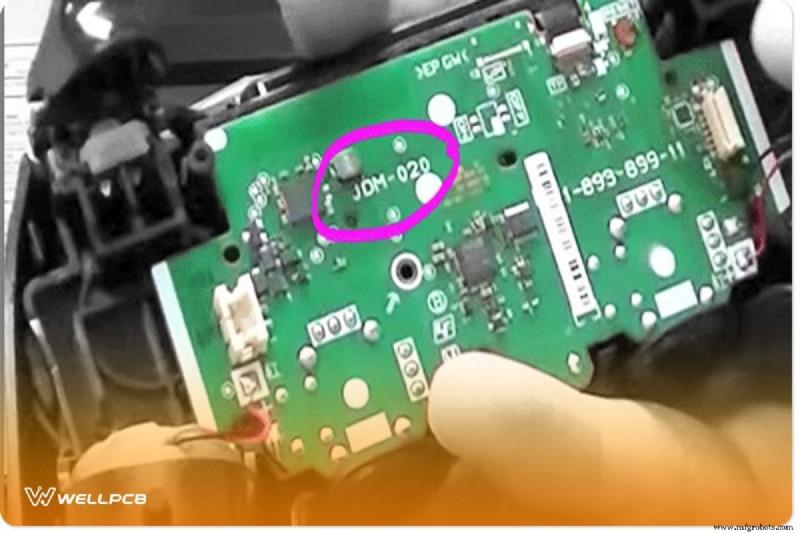
Current production model for the standard PS4. It replaces the Fujitsu core with a Freescale ARM processor and introduces blind vertical interconnect access (vias) for cleaner signal routing. Vias for X and triangle buttons are on the board’s underside; circle and square use top‑side vias. The daughter board now mounts on the main board’s sides rather than the center.
JDM‑030
Designed for the slim PS4, the JDM‑030 features a single‑PCB daughter that attaches to the main board’s top‑left corner. Shell and housing were also refined for slimmer profile.
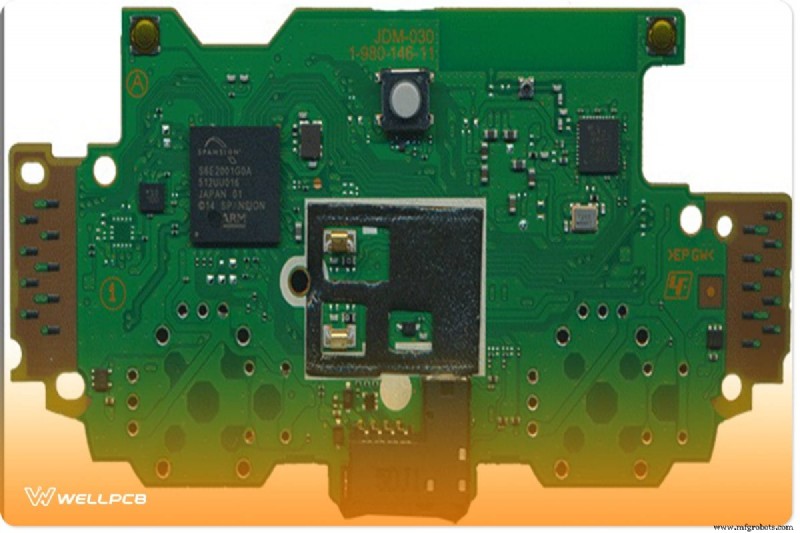
JDM‑040, JDM‑050, JDM‑055
Minor revisions that relocate button vias to the top‑right side, allowing any ground line to be used for button contacts.
Key PCB Components and Functions
Regardless of revision, the DualShock 4’s PCB incorporates standard electronic parts—resistors, capacitors, transistors—paired with specialized components that translate user input into signals the console can process.
Typical modules include:
- Button, Trigger, and D‑pad Switches – Conductive pads that close circuits upon press.
- Analog Stick Modules – Each stick comprises a sensor wheel, housing, springs, tactile button, and plastic shaft. One stick connects to the daughter board, the other to the main board.
- Battery Holder – A standard plastic holder wired to the main PCB via a plug.
- Lightbar – A glass‑encased LED strip attached via a cable to the PCB.
- Mounting Plate – Provides structural support between the PCB and controller shell.
- Rumble Motors – Two motors and their housings deliver haptic feedback.
- Speaker System – Includes a speaker and driver circuit for audio output.
- Touchpad – Positioned atop the daughter board for gesture input.
- USB Port & PCB – Custom‑fabricated to fit the controller, yet uses USB‑standard components for charging and data transfer.
- Cooling Fan – Helps dissipate heat during prolonged use.
- Bluetooth Antenna – Enables wireless connectivity.
- ARM Processor – The controller’s “brain,” handling all internal logic.
Choosing the Right PCB and Parts
When sourcing or fabricating a DualShock 4 PCB, consider the following criteria:
- High‑Tolerance Standards – The board must endure repeated button presses and analog stick movements.
- Quality Components – Use parts from reputable vendors to ensure longevity.
- Reliable Customer Support – A trustworthy supplier can resolve issues and provide replacement parts quickly.
- Fast Delivery – Timely shipping reduces project downtime.
Because Sony does not sell PCB components in isolation, third‑party manufacturers are the primary source for authentic parts.
Automated PCB Fabrication for Controllers
Modern PCB assembly lines can produce DualShock 4‑compatible boards with minimal manual intervention. By feeding raw materials into a robotic router and laser scribing system, manufacturers can achieve consistent quality and scalability.
Such automation ensures that every board meets Sony’s specifications for signal integrity, thermal management, and mechanical durability.
Conclusion
Whether you’re repairing a faulty controller or building a custom DualShock 4, understanding the PCB’s architecture, component layout, and sourcing strategy is essential. Our expertise in PCB design and fabrication can help you select the right parts and streamline production.
Contact us today for reliable PCB components and manufacturing solutions that keep your gaming experience seamless.
Industrial Technology
- AI Now Maps Global Informal Settlements from Low-Resolution Satellites
- Design for Manufacturability (DFM): A Comprehensive Guide to Cost‑Effective Production
- Mastering 2021: Proven Marketing Strategies for Manufacturing Success
- Unlocking Oil & Gas OEM Growth: How IIoT Boosts Efficiency & Revenue
- AI Predicts Movie Attendance by Analyzing Trailers with Collaborative Filtering
- Zero Trust: The Ultimate Defense for IoT Device Security
- How IoT Is Transforming Retail Supply Chains for the Holiday Season
- Comprehensive Review of the Intermec SR61 Rugged HD/DPM Handheld Scanner
- Key Criteria for Selecting a Trusted Urethane Manufacturing Partner
- 4 Key Spare Parts Every SCM Woodworking Machine Needs