



Boxcapiel Tannery Achieves Zero Liquid Discharge with HRS Heat Exchangers
Zero Liquid Discharge (ZLD) is a cutting‑edge waste‑management technology that converts industrial liquid streams into clean, reusable water while leaving behind only a small, often valuable, solid residue. It is especially effective for industries that produce complex, hard‑to‑treat wastes.
Boxcapiel, a leading Spanish leather producer based in Salinas near Alicante, specializes in turning animal skins into high‑quality leather for footwear, upholstery, car interiors and more. Stricter environmental regulations forced the company to abandon its legacy waste‑treatment methods, which were no longer economically viable.
Upon discovering an existing HRS ZLD system in the area, Boxcapiel engaged HRS Heat Exchangers to evaluate the feasibility of implementing a bespoke solution at its plant.
The design of an effective ZLD system begins with a precise analysis of the wastewater: composition, flow rates, and chemistry. HRS conducted laboratory studies followed by a pilot‑scale trial on-site, ensuring the final design would meet performance targets.
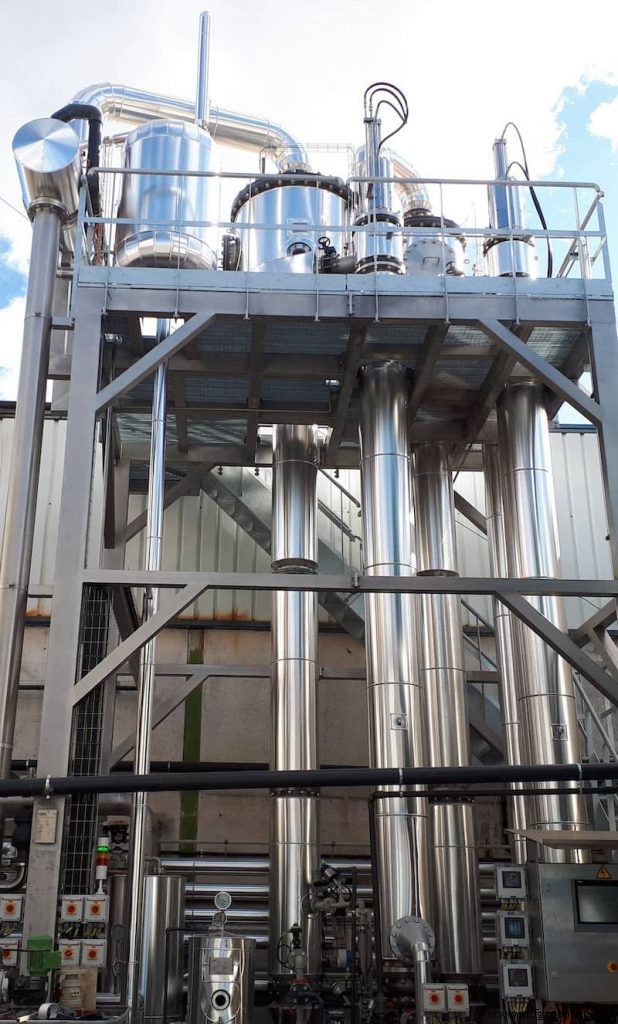
Armed with accurate data, HRS engineers engineered a full‑scale ZLD evaporation system around the patented HRS Unicus Series of reciprocating scraped‑surface heat exchangers. Traditional ZLD approaches rely on vapor‑compression evaporation, typically recovering about 95% of wastewater as distillate. Remaining concentrate is further processed to produce solid by‑products.
To reduce energy consumption, the system employs multi‑effect evaporation: steam from one stage powers the next, lowering boiling points and enabling successive stages of concentration. The concentrated stream is then cooled to induce salt crystallisation in specially designed tanks. Crystals are separated, and the remaining supernatant is recirculated to the second evaporator.
Both evaporation and cooling steps tend to foul equipment. HRS Unicus scraped‑surface evaporators maintain thermal efficiency and mitigate fouling in real time, allowing continuous operation without scheduled downtime.
The installed ZLD plant delivers clean water for Boxcapiel’s tanning processes and produces a solid residue that can be disposed of conventionally or monetised as a valuable by‑product.
With HRS’s ZLD solution, Boxcapiel now meets stringent environmental standards, enhances operational sustainability, and preserves its profitability as Spain’s premier leather manufacturer.
Contact HRS Heat Exchangers for expert advice on ZLD and advanced heat‑transfer technologies.
Email: [email protected]
Website: www.hrs-heatexchangers.com
Industrial Technology
- Key Aerospace Supply Chain Challenges Every Stakeholder Should Know
- Master Lean Principles & Tools: Boost Efficiency & Reduce Waste
- 5 Leading Causes of Wire Feeding Problems in Welding – Diagnose & Resolve Quickly
- Preventing Bow & Twist Problems in Printed Circuit Boards
- Understanding and Preventing Conductive Anodic Filament (CAF) in PCBs
- Mastering PCB Electromagnetic Interference: Strategies for Reliable Design
- 5 Proven Strategies to Reduce Hazardous Chemical Waste Safely
- 8 Proven Strategies to Cut Manufacturing Waste and Boost Efficiency
- Managing Construction Debris and Waste: Best Practices for Sustainable Building
- Common PCB Design Challenges and How to Avoid Them