



Just‑in‑Time Management: A Manufacturer’s Blueprint for Lean, Cost‑Effective Inventory
 What Is Just‑in‑Time Management in Manufacturing?
Just‑in‑Time (JIT) management is a production strategy that aligns manufacturing output tightly with actual customer demand, eliminating over‑production, excess inventory, and unnecessary work‑in‑process.
By minimizing stock levels, JIT reduces supply‑chain costs, boosts productivity, and enhances quality—research shows up to a 75% improvement in inventory control and over 25% in productivity.

Lean, Throughput, and JIT: How They Differ
Although often conflated, Lean manufacturing focuses on eliminating non‑value‑added steps to deliver customer value; Manufacturing throughput prioritizes meeting volume targets; JIT zeroes in on producing only what is needed, when it is needed.
JIT can stand alone or serve as a core component of a Lean strategy.
Lean’s core principle—each step must add customer value—complements JIT’s efficiency gains by eliminating inventory waste.
Traditional vs. JIT Manufacturing
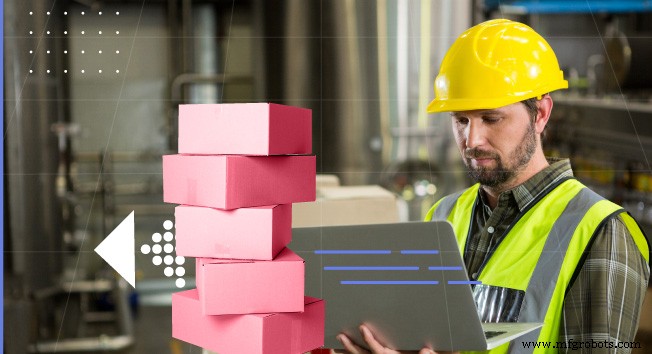
Traditional manufacturing relies on forecasted demand, bulk production, and large work‑in‑process and finished‑goods buffers—often called “Just‑in‑Case” manufacturing. This model leads to extended lead times and excess inventory.
In contrast, JIT employs visual signals such as Kanbans to pull production in sync with real‑time customer orders, slashing lead times from weeks to hours and eliminating surplus stock.
Why JIT Matters for Manufacturers
1. Accurate Forecasting
JIT enables data‑driven inventory decisions, allowing manufacturers to forecast needs precisely and respond to demand shifts swiftly.
2. Reduced Over‑Production & Under‑Stocking
Only what is required is produced, eliminating waste from excess stock and ensuring the right quantity arrives at the right time.
3. Better Supply‑Chain Control
JIT tightens control over planning and forecasting, enabling rapid adaptation to changing customer needs.

4. Waste Elimination
By producing only what is ordered, JIT virtually eliminates obsolete or unsold inventory.
5. Lower Overhead Costs
Reduced storage and inventory expenses free up capital, lowering overall operating costs.
6. Faster Response Time
JIT shortens cycle times, reducing the need for rework and accelerating time‑to‑market.
7. Frees Working Capital

Because inventory is kept to a minimum, manufacturers can reallocate capital to growth initiatives.
The JIT Manufacturing Checklist
Effective JIT requires disciplined processes, clear structures, and defined roles. Below is a checklist to guide implementation:
- Adherence to standardized processes across all functions
- Elimination of defects and associated risks
- Small, manageable lot sizes
- Balanced plant load to maintain flow
- Controlled, limited batch sizes for material and product movement
- Cross‑trained, multi‑skill workers
- Real‑time visibility through visual controls
- Accessible designs and process documentation
- Continuous streamlining of material flow
- Cellular manufacturing setup
Potential Risks of JIT Manufacturing

1. Lack of Inventory Buffer
Without a safety stock, production can stall if suppliers miss a delivery, jeopardizing customer commitments.
2. Supplier Proximity
Success depends on nearby suppliers or those capable of rapid, on‑demand deliveries; otherwise small orders may be impractical.
3. Limited Time‑Frame Control
Dependence on supplier lead times can delay order fulfillment, risking customer dissatisfaction.
4. Intensive Planning Requirements
JIT demands close monitoring of sales trends and precise inventory planning to align supply with variable demand.
5. Need for Automation
Manual processes can become bottlenecks; highly automated production is essential for timely material flow.
AI’s Role in Modern JIT Manufacturing
Data‑centric analytics now reshape every stage of production—from raw‑material use to final output—making perpetual inventory storage obsolete. AI, coupled with machine learning and robotics, delivers real‑time decision support, predictive ordering, and streamlined operations.
Modern JIT systems integrate supply‑chain, logistics, and customer‑relationship management into a unified platform, ensuring consistent quality and inventory priority.
ThroughPut’s ELI is an AI‑powered Bottleneck Elimination Engine that analyzes live industrial data, giving manufacturers full inventory control while upholding product quality and smart‑supply‑chain standards.
Contact us today to explore how ELI can bring JIT principles to your operations.

Industrial Technology
- Manufacturing Operations Management: A Comprehensive Guide to Shop‑Floor Control and Operational Excellence
- Rapid Manufacturing: Accelerate Production for Custom and Low‑Volume Parts
- Mastering Spare Parts Management: A Practical, Data‑Driven Guide for Plant & Supply Chain Leaders
- Master IoT Inventory Management: The Complete Guide
- Mastering Preventive Maintenance: Boost Equipment Lifespan & ROI in Manufacturing
- Mastering Manufacturing Production Software: Boost Efficiency & Control
- Mastering Inventory Management: Proven Strategies for Every Business
- Inventory Management Software: What It Is and Why It Matters
- Four Essential Benefits of Inventory Management Systems
- Mastering Maintenance Management: Boost Efficiency & Control Costs