



Industrial Production of Ferro-Silicon (Fe‑Si) – Process, Grades, and Applications
Production of Ferro-Silicon
Ferro-silicon (Fe-Si) is a ferro-alloy having iron (Fe) and silicon (Si) as its main elements. The ferro-alloy normally contains Si in the range of 15 % to 90 %. The usual Si contents in the Fe-Si available in the market are 15 %, 45 %, 65 %, 75 %, and 90 %. The remainder is Fe, with around 2 % of other elements like aluminum (Al) and calcium (Ca).
Fe-Si is produced industrially by carbo-thermic reduction of silicon dioxide (SiO2) with carbon (C) in the presence of iron ore, scrap iron, mill scale, or other source of iron. The smelting of Fe-Si is a continuous process carried out in the electric submerged arc furnace (SAF) with the self-baking electrodes.
Fe-Si (typical qualities 65%, 75% and 90% silicon) is mainly used during steelmaking and in foundries for the production of C steels, stainless steels as a deoxidizing agent and for the alloying of steel and cast iron. It is also used for the production of silicon steel also called electrical steel. During the production of cast iron, Fe-Si is also used for inoculation of the iron to accelerate graphitization. In arc welding Fe-Si can be found in some electrode coatings.
The ideal reduction reaction during the production of Fe-Si silicon is SiO2+2C=Si+2CO. However the real reaction is quite complex due to the different temperature zones inside the SAF. The gas in the hottest zone has a high content of silicon mono oxide (SiO) which is required to be recovered in the outer charge layers if the recovery of Si is to be high. The recovery reactions occur in the outer charge layers where they heat the charge to a very high temperature. The outlet gas form the furnace contains SiO2 which can be recovered as silica dust. The formation liquid Si goes through several intermediate reactions. This is described later in the article. The main characteristic features of the production of Fe-Si can be summarized in the following three points.
- The gas in the hottest zone of the SAF has a high content of a Si containing gas which is required to be recovered in the outer charge layers if the Si recovery is to be high.
- The Si recovering reactions in the outer charge layers heat the charge to a very high temperature and create a sticky charge which does not flow easily into the hottest zone.
- The gas from the furnace contains significant amounts of a dust consisting of SiO2.
The schematic flow sheet for the production process of Fe-Si is given at Fig 1.
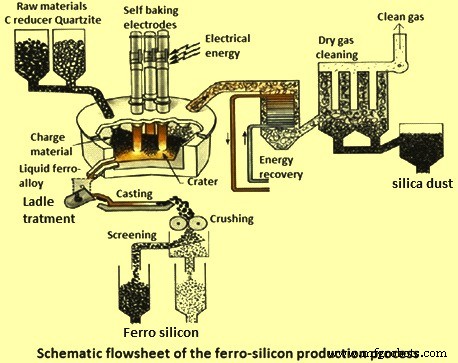
Fig 1 Schematic flow sheet of the production process for Fe-Si
Raw materials
Fe-Si is produced by smelting Fe containing materials and Si containing materials usually in a SAF. Fe is in the form of iron ore, steel scrap or mill scale and Si is normally in the form of quartzite lumps. These are combined with carbonaceous material such as coal or petroleum coke and a bulking agent such as wood chips. Quartzite is the source for Si in the carbo-thermic process. The purity of quartzites is usually lower than for other types of quartz deposits and but is normally suitable for the production of Fe-Si.
Furnaceability is a common international industrial quality term used for quartzite. The quartzite is having good furnaceability when all its chemical and physical criteria are such so as to make it an appropriate silica raw material for the production of Fe-Si with high content of Si at high rates of process performance. The absolute quality requirements of the quartzite raw material are those which are necessary to achieve for the process to be optimized and include (i) chemistry, (ii) material size (typically 10 mm to 150 mm), (iii) mechanical strength, (iv) thermal strength, and (v) softening properties.
Chemistry and size are the most common specifications used by all Fe-Si producers for specifying quartzite. The requirements for the chemistry are related to the content of impurity elements especially elements such as Al, Ca, titanium (Ti), boron (B), and phosphorus (P). Normally, elements more noble than Si (e.g. Al and Ca) end up in the product, whereas the volatile components go into the off-gas. However, the reactions in the furnace are much more complicated than that, and the distribution of the elements in the raw materials also determines where the elements go. Some elements, especially alkalis such as sodium (Na) and potassium (K) can actually lower the melting point of quartzite. Generally, the requirements for the raw materials are connected to the requirements of the products. Fe-Si production usually has requirements that allows for higher contents of the most difficult elements.
The sizing requirements can vary for the different plants and it ranges from 10 mm to150 mm. However, some producers have specifications for narrower sizing. Some Fe-Si producers focus on, or measure the mechanical strength and thermal strength, although these are usually not included in the specifications to the supplier. Additionally, some producers focus on the softening properties of the quartzite. Further, additional requirements can be defined by the individual producer, according to what is most optimal for the specific operation.
The mechanical properties of quartzite affect the size reduction of the raw materials during production in the mine, transport and storage before charging. The generated fine material creates problems for the carbo-thermic process since it can lower the permeability of the charge and obstruct the gas flow from the lower parts of the furnace to the upper parts where SiO gas reacts with the unreacted C in the charge to form SiC, which is an important reaction in the furnace. Additionally, some of the SiO gas condensates and forms a sticky mixture of SiO2 and liquid Si. Loss of SiO gas through off gas channels and lowered Si recovery can be due to the low permeability of the charge.
Fines are defined by two different criteria. In this context, fines are defined as material less than 2 mm size, which is the most critical for the process. Fines less than 2 mm lower the permeability of the charge. Fines can also be defined as the material of lump size below specifications (e.g. -10 mm). As for the mechanical properties, the thermo-mechanical properties is mainly related to the generation of fines, however, in this case, the fines generation occur inside the furnace as bad thermo-mechanical properties results in disintegration of the quartzite as a result of the extreme heat in the furnace. Ideally, the lumpy quartzite is to keep its original size as it moves down through the charge, until the quartzite starts to soften and melt in the lower parts of the furnace near the cavity wall.
Although, most of the quartzite is likely to disintegrate to a certain degree, it is not to be pulverized and generate too much fines that lowers the permeability of the charge as described above. This size reduction can also, in extreme cases, results in a popping effect where in some cases fragments of quartzite can be thrown up into the air. Quartzite with low thermal stability which disintegrates within the charge can also contribute to slag formation in the furnace.
The softening properties of the quartzite are another side of the thermo-mechanical properties. The softening temperature, or softening interval, is the temperature on which the quartzite starts to melt. This is lower than the melting point of quartzite at 1723 deg C. The softening temperature is to be as close to the melting temperature of quartzite as possible to achieve the ideal process where quartzite move down to the cavity walls before it starts to melt and droplets of molten quartzite drip from the cavity wall into the cavity, where Si forming reactions take place. Alkali elements (and to a lesser extent alkali earths) are known to affect the melting temperature of the quartzite. It is to be noted that the quartzite which starts to soften or even melt too high up in the furnace, creates a sticky mass, which agglomerates with other particles and become electrically conductive and alter the electric paths in the furnace and even reduce the power of the arc.
Submerged arc furnace for production of Fe-Si
Commercial grade of Fe-Si with Si content of 15 % is generally produced in the blast furnace (BF) lined with acidic fire bricks. Fe-Si with higher Si content is normally produced in SAF. The size of a SAF producing Fe-Si is given in term of electric load and varies from 1-2 MVA to more than 40 MVA. The sizes of SAFs typically consist of upto 10 meters in diameter and 3.5 meters in depth. Electrical energy is supplied through 3 phase alternating current (AC) by the three electrodes submerged deep in the charge. The specific energy consumption is typically up to 9 MWh – 10 MWh (megawatt hour) per ton of produced Fe-Si (75 % Si). To operate efficiently and reduce unit fixed cost, a SAF is required to run continuously, 24 hours per day.
Necessary heat for the highly endothermic reactions of SiO2 reduction is generated direct in the charge of the SAF charge as a result of current flow by resistive heating, and by arc heating which burns in the gas chambers located near the electrodes tip. The internal structure of the furnace and temperature distribution in the reaction zones have a close relationship with the proportions of the heat generated in the furnace on the principle of resistance heating and arc heating. One of the most important structural elements of the Fe-Si furnace are immersed in the charge self-baking ‘Soderberg’ electrodes which bring electricity required for the process. Burning of electric arc and temperature conditions of the reaction zones has a close relationship with the position of electrodes tips in the furnace. The current heats part of the charge to around 2000 deg C in the hottest part. At this high temperature the SiO2 is reduced to molten Si.
The temperature distribution of reaction zones are not subject to direct measurements, but to provide the correct electrical and temperature conditions of the process it is necessary to systematically carry out electrodes slipping. The optimal position of the electrodes leads to the minimization of economic indicators of the process. In periods of good and stable operation of the SAF in the reaction zones are conditions for the continuous evolution of new products of the SiO2 reduction. This process has a cyclical nature and it is associated with melting and periodic penetration of liquid SiO2 inside the arc chambers.
SAF has a hood at the upper part of the furnace which directs the hot gases through a chimney to a gas cleaning system. The raw materials namely quartzite, Fe bearing materials, and C bearing materials are transported on conveyor belts and stored separately in day bins. The raw materials in the form of the mixture batch consisting of quartzite, C reducers, and carriers of Fe are weighed, combined in the required proportions, mixed and charged into the furnace through charging tubes. These tubes are located with outlets towards the electrodes. The number of tubes surrounding the electrodes differs from furnace to furnace. The charged material is at the same level as the floor outside the furnace surrounded by a hood that has stoking gates at different sections and these sections can be opened during a stoking period.
Production process of Fe-Si
The raw materials are charged into the furnace from the top. High?current, low?voltage electricity is delivered through a transformer and into the furnace through C electrodes. The process is very energy?intensive, requiring around 9,000 kWh to 10,000 kWh (kilowatt hours) of electricity to produce one ton of 75 % Fe-Si.
SAF used for the production of Fe-Si is usually operated in cycles with stoking, charging and tapping as the main operations. During stoking, the thin crust on top of the charge is broken and old charge is pushed towards the electrode. The new charge is then laid on top of the old charge.
The stoking charging cycle is an operational cycle. The stoking is carried out by a special moving machine equipped with a stoking rod which is mounted in front of the machine. The unevenly charged burden can be distributed with the machine through the stoking gate. Old charged material at the surface is distributed towards the electrodes where depressions have formed around the electrodes. These depressions are formed by the hot reactions zone in the cavity.
In the furnace, the charge is heated to around 1815 deg C. At that temperature, the quartzite combines with the C in the reductants forming carbon monoxide (CO) gas and releasing Si, which forms an alloy with molten Fe. Molten Fe-Si accumulates in the bottom of the furnace. Trace element content of the raw materials (including quartzite reduction materials and electrodes) is carried to the product.
Periodically, around at equal time intervals liquid ferro-alloy is tapped into the ladle, through one of the tap holes in the furnace lining. The tapholes are located in the transition between the side and bottom lining of the furnace. The number of tap holes varies from furnace to furnace. The tap hole is usually opened mechanically and closed with special clay mixture.
The off gases are passed through a gas cleaning plant for removal of the dust the main content of which is amorphous condensed SiO2. This dust is generally used as filler material in concrete, ceramics, refractories, rubber and other suitable applications. A furnace produces around 0.2 tons to 0.4 tons of SiO2 dust per ton of ferro-alloy. The cleaned off gas mainly contains CO, sulphur di oxide (SO2), carbon di oxide (CO2), and oxides of nitrogen (NOx). The heat of the gases can be recovered in the waste heat recovery system.
The reactions
The production process of Fe-Si consists of a high temperature process where SiO2 is reduced with C to Si and CO (g). The overall reaction of the process is based on the carbo-thermal reaction which is idealized as the reaction given below.
SiO2(s) + 2C(s) = 2Si (l) + 2CO (g) Delta H at 2000 deg C = 687 kJ/mol
The Fe-Si furnace is normally divided into two zones namely (i) an inner hot zone, and (ii) an outer colder region. Si is produced in the inner zone. The equilibrium condition for the production of Si is given by the following reaction.
SiO (g) + SiC (s) = 2Si (l) + CO (g)
The temperature for the production of Si is around 2000 deg C. Then the equilibrium pressure of SiO for the above reaction at 1 atmosphere is 0.5 atmospheres. For getting a high recovery of Si, this SiO is to be recovered in the colder parts of the furnace. The SiO is recovered by a reaction with the C or by condensation. The SiO which is not recovered is lost as SiO2 dust.
The ability of a C material to react with SiO is called the reactivity. In case of high reactivity, much of the C reacts with SiO to form SiC in the outer zone. If the reactivity is low, free C can reach the inner zone. Then less Si and more of SiO and CO are produced. Because of the low reactivity in the outer zone, more of SiO condenses. Since the condensation supplies heat, there is a limit for the condensation. When the limit is exceeded then SiO leaves the furnace. If the reactivity is low, the C balance in the charge is required to be reduced to avoid SiC deposits. In such a case the recovery of Si decreases.
In practical operation there is always some silicon loss in the gas. This is mainly due to a loss of the gas species SiO. The SiO burns together with CO in excess air above the charge. A more accurate description of the process is more complex and involves many intermediate reactions and complicates the situation vastly from what the above reaction describes. The internals of a SAF can be divided into a high temperature (around 2000 deg C) and lower temperature (less than 1815 deg C) zone, where different reactions dominate. In the high temperature zone around the electrode tip, the following reactions occur.
2SiO2 (s, l) + SiC(s) = 3SiO (g) + CO (g) Delta H at 2000 deg C = 1364 kJ/mol
SiO2 (s, l) + Si (l) = 2SiO (g) Delta H at 2000 deg C= 599 kJ/mol
SiO (g) + SiC (s) = Si (l) + CO (g) Delta H at 2000 deg C = 167 kJ/mol
The slowest of these three are probably the SiO (g) producing reactions which consume a major part of the electrical energy developed. Si can be produced through reaction at temperatures above 1815 deg C. The SiO gas travels upwards in the furnace and is recovered either by reaction C with the material as given below or by condensation where the temperature is sufficiently low (less than 1800 deg C). The last two reactions given below are reversible.
SiO (g) + 2C (s) = SiC (s) + CO (g) Delta H at 1800 deg C = -78 kJ/mol
3SiO (g) + CO (g) = 2SiO2 (s, l) + SiC (s) Delta H at 1800 deg C = -1380 kJ/mol
2SiO (g) = SiO2 (s, l) + Si (l) Delta H at 1800 deg C = – 606 kJ/mol
The last two condensate producing reactions are strongly exothermic and are the main factor how heat is transported upwards in the furnace. The equilibrium conditions for the other reactions are shown in Fig 2.
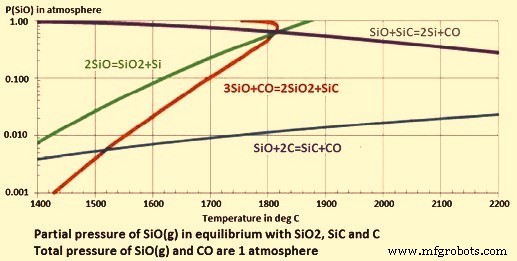
Fig 2 Partial pressure of SiO (g) in equilibrium with SiO2, SiC and C
At the top of the furnace charge, the temperature can vary between 1000 deg C to 1700 deg C. Typical industrial silicon yield is around 85 % in a well operated furnace. SIC forming reaction is the preferred SiO recovery reaction above 1512 deg C. Below this temperature, SiO gas is generally captured by the last two condensate producing reactions. The temperature has a great effect on the equilibrium conditions for these reactions. If the temperature at the top is around 1620 deg C (partial pressure of SiO=0.1 atm.) and the main SiO recovery goes through condensation, then the yield of Si is around 80 %.
Refining and casting of Fe-Si
Impurities in the liquid ferro-alloy like Al and Ca can be removed by oxygen (O2) and air while the alloy is in molten stage in the ladle before casting. The liquid ferro-alloy can be tapped from the furnace into a refractory lined steel ladle.
Liquid Fe-Si is poured from the ladles into large, flat cast iron moulds. The moulds are prepared by adding a layer of Fe-Si fines on the mould surface. The cast material is removed from the moulds when it has cooled down to a level where the material strength is high enough to be removed and stacked in piles for further cooling. After cooling and solidification, the Fe-Si is crushed and screened to produce the required lump sizes. In the process of crushing, some fines are generated. Such fine material can be further ground to a powder, combined with a binder, and formed into briquettes. The melt can also be granulated.
All grades of Fe-Si are produced using essentially the same process, but certain additional steps are required to produce higher?purity grades of Fe-Si. Such grades are produced using raw materials containing lower amounts of impurities. In addition, refinement of the liquid Fe-Si to remove unwanted impurities and the addition of special alloying elements occur in the ladles. This further processing to produce higher purity Fe-Si is known as ladle metallurgy. Specialty grade 15 % Fe-Si for dense medium application is typically produced by remelting 75 % Fe-Si with steel scrap in an electric arc furnace and casting into a high?pressure water spray.
Manufacturing process
- 3D Systems Figure 4 Production – High‑Volume Resin 3D Printing Solution
- Building a Strong Operations‑Maintenance Partnership for Sustainable Production
- How Ferro-Chrome Is Produced: Process, Composition, and Uses
- Ferro-Manganese Production: Process, Composition, and Steel Industry Role
- The Globalization of Production: A Foundry’s Tale of Rise, Decline, and Resilience
- Prototype vs. Production Injection Molds: Choosing the Right Mold for Your Project
- Understanding Production Lines: How Assembly Lines Drive Manufacturing Efficiency
- Batch Production Explained: Boosting Efficiency in Manufacturing
- Why Low‑Volume Manufacturing Accelerates Custom CNC Innovation
- Agile Production: Revolutionizing Manufacturing for the Future