



Batch Production Explained: Boosting Efficiency in Manufacturing
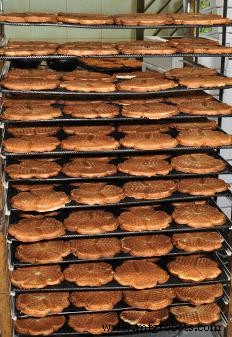
Manufacturers of anything from cakes to computer chips have many ways of organizing production. One of these methods is called batch production. This is when, instead of manufacturing items singly or by continuous production, items are manufactured in groups or batches. A specific process for each item takes place at the same time on a batch of items, and that group does not move onto the next stage of production or inspection until the whole batch is done.
For example, in small bakeries and many homes, as opposed to large food manufacturing companies, cookies are baked in batches. A baker must first make the dough, then place it onto baking sheets, and then bake it. People are limited as to how many cookies they can produce at one time by the number of baking sheets and ovens they possess, and by the size of bowls available to mix each batch.

This is batch production, since a large number of cookies is baked at the same time, and bakers can’t skip from one step to the next until each process is complete. They can’t start cooking the cookies until they've made the dough, and they can’t remove the cookies from the oven (in most cases) until all the cookies are done, unless using an oven with a conveyor belt. There are necessary steps that apply to the whole batch of cookies. Cooking may requires a baker to bake in individual batches, increasing the final time between finishing the dough and actually having completed baking all the cookies.
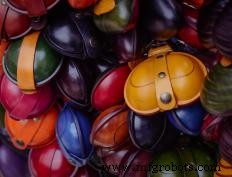
Sometimes, this type of production is necessary when a manufacturer is producing similar things, but with variants. For instance, if a company manufactures two colors of the same shoe, it would probably use batch production. Any dyeing of leather or fabric can’t apply to the whole set of shoes since they’re different colors, which can mean stopping in between each batch to change or clean machines, or prepare to add new dyes for the next variation. The necessity of stopping between batches is called "down time," and is why some people find this method of production an inefficient manufacturing process. Time needed to prepare equipment or machines for the next batch can reduce total amount that can be manufactured and take longer in total production time.
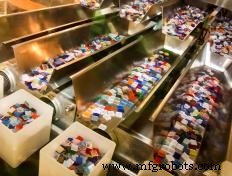
Another example is found in thin film coating of materials, like lenses, computer screens and the like. A coating machine can hold a finite number of the item being produced, and it can take several hours to over a day to apply the coatings needed in order to produce one batch. After materials are coated, they move on to the inspection process, while the coating machine must be readied for the next batch. This resetting of the machine may take considerable time, and may require several steps before the next batch can be placed in the machine.
Industrial equipment
- Short‑Run vs Long‑Run Production: Understanding the Key Differences
- Understanding the Oxygen (O2) Sensor: Role, Placement, and Failure Signs
- Manufacturing Execution Systems (MES): The Key to Real-Time Production Control
- How to Boost Production Quality: Proven Strategies for Efficiency & Competitiveness
- What is PPIC? Master Production Planning & Inventory Control in Manufacturing
- Understanding Stamping: The Key Process Behind Coke Can Production
- Understanding Production Lines: How Assembly Lines Drive Manufacturing Efficiency
- Inside a Car Production Line: Key Stations & Roles
- Batch Production Explained: Boosting Efficiency in Manufacturing
- Decoding 'N' in Pump Calculations: Its Role and Significance