



Choosing the Right Hydraulic Tube Bender: A Comprehensive Comparison Guide
Whether you need to bend metal pipes, tubes, or rigid metal conduits, hydraulic tube benders are your ideal tool. But what type of pipe bender do you need? The answer depends on what you want to bend. In this article, we will take a look at different types of benders as well as how to operate a manual model.
Pipe, Tube, and Conduit Benders
Though these terms are often used interchangeably, they are actually different from each other. The bending tools for tubes and pipes are also different. Therefore, it is suggested that one should know the differences between tubes, pipes, and conduits before processing them.
Pipe Bender
So how do pipes differ from tubes? A pipe is determined by referring to its inner diameter (ID) vs. its outer diameter, and its wall thickness. A pipe is round and has walls usually thicker than a drain. The purpose of piping is usually to transmit liquids or fluid inside a system or between systems.
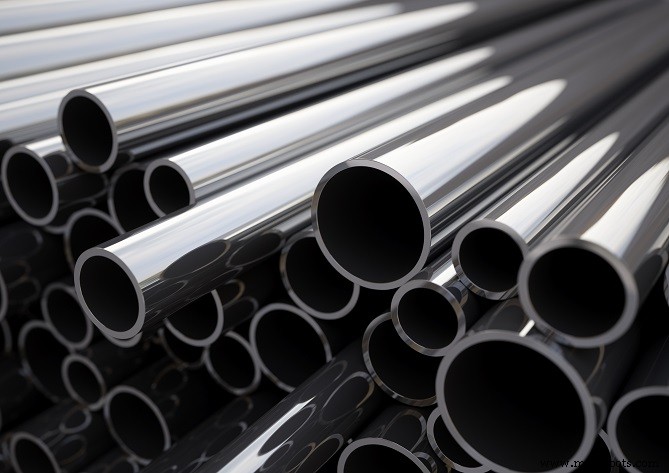
Fig. 1 Pipes
Tube Bender
A tube bender forms tubing and uses mostly the same method as a bender for pipes. And how do tubes differ from pipes? A tube is defined by its outer diameter (OD) and wall thickness because it is used in structural, medical, or pressure applications. They can have round, rectangular, or square cross-sections.
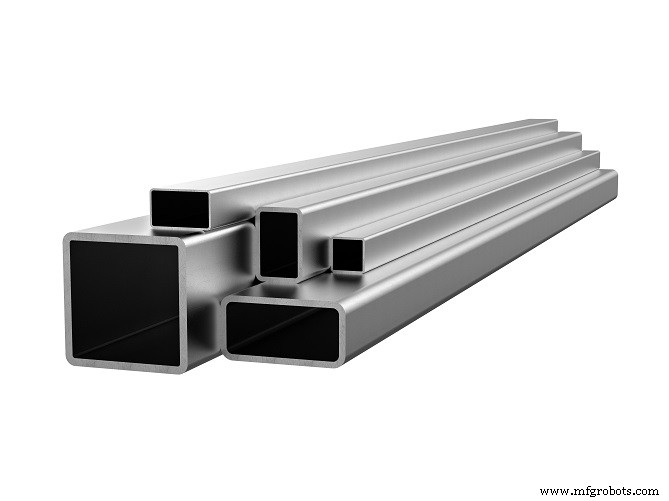
Fig. 2 Tubes
Conduit Bender
A conduit bender is built to bend angles in the conduit, a tube through which electrical wiring is performed. It is necessary to understand the difference between a pipe and a tube to select a compatible bender and die, a former or bender roller of the right size. Conduit benders are used primarily to bend rigid metal conduits.
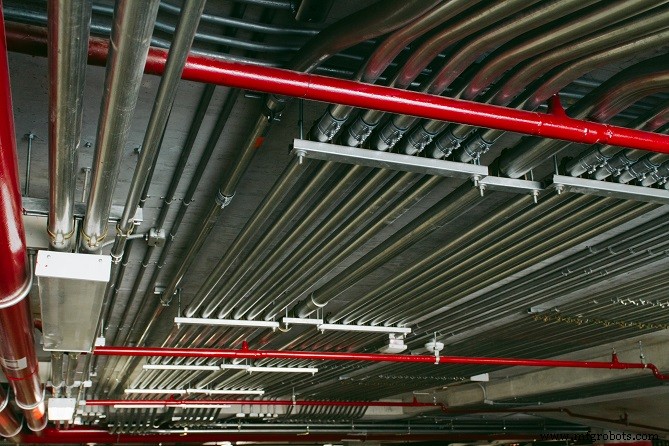
Fig. 3 Electrical Conduits
Hydraulic, Electric, Manual, and Mechanical
The four most common types of pipe benders are hydraulic, electric, manual, and mechanical. The hydraulic unit is extremely durable and strong and can produce precise angles with thick walls in large pipes. Electric pipe benders have electric gear drives and are usually programmable, making them ideal for producing multiple iterations of the same bend.
Manual pipe benders are cheap, easy to transport and manipulate, and can complete many bending tasks with sufficient elbow grease. Manual bending is an art form. It requires some skill but allows you to make custom shapes. In terms of bending angles, mechanical models are somewhere in-between hydraulic and manual.
Applications
The highly versatile hydraulic bender can be used in many fields, from automotive to interior design. Some examples of finished products that can be produced using 1 to 12 axis pipe benders, depending on the degree of automation required. Some of the applications include:
-
Hydraulic connections and systems
-
Fuel pipes for diesel motors
-
Motorbike and scooter accessories
-
Iron, steel, and aluminum furnishings and accessories
-
Furnishings for shops, office buildings, hospitals, etc.
-
Children's playgrounds & gym equipment
-
Exhausts
-
Handles
-
Equipment for the food industry
How to Operate a Manual Hydraulic Tube Bender?
Manual benders are a relatively simple tool that can provide precise and reliable bends on various pipes including copper, steel, and aluminum-based pipes. Although there are many automatic pipe benders, they are bulky and not suitable for field applications where proper power connections may not be available. The following are the main steps to operate a hydraulic tube bender:
Hydraulic and Manual Pipe Benders, Prisma ECC
Set Up Your Bender
All manual benders have a limit to the pipe size that they can effectively bend. The limit varies depending on the material, cross-section, and thickness of the tube. The adjustment dial needs to be set based on the radius and bend degree you need in the tube. Another factor is whether you can use a vise or not. Most manual benders can be fitted with a vise. If you want to bend thicker-walled pipes, you will need one.
Mark Bend Directions & Reference Points
Since you may make multiple bends on a single test tube, you should mark your test tube with a longitudinal line for reference. The line should always stay in the direction opposite to the direction of bending to be achieved. The reference and measurement marks on the test tube will ensure that you get the results you need and can monitor your progress.
Align & Insert the Tube into the Bender
You must swing one of the two bending arms up to insert the tube into the bending mold while ensuring that the reference mark is always visible. After inserting the tube, the latch mechanism can usually be used to lower the second arm to hold the tube in place while making minor adjustments.
Start the Bending Process
You can start the bending process by firmly holding the roller support arm and lowering it until the required degree mark is reached on the bending mold. You should note that most pipes tend to have a certain degree of rebound after bending. Copper pipes typically have lower strength compared with steel pipes.
Manufacturing process
- Smart App‑Controlled Hydraulic Crane – Precision & Ease
- Mandrel Tube Bending Explained: Enhancing Precision and Structural Integrity
- High-Quality Hydraulic Pipe Bender – Durable, ISO 9001 Certified
- Electric Pipe Bender – Precise EMT & Rigid Conduit Flexibility
- CNC Pipe Bender: Enhancing Precision and Productivity
- Understanding Mandrel Pipe Bending: A Reliable Technique for Precise Pipe Curving
- Mandrel Tube Benders: Precision, Accuracy, and Wrinkle-Free Tubes for High-Pressure Transport
- Master Tube Bending: Expert Tooling Guide for Precision Results
- Understanding Automatic Pipe Benders: Functions, Benefits, and Applications
- How to Choose the Right Hydraulic Cylinder: A Comprehensive Selection Guide