



Precision‑Toleranced Heavy‑Duty Industrial Shear Blades for Consistent Cutting
Precision‑Toleranced Heavy‑Duty Industrial Shear Blades for Consistent Cutting
April 22, 2026
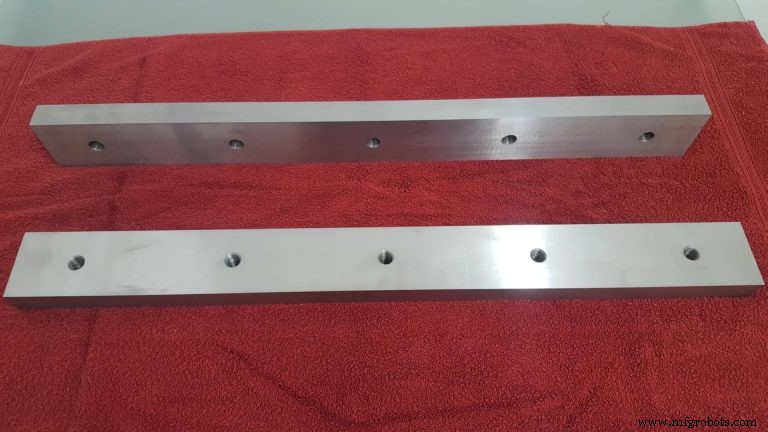
Elevate cutting performance with Gunna Engineering’s heavy‑duty shear blades, precision‑machined in Melbourne to meet the toughest industrial demands.
Industrial cutting systems thrive on dimensional accuracy and structural durability. Our blades are engineered to maintain strict tolerances even under repetitive mechanical load, ensuring clean material separation and reducing wear on the entire assembly.
Manufacturing Precision that Drives Performance
Dimensional fidelity is critical to blade effectiveness within a shear unit. Each blade is machined and ground to exact tolerances, guaranteeing optimal alignment between upper and lower cutting edges, minimizing burrs and uneven wear.
Controlled heat treatment stabilises hardness throughout the blade while preserving internal toughness. Final surface grinding delivers flatness and straightness, supporting consistent cutting pressure and reducing vibration during operation.
Engineering Controls that Support Cutting Consistency
Reliable performance depends on measurable manufacturing standards. Material properties, machining accuracy, and inspection procedures all influence long‑term blade stability.
We strengthen precision cutting through:
- Material Selection: Alloy tool steels chosen for their blend of wear resistance and impact strength, ideal for high‑tonnage applications.
- Heat‑Treatment Stability: Carefully regulated hardening and tempering cycles minimise internal stress and distortion during service.
- Precision Grinding: Controlled grinding preserves parallelism and delivers smooth surface finishes, reducing friction and uneven contact pressure.
- Edge Geometry Accuracy: Optimised bevel angles promote cleaner shearing action and reduce material deformation at the cut edge.
- Dimensional Verification: Final inspection confirms tolerance compliance and ensures seamless integration with installed shear equipment.
Performance Reliability in High‑Demand Environments
Shear systems endure repeated impact and sustained pressure. Our blades retain edge alignment and structural integrity across demanding production schedules and abrasive materials.
At Gunna Engineering, we adhere to recognised safety guidance and responsible machining practice to support safe installation and operational reliability. Our experience across fabrication and processing environments informs every machining, finishing, and inspection step before dispatch.
Tolerance control remains central to long‑term performance. We focus on maintaining dimensional stability so clients achieve predictable cutting results across ongoing production cycles.
Precision Blade Manufacturing for Industrial Operations
Consistent blade tolerances contribute to smoother machine operation and improved material control. Reliable machining reduces avoidable wear and supports efficient production management.
Gunna Engineering’s heavy‑duty shear blades are designed for fabrication and processing facilities that demand stable, repeatable cutting results. Our machining processes emphasise dimensional precision and structural integrity to deliver long‑term operational reliability.
Contact us to ensure your cutting system is supported by properly machined, tolerance‑controlled blades.
Related Blog Articles:
Shear Blade Geometry and Quality Explained: Achieving Cleaner, Precise Cuts
Choosing the Right Shear Blade Steel for High‑Volume Production
CNC Shear Blade Supplier Guide: What to Look for in High‑Performance Blades
Optimized by: Netwizard SEO
Manufacturing process
- Rapid Prototyping Explained: Types, Processes, and Benefits
- Foundry Evolution: Cutting-Edge Technology & Safety Standards
- EasyFFT – Reliable FFT Library for Arduino Projects
- Track Orientation with Arduino & ADXL345 Accelerometer – A Step‑by‑Step Guide
- Harnessing Solar Energy: Your Complete Guide to Clean, Reliable Power
- Understanding 4th & 5th Axis CNC Rotary Tables: Functions & Benefits
- Understanding Welding Spatter: Causes and Effective Reduction Techniques
- Build a Raspberry Pi Temperature Logger with a $5 I2C Sensor
- Cushioning Laminates: Production, Materials, and Future Trends
- Preventing J‑Hook Punch Deformity: Causes, Symptoms, and Solutions