



Unlocking Profitability: The Business Value of Regular Equipment Inspections
In our 25 years of helping businesses improve workplace safety, we’ve observed that companies that regularly conduct equipment inspections are generally more profitable than those that don’t.
Yet a perception remains that equipment inspections are all about compliance.
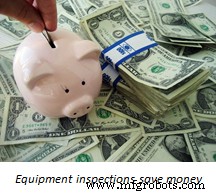 This preoccupation with compliance is understandable. Depending on the location and industry, companies may be required to inspect certain equipment on a mandated schedule. When you’re required to do something, it’s natural to think you’ve accomplished what you’re supposed to do when you fulfill the requirement.
But take a look at top-performing companies. You’ll see that as a group they inspect more often than required and that they inspect equipment not even covered by regulations.
Their treatment of inspections as a vital business process shows that they realize that equipment inspections produce benefits beyond compliance. They know from experience that costs are reduced and productivity increases when inspections are done thoroughly and results are acted upon appropriately.
The key is to have a systematic program for equipment inspections that includes:
- Equipment checklists such as The Checker for ensuring accurate identification of equipment problems.
- Procedures for timely communication of inspection results to the maintenance department.
- Management support that includes consequences and rewards related to how well inspection procedures are followed.
Such a program can achieve multiple business benefits.
Lowering the costs of workplace injuries.
Proper equipment inspections reveal problems with equipment that would cause it to be unsafe. This reduces the likelihood of workplace injuries and their substantial costs, which include:
- Work delays.
- Lost work time.
- Re-staffing costs.
- Increased Worker’s Comp premiums.
- Increased group health coverage premiums.
- Fines.
- Liability.
In addition, regularly looking for safety issues while conducting inspections tends to increase overall safety awareness among personnel, which is fundamental in lowering workplace incidence rates.
Reducing job interruptions due to equipment failure.
When equipment inspections are regularly performed, problems that could cause equipment to fail are identified before the equipment is deployed and a job process is in place.
When a necessary piece of equipment breaks down during a job, it’s common for other pieces of equipment to also become idle. Jobs are slowed, and personnel often end up being paid for unproductive time.
It’s much better to identify problems for maintenance attention or repair and schedule jobs, labor, and replacement equipment accordingly.
Fixing equipment problems before they become more-expensive problems.
Equipment problems tend to escalate. One problem not known about or left unattended can lead to other problems. If the problem eventually leads to failure in the field, the result is the safety-related and productivity costs discussed above. And once failure occurs, replacement is often more expensive due to time pressures.
When pre-use equipment inspections reveal problems—and those problems are immediately communicated to maintenance personnel who can take action—equipment can receive the attention it needs when it can be most effective, at a lower cost.
Providing documentation for protection against liability exposure.
If a workplace injury or fatality occurs, you can be in compliance but still be found negligent. When using an equipment checklist such as The Checker, the checklist provides evidence that inspections have been performed, which can prove to be invaluable in defending against liability claims.
Takeaway
A systematic program of regularly inspecting commercial equipment will not only provide compliance with regulations, it can strengthen a business by lowering costs, reducing negative effects on productivity, and guarding against liability risk.
Image courtesy of 401kcalculator.org, Creative Commons.
Equipment Maintenance and Repair
- Maximize Your 2019 Business Equipment Tax Deductions: Section 179 & 100% Bonus Depreciation
- Optimizing Maintenance: Cost‑Effective Predictive Strategies for Manufacturing Leaders
- Maximize Lab Reliability with Expert Equipment Repair Services
- Equipment-as-a-Service Explained: Unlocking the Advantages for Your Business
- How Regular Equipment Inspections Cut Maintenance Costs & Prevent Downtime
- Maximizing Safety and Savings: The Benefits of Facility Audits & Equipment Inspections
- Unlock Growth: The Top 3 Benefits of Equipment Financing for Manufacturers
- Why Regular Equipment Inspections Save Time, Money, and Ensure Safety
- Exploring the Pros and Cons of Equipment Tracking Software for Asset Management
- How a Cat® Customer Value Agreement Enhances Equipment Management and Reduces Operational Burden