



Optimizing Maintenance: Cost‑Effective Predictive Strategies for Manufacturing Leaders
In the manufacturing sector, maintenance often ranks among the top three expenses. To stay competitive, leaders must transition from reactive downtime to proactive, data‑driven maintenance strategies.
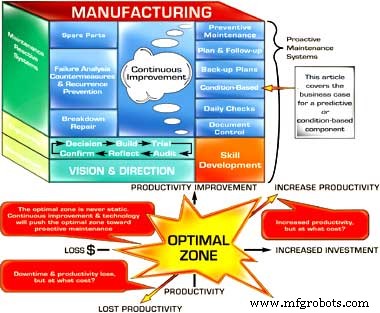
Implementing condition‑based, predictive maintenance (PdM) can sometimes yield a negative return on investment. The key is a rigorous cost‑to‑benefit analysis that considers process‑specific variables:
- What is the cost per minute of process downtime?
- Can the process be backed up, or is it a single‑pass cycle?
- Would a failure trigger safety concerns?
- Which failure modes will the predictive tool forecast?
- Are these failure modes historically documented?
- What resources are required to collect and analyze predictive data?
Short‑term decisions hinge on this analysis, but true leadership demands a forward‑looking approach:
- How can we deploy PdM tools cost‑effectively?
- Can predictive models be embedded directly into machine controls?
Even if the upfront cost of predictive tools appears prohibitive, the long‑term savings—through just‑in‑time spare parts, reduced downtime, and improved safety—often outweigh the initial outlay. The future of maintenance is undeniably tied to intelligent, near‑zero‑breakdown solutions.
Reactive maintenance incurs hidden costs beyond downtime: spare parts inventory overruns, morale decline from frequent disruptions, and elevated safety risks that lead to more injuries per hour worked. A robust predictive program mitigates all three.
Leading experts underscore the importance of continuous improvement in maintenance systems. Dr. Jay Lee, an Ohio-based scholar in advanced manufacturing at the University of Cincinnati and former Rockwell Automation professor at the University of Wisconsin‑Milwaukee, has directed product development and manufacturing at United Technologies. He founded the National Science Foundation‑backed Center for Intelligent Maintenance Systems (CIMS), partnering with industry giants such as Rockwell, Toyota, GM, Harley‑Davidson, DaimlerChrysler, Ford, and Siemens to develop near‑zero‑breakdown technologies. Contact Dr. Lee at jay.lee@uc.edu for insights into integrating predictive tools into your operations.
Equipment Maintenance and Repair
- Unlocking Real-Time Value with Predictive Maintenance
- Your Comprehensive Predictive Maintenance Checklist: Boost Efficiency, Cut Downtime & Drive ROI
- How Preventive Maintenance Paves the Way for Predictive Maintenance Success
- How Predictive Maintenance Drives Efficiency and Cuts Downtime
- Predictive Maintenance: The Complete Guide to Reducing Downtime and Maximizing ROI
- From Scheduled to Predictive Maintenance: A Step‑by‑Step Transformation Roadmap
- Predictive Maintenance Evolution: From Reactive Failures to Proactive Success
- Overcoming the 3 Biggest Obstacles to Successful Predictive Maintenance
- Predictive Maintenance Explained: How to Minimize Downtime and Maximize Asset Performance
- Choosing Predictive Maintenance: A Smart, Data‑Driven Decision for Your Business