



Hydraulic System Maintenance: Essential Hose Care Tips for Heavy Equipment
If you own or run heavy equipment, you know how crucial it is that your hydraulics operate correctly. You depend on hydraulic system components to dig, lift and move material. You also need properly functioning hydraulics to mobilize your equipment.
The hydraulic systems on today’s machinery are highly sophisticated. They’re also dependable, provided you perform thorough hydraulic maintenance and regular hydraulic inspections. This maintenance work includes carefully checking your hydraulic hoses, regularly changing your hydraulic filters and periodically analyzing your hydraulic fluid.
But there’s more to maintaining your hydraulics than just hoses, filters and fluid. You need to develop a comprehensive hydraulic system preventative maintenance plan. Let’s examine what you can do to make sure your equipment’s hydraulics are always ready to work.
Hydraulic Systems Overview
Modern hydraulics systems apply torque multiplication from a motor and turn mechanical energy into fluid energy through a pump. Pressurized oil passes from the pump through contained lines and into expanding cylinders that perform work. Hydraulic theory and practical operation stem from Pascal’s Law, which says that pressurized fluid in a closed system transmits equal pressure in all directions.

Hydraulic systems on a modern excavator, dozer, grader or skid steer all operate on a closed-loop, or contained, principle. Although today’s hydraulic components are becoming increasingly sophisticated, they rely on the same basic concepts as older technologies. Here’s an overview of what you’ll find in a current heavy equipment hydraulic system:
- Hydraulic motor: Most heavy equipment has a diesel engine as their primary power source. They convert energy stored in petroleum products into mechanical energy using heat. Hydraulic systems use the machine’s engine to motorize a pump that pressurizes fluid.
- Hydraulic pump: Hydraulic system pumps pressurize fluid called hydraulic oil. Hydraulic pumps pressurize the fluid rather than compress like pneumatic systems do. Pressurized hydraulic oil retains its mass but has an increased energy level.
- Hydraulic reservoir: Every hydraulic system needs a storage tank for its fluid. This container is called a reservoir and holds reserve fluid that’s not pressurized. Reservoir sizes vary according to the machine size and the capacity needed.
- Hydraulic controls: Valves that control pressurized fluid essentially function as the hydraulic system’s brain. A typical earthmoving machine has many operator-controlled valves. These controls direct flow, regulate volume and compensate pressures.
- Hydraulic lines: Lines deliver pressurized fluid from the pump to the work cylinders. Hydraulic line systems are made up of tubing, hoses, couplers, fitting and seals.
- Hydraulic actuators: Once the lines deliver pressurized fluid, the actuators change the hydraulic energy back into mechanical energy. Most equipment operators and service technicians call actuators “cylinders.” These cylinders move booms, activate sticks and manipulate buckets.
- Hydraulic fluids: Most hydraulic fluid is petroleum-based. It’s vital to keep this fluid uncontaminated. Dirty oil is horrible for hydraulic components.
- Hydraulic filters: Filters help keep hydraulic systems clean. Many hydraulic assemblies have multiple filters in strategic locations. Having the right filter is critical for your equipment’s hydraulic health.
Maintaining your equipment’s hydraulic system is crucial for cost-effective and long-term machine performance. Doing so takes time and requires paying attention to small details. These details include fluid contamination, which is the leading cause of hydraulic system failure.
Hydraulic System Failures
A leading cause of all hydraulic system failures is fluid contamination. With earthmoving equipment, hydraulic failures due to fluid contamination pose an even greater threat because of constant exposure to dirt and debris.
Contamination comes in different forms and can enter a hydraulic system in many ways. Here are the main contaminant forms you’ll commonly find damaging hydraulics and causing systems to fail:
- Ingressed contamination: These contaminants are unavoidable if you’re working with earthmoving machinery. Your hydraulic system takes in dirt from the air, direct contact with mineral material and even organic pollution. To minimize ingress contaminant damage, you need to stay on top of your maintenance.
- Catalytic contamination: Non-solid contaminants also threaten your hydraulic health. The main culprits are water and air, as well as heat stress. Water and air can contain microscopic contaminants, such as iron and copper, that react with particulates in hydraulic fluid and cause catalytic action and abrasion.
- Generated contamination: This is a vicious cycle. Small contaminant particles work their way into bigger pieces. They grow over time, causing increased contamination that seriously affects your hydraulic system.
- Natural contamination: Some fresh oil may contain contaminants, and contaminants naturally build up in your oil over time. To avoid this problem, always buy quality products from a reputable supplier and change your hydraulic fluid regularly.
- Built-in contamination: Some contaminants are built right into your equipment. Trace matter from manufacturing is ever-present, and it’s completely unavoidable. Examples include manufacturing debris, assembly contamination, welding spatter, casting sand, paint dust and even cleaning rag fibers.
There are many contamination sources threatening your hydraulic components. Experiencing regular wear and tear is part of the heavy equipment industry. It’s part of your role as a machinery owner, operator or fleet manager to maintain your equipment and keep it operating as long as possible.
All hydraulic equipment has a calculated service life. Some components are designed to last until they’re obsolete. Others suffer premature failure, and the cause is usually a lack of preventative maintenance.
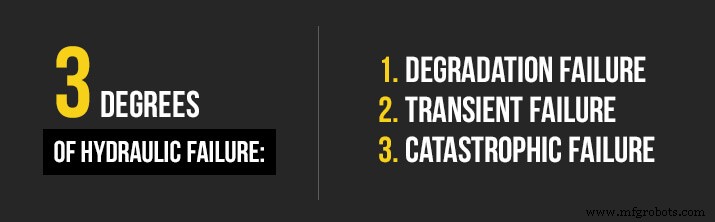
Some hydraulic failures are merely inconvenient. Others are disastrous. A successful preventative maintenance program can decrease your failure rate and the cost of any issues that do occur. Here are the three degrees of hydraulic failure that you’ll find in the heavy equipment industry:
- Degradation failure: All mechanical equipment degrades and fails eventually, including properly maintained hydraulics. The key to managing degradation failure is monitoring components and repairing or replacing them before they give out.
- Transient failure: Hydraulic component failures sporadically occur. When they do, they transfer stress onto other parts and raise the risk of their failure, too. This process is called transient or progressive breakdown.
- Catastrophic failure: Some hydraulic failures seem to happen without warning. A hose, for example, may suddenly burst and discharge gallons of oil. These unexpected breakages can result in expensive repair bills and downtime.
You can significantly reduce your hydraulic failure rate with a simple and straightforward preventative maintenance program. By following some simple steps, you can detect degradation failure in its early stages, delay transient failure events and avoid catastrophic failure. Start with routine hydraulic system maintenance and inspections.
Routine Hydraulic System Maintenance and Inspections
Preventative maintenance is essential for keeping your hydraulic systems active and dependable. Maintaining your hydraulics prevents early failure that happens without warning. Failure prevention reduces your repair costs, minimizes your unplanned downtime and supports your profitability.
Maintaining your equipment is an ongoing process and a continual commitment. You need to plan on a routine that includes pre- and post-operation inspections as well as regularly scheduled maintenance. A well-balanced preventative maintenance (PM) program has two main parts:
- Problem prevention: Maintaining your hydraulic system and preventing problems requires knowing your machine and what work it needs. You’ll find useful maintenance information in your owner’s manual. Take time to absorb what the engineers who designed your equipment want you to do.
- Problem correction: Once you identify potential problems, make sure you take immediate corrective maintenance measures. Don’t wait to repair or replace a hydraulic part that’s showing defects. Failing to address a developing problem can result in a costly breakdown at the worst possible time.

To save time and money, it’s crucial to develop a routine preventive maintenance program for hose and hydraulic systems. Here are some tips for implementing such a plan:
- Define what the plan covers: The first step in developing a routine maintenance plan is to define exactly what it will cover. Generally, all maintenance or inspection plans cover three aspects—routine scheduled maintenance, regular inspections and proactive parts replacement.
- Schedule inspections: The next step is to schedule your routine and preventive maintenance activities. Keep separate schedules for regular servicing, general inspections and parts replacements. Consult your owner’s manual and get expert advice from your dealer to learn how often to schedule preventive maintenance and inspection activities.
- Record maintenance activity: Any and all inspections, servicing or maintenance activity should be recorded in a single location. If you own more than one piece of equipment, then each piece will need its own record. Recording service and inspection activity helps keep you accountable for preventive maintenance. It will also help to build the habit of prioritizing preventive maintenance and inspections.
- Designate a person in charge: No preventive or routine maintenance plan is complete without appointing someone as responsible. Who is in charge of maintenance and inspections will depend on the size of the company, but it should always be whoever is most familiar with the equipment. Small businesses typically have the owner-operator or principal take on the responsibility of managing maintenance and inspections. Large companies typically employ a head technician to oversee maintenance activity.
Another aspect of an effective preventative maintenance program is analyzing the cause of any wear or defects. If you determine the cause of the problem, you’ll be better able to prevent similar issues in the future.
What to Look For and Knowing When to Replace Hydraulic Components
It can be challenging to determine when to replace a hydraulic component. Knowing what warning signs to look for can help. As you gain more experience in equipment maintenance, you’ll get better at noticing and interpreting these signals. Some of the signs you need to look for include:
- Hydraulic oil discoloration: If you see your hydraulic oil suddenly changing color, consider that a red flag. Some fluid discoloration as your oil ages is normal. However, a milky or bubbly appearance is a sign that water or air has contaminated your fluid. Immediately stop work until you’ve addressed this situation.
- Hydraulic oil leaks: Healthy hydraulic systems should never leak. If you see stains or liquid pooling, fix the cause of these drips as soon as possible. Little leaks have a way of becoming a big mess in no time.
- Hydraulic line deterioration: Any wear signs on your hydraulic lines is a signal to stop and fix them. That includes your whole hydraulic line sub-system of tubing, hoses, seals, connections and fittings. A worn component in this closed system can burst without any warning other than a slight bit of wear evidence.
- Hydraulic component fatigue: To find fatigued components, look for symptoms such as loosening and cracks. Remember that your hydraulic system operates under pressure and that fatigued parts rarely survive much pressure.
- Hydraulic component corrosion: Rust is a mortal enemy of hydraulic systems. Moisture amplifies corrosion and can eat through your hydraulic system’s metal components quickly. Check your fasteners and connections for that reddish-brown sign that corrosion has started and is compromising your system’s integrity.
- Hydraulic system noise: All operating hydraulic systems emit noise. With experience, you’ll know what your healthy hydraulics sound like. You’ll also know when something sounds wrong and when something requires immediate attention.
- Hydraulic system smell: The smells related to your hydraulic system can help you detect trouble. Burnt oil and overheated components can be smelled right away. Immediately stop work and look to see what’s causing the smell.
- Hydraulic control change: You or your operator will know something’s wrong when your hydraulic controls change their behavior. Your hydraulic controls are vibratory extensions that deliver constant signals to your hands and feet. Any unusual control pattern is a tap on your shoulder telling you to look into what component is acting up.

If you have experience with heavy equipment, you’ll know when something doesn’t look right. The trick is to constantly watch for problems — this is what your preventative maintenance plan is all about.
No matter how thorough your PM plan is, it’s easy to miss something. You might not see something when it’s right before your eyes. Here are some tips to help you find problems that you might not usually see and extend the life of your hydraulic system components.
Tips on Increasing Longevity with Hydraulic System Components
Increasing the longevity of your hydraulic system components is a core aim of any preventative maintenance and corrective measures program. Without question, staying on top of issues provides a tremendous return on your time and money investment. Look into these helpful tips, which are sure to increase your hydraulic component’s longevity.

Hydraulic pumps:
- Listen for unusual or sudden noise changes coming from the housing.
- Watch for vibrations developing in the pump drive and mounts.
- Inspect your hydraulic pump for excess temperature or high heat signs.
Hydraulic cylinders:
- Watch for rusty cylinder sleeves, which are a sure sign of moisture-induced corrosion.
- Store your machines with retracted cylinders if possible.
- Inspect cylinders for wear patterns that indicate side loading.
Hydraulic lines:
- Check metal tubing lines for loose fittings and couplings.
- Tighten leaky fittings before replacing or repairing them.
- Make sure seals are in good shape and not showing wear.
Hydraulic hoses:
- Check your flexible hoses for routing and kinks.
- Watch for blisters and immediately replace frayed hoses.
- Ensure your hoses are sized properly for their specific demand.
Hydraulic reservoirs:
- Always keep your hydraulic fluid reservoir topped off to limit condensation.
- Reservoirs can loosen from vibration, so always check the connections.
- Keep your reservoir sealed when in operation and only open it in clean conditions.
Hydraulic filters:
- Always purchase filters designed and intended for your specific system.
- Do not tempt fate by using inferior or “jobber” hydraulic fluid filters.
- Never, ever change your hydraulic oil without installing new filters.
Hydraulic fluid:
- Buy high-quality hydraulic fluid that made specifically for your system.
- Pay special attention to any suspicious substance that appears in your oil.
- Invest in regular hydraulic fluid analysis conducted in a certified laboratory.
Having a professional lab analyze your hydraulic fluid is an economical investment with high returns. Because hydraulic oil is your system’s lifeblood, you want to make sure it’s as healthy as possible. A thorough fluid analysis is a must-do maintenance measure that you can’t afford to miss.
Hydraulic Fluid Analysis
It’s more than a wise move to have your hydraulic fluid tested. It’s a no-brainer. This simple procedure done at regular intervals picks up minute contaminant traces that you couldn’t possibly otherwise detect. It’s also a low-cost operation with quick turnaround time.
Hydraulic fluid analysis gives you an immediate and early sign that you’re developing hydraulic problems. Getting a hydraulic health warning gives you time to schedule repairs without interrupting job flow. A fluid analysis also monitors positive indicators that give you the peace of mind that your equipment is healthy.
It’s an easy process to get your hydraulic fluid analyzed. You follow the prescribed collection directions, submit the oil to your lab and then receive the report. With an oil analysis, you can expect these tests:
- Oil wear rate analysis: This test looks for trace metals or wear-element particles in your hydraulic fluid. Metal is a sure sign of component wear. It’s an indicator that you need to check for components that are wearing out.
- Oil cleanliness analysis: Dirt is your oil’s worst enemy. A cleanliness analysis identifies mineral pollutants like dust, soot and chemical compounds hidden in your hydraulic fluid. This test tells you if changing oil is immediately required or if you have time left in this category.
- Oil condition analysis: There’s a difference between condition and cleanliness. A condition analysis can uncover impurities at the microscopic level. Even if your oil looks clean, these contaminants, which include oxidation, nitration and sulfur by-products, can still cause significant problems.
Your oil has to be clean to keep the rest of your hydraulic components happy and healthy. Cleanliness is just that important to hydraulic performance, and so is having a clean hydraulic service environment.
The Importance of a Clean Hydraulic Service Environment
Servicing your machine’s hydraulic system in the field is risky. An open and uncontrolled environment exposes all your hydraulic components to dust and dampness, which are notable threats to unprotected hydraulic components.
Your machinery will be far better off having its hydraulics serviced in a shop. An enclosed shop at a professional dealership offers you superior hydraulic protection in a clean environment. You can’t possibly achieve clean-room conditions out in the field.
MacAllister Machinery knows how important cleanliness is for long-term hydraulic performance. Since 1945, when we opened our first Indiana Caterpillar dealership, we’re maintained a reputation for shop service that’s second to none. Although we do offer convenient field service for Cat® heavy equipment, we strongly recommend you have your hydraulic systems serviced in a shop.
Preventative Maintenance for Hydraulic Components From MacAllister Machinery
MacAllister Machinery is a full-service sales, maintenance and repair facility. We have the facilities, equipment and expertise needed to service all your hydraulics and perform your hydraulic hose maintenance in a clean environment. We also do hydraulic fluid tests and can evaluate your hydraulic system’s condition.

Contact MacAllister Machinery today for full hydraulic services. Call us at 800-382-1896 or reach out to us online.
Equipment Maintenance and Repair
- Hydraulics 101: Understanding Fluid Power Systems
- Hydraulic System Care: Proven Best Practices & Maintenance Tips
- Essential Machinery Maintenance: Definition & Proven Tips for Operators and Engineers
- Essential Roles & Key Traits of Hydraulic Fluid for Optimal System Performance
- Reduce Hydraulic Downtime Costs: Proven Strategies to Minimize Direct and Indirect Losses
- Why Routine Hydraulic Hose Maintenance Keeps Your Equipment Running Smoothly
- Choosing the Right Hydraulic Fluid: Ensuring Pump Efficiency and Longevity
- Condition‑Based Monitoring: Key Benefits & Practical Tips for Proactive Maintenance
- Boost Equipment Reliability: Proven Maintenance Strategies for Mining & Metals
- 10 Expert Tips for Seamless Hydraulic Hose Design & Maintenance