



Key Indicators Your Heavy Equipment Requires Service
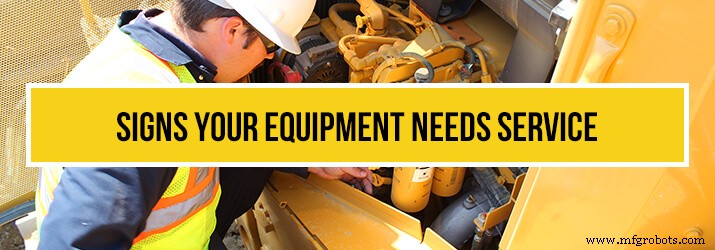
It’s an inevitable part in the life of even the best Cat® machines. Through the years of wear and tear, your heavy equipment and construction machinery will need to be serviced.
Jump To Sections:
- Visual Signs Your Equipment Needs Maintenance
- Auditory Signs Equipment Needs Service
- How to Protect Your Heavy Equipment
- The Price of Neglecting Your Equipment
Yet misinformation exists when it comes to even the most basic care and maintenance guidelines. Familiarizing yourself with equipment manuals and resources is a great place to start. So, too, are reviewing products specs and warranties. This is both time-consuming and tedious, whether you’re a contractor, landscaper, foreman or machine operator. There are only so many hours in the day to get your jobs done — and those hours are already jam-packed.
What can you do day by day and week by week to keep your equipment durable and healthy — and how do you know when it isn’t? Luckily, anyone can diagnose the condition of their heavy equipment with a few insider tips and tricks. You can learn to spot the signs that your fleet needs servicing and make the best judgment calls on the job.
Visual Signs Your Heavy Equipment Needs Maintenance
There are many ways to spot problems in your heavy equipment. It doesn’t take an expert eye to identify concerns and gauge their severity. The sooner you catch these irregularities, the better.
From small surveillance steps to overall tactics that better manage disruptions before and while they occur, you should begin to familiarize yourself with these visual cues that signal it’s time for service.
1. Low Fluid Levels in Heavy Equipment
Leaking coolant or hydraulic oils are clear signs of a problem across heavy machine types. Machine parts that aren’t adequately lubricated will wind up needing downtime and repairs. These repairs are far more costly than any preventative maintenance.
It’s easy to see if your equipment fluid levels are low. Most dashboards come with low-fluid lights or symbols that flash to call attention. Still, never underestimate the power of assessing liquid components and system parts manually.
Common Causes: Fluid leakage can occur in multiple areas of your heavy equipment. The most common leaks happen in hoses or hydraulic arms but can also pop up anywhere in the fluid transmission system. Jammed or malfunctioning valves can also cause damaging leakage.
Prevention: Check fluid levels, transportation belts and hoses regularly. Change oils and fluids yourself, or sign up for a servicing package that does this for you. Winterize your equipment. Use supplemental fluids like liquid enhancers to prevent gelling. Fluid additives will avert excess moisture or water residue from building up in your machine.
2. Exhaust Problems With Heavy Equipment
Trust your nose and your eyes to assess exhaust problems. Whether it’s discolored, thick discharge or fumes that suddenly smell different, use the senses as a first defense. Exhaust fumes signal functional concerns taking place within your equipment.
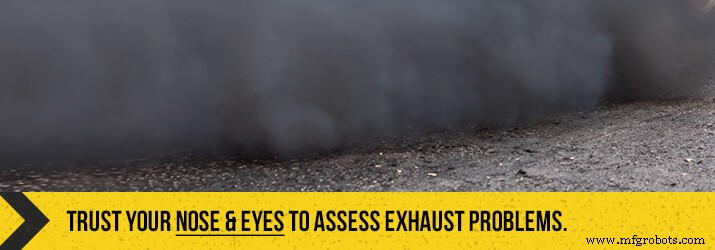
Unaddressed exhaust problems have serious consequences. Not only do you run the risk of OSHA violations, but also you put the health of you and your crew at risk without safe and fuel-efficient emissions. Consider short and long-term solutions for exhaust irregularities.
Common Causes: Common causes of exhaust problems include dirty or clogged air filters. Overworked engine exhaust filters make the short list as well. But it could also signal more severe concerns like engine malfunctions, oxygen sensor misreadings, poor exhaust recirculation, main or auxiliary ventilation failure and more.
Prevention: Assess the damage to your exhaust system through vacuum gauge tests or other digital tests. Make sure to regularly change your air filters. This remains the standard and best preventative measure for exhaust problems. You can also double down on preventative tools. Install components like diesel oxidation catalysts or upgraded machine ventilation systems.
3. Dashboard Warning Lights Going Off in Heavy Equipment
If your machine’s dashboard lights activate, something could be wrong with the system. Many operators shut off the machine when this occurs. They chalk up the warning lights to a routine maintenance concern, thinking a short rest will do the trick.
Dashboard warning lights are like canaries in the coal mine. They signal poor machine productivity. This can then signal an avalanche of heavy equipment servicing concerns.
Common Causes: Dashboards lights can activate for programmed or routine code maintenance. If you have a newer machine, you can often look up computerized diagnostics in the machine itself.
However, dashboard lights could sense more severe hydraulic or mechanical glitches. These include things such as hydraulic oil temperatures outside the standard operating range, low oil pressure readings or electronic control errors.
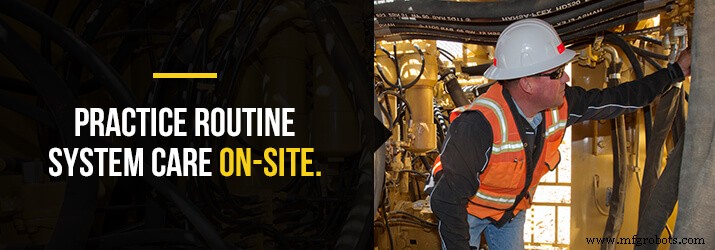
Prevention: Practice routine system care on-site. Bring your fleet in for regular servicing. These remain the prime ways to keep all variables in check that cause dashboard-light activation.
Auditory Signs Equipment Needs Service
In addition to seeing signs that your equipment needs service, you may also hear them. Watch out for these sounds and if you hear them, be quick to get your equipment to the shop.
1. Engine Stalls in Heavy Equipment
Difficult to start or stalled engines are a red flag your heavy equipment needs a hand. Overused and underserviced engine components and machine batteries can be the culprit. But so can low fuel levels or fluid transmission, temperature readings, filter blockage, ignition complications — or a whole range of other malfunctioning parts.
Common Causes: Powertrain issues are a likely engine-stalling culprit. Such damage occurs in the transmission, drive trains, clutches and gears. Likewise, other hydraulic system complications can take place in heavy machinery. Think piston misfiring, improper valve openings and air or fluid leakage all auditory engine concerns.
Prevention: Assessing the precise source of engine irregularities will be easy if you have an engine-management computer installed in your machine. However, preventing long-term engine problems without a digital system is possible. Run regular power tests and keep all system fluids, oils and fuels properly controlled. Certain machines may benefit from warm-up and cool-down windows before and after heavy work.
2. Grinding, Hissing, Screeching or Other Strange Heavy Equipment Noises
The sounds of gears seizing or parts wheezing are tell-tale signs heavy equipment needs servicing. Normal noises can sound quite different. It makes it difficult to assess what’s okay and what’s crying out for servicing.
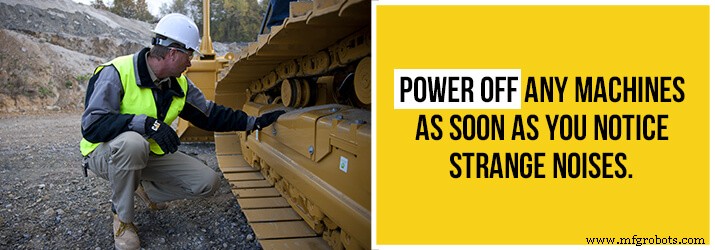
Consult with crew members and machine operators. They should know how long and how consistently these mechanical sounds occur. Power off any machines as soon as you notice the noises. Do a quick but thorough analysis of major parts. Review the engine, hydraulics, transmission systems, undercarriage and even tires.
Common Causes: Leaks in the vacuums or cooling systems could cause auditory hissing. Clunking or clacking noises could signal hydraulic, steering, brake problems or combustion woes. This is especially common while the machine is performing heavy labor. Repeated grinding or hammering might mean pump or valve misalignments, or an issue with the entire powertrain.
Prevention: Bring your equipment into a professional in the event of recurring noises. These professionals can perform routine maintenance and machinery inspections to prevent further damage. In fact, consider an entire servicing package. This will give you regular part inspections and expertise on your fleet. Consider installing a digital or computer tracking system to monitor part health.
You can keep strange noises to a minimum every day by properly lubricating system parts. Be wary of running machines outside proper operating temperatures. Never overwork — or underwork — your heavy equipment.
3. Audible Alarms on Heavy Equipment
Backup alarms are built into many of today’s construction and industrial machinery. Heavy machinery such as bulldozers, rollers, front-end loaders, compactors and more must come equipped with reverse signal horns that signal movement. These are particularly important if machine operators experience sightline obstructions while backing up. They have been the source of many OSHA-recorded job site injuries.
Machines with broken or too-quiet audible horns must be serviced immediately. Heavy equipment with dashboard alarms, buzzers and beepers that activate fall into this category as well. All alarms need to be addressed as soon as possible — for the safety and convenience of your crew.
Common Causes: Many abnormal system conditions trigger dashboard auditory alarms. These alarms are meant to deliver engine and auxiliary readings. However, they can also alert you to problematic operating loads and weights. Broken alarms require quick repairs or replacement in a shop. This servicing is simple and usually an isolated fix.
Prevention: Follow all machine operating directions and safety instructions. Never tamper with auditory alarms or motion horns. Immediately power down and inspect machines if dashboard auditory alarms go off.
How to Protect Heavy Equipment and Machinery
Your construction equipment and heavy machinery are at the center of your job. Without your fleet, on-site operations would be slow, cumbersome, costly and much more dangerous.
This makes protecting your heavy equipment critical. Proper safeguards and servicing measures involve foresight and planning. They are fundamental in caring for and maintaining the service life of your machines. Otherwise, you throw away your investment.
Preserving your equipment doesn’t have to be a complicated process. You won’t need to worry about expensive fees, extraneous labor and unnecessary fluff. For the optimal health, durability and efficiency of your heavy equipment, consider the following protective measures. Pick what works best for your situation.
1. Preventative Maintenance Packages
Preventative maintenance (PM) programs are not only a best practice for the life of your machine, but for your wallet, too.
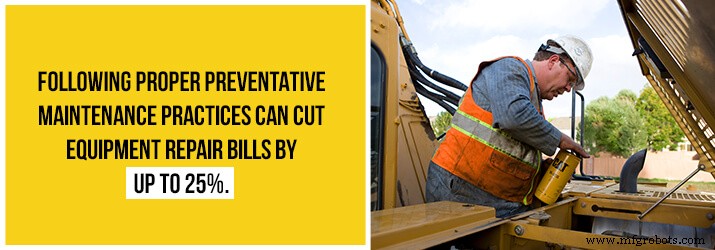
In fact, following proper preventative maintenance practices can cut equipment repair bills by up to 25 percent. Consider the upfront costs you’ve already invested in your industrial machines. Cutting overhead by 25 percent is a huge sum, averaging thousands of dollars in your pocket.
The first step you can take to ensuring the lifespan of your machinery is to sign up for a PM program. Think of these packages like routine physicals for your equipment. They run systematic assessments and tests across the gamut of machine operations. They inspect both individual and interdependent parts while looking for glitches or weaknesses. PM packages will then tweak, fix or replace diagnosed issues.
Most PM packages include some or all of these services:
- Routine total maintenance and repair contracts
- Machinery inspection programs
- Site inspections
- Field service and in-shop service
- Diagnostic readings
- S-O-S fluid inspection, including oil, fuel and coolants
- Risk-failure analysis
- Product link onboard monitoring
- Machine condition oversight
- Electronic information collection
- Machine inspection data
- Historical repair data
- Component and system rebuilds
- Component and system tracking
- Specialized repairs, tooling and equipment
- Cutting-edge equipment management software
- Crew training seminars
- Training and safety tutorials
2. Customer Value Agreements
A clear, written contract between you and your machine servicer is the second step to improved equipment lifespans. These customer value agreements outline the machine responsibilities of both parties. They include all repairs, assessments and maintenance schedules up front. They also cover additional inspections and procedures, ensuring the safety and wellness of your fleet.
Customer value agreements serve as the core communicative document for your machines. You can consult these customer value agreements to answer your questions. They divvy transparent machine needs and timelines, so you have one less thing to mull over.
Most customer value agreements are customizable. You can pick and choose what you want, with most incorporating these standard services:
- Total Maintenance and Repairs: All the oversight and management of your machines. This includes performance monitoring, preventative measures, as-needed repairs and component rebuilds. Everything you need to keep your machine running in tip-top shape.
- Preventative Maintenance Programs: Outlined above, PM programs are the first layer of defense against equipment wear and tear. Preventative services run diagnostics to find system weaknesses. They assess and address underperforming parts before they become a real problem. They can then fix or repair these issues right at the source, preventing large-scale system failure.
- Inspections: From individual parts to component systems, inspections can be added into to augment routine maintenance. You select inspections for tires, engines, hydraulic systems, transmission and even undercarriage performance.
- Fluid Analysis. Multi-part fluid analysis is another great addition. Professionals check and change the fluid components of your equipment. This also includes oil analysis, coolant tests and hydraulic fluid assessment.
- Product Link Onboard Analysis: Onboard analysis brings the best of technology to your customer value agreement. It is real-time monitoring and updates on the efficiency and productivity of your machines. These link systems can be installed in most Cat equipment. They give you and your fleet a leg up on any emerging mechanical problems.
3. Cat Equipment Management Services
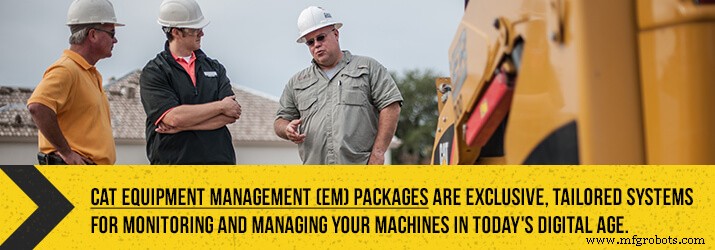
Cat Equipment Management (EM) packages are exclusive, tailored systems for monitoring and managing your machines in today’s digital age.
They go beyond preventative maintenance schedules and testing. You get top fleet management through the latest industry technology and digital solutions. Think of EM services like modernizing machine administration. You receive productivity-enhancing software, data insights, data management and business solutions. This reduces costs and gives you real-time insights into the workings of your machines. It provides answers old mechanical test would take hours, if not days, to assess.
EM Services uses two state-of-the-art technologies to build its fleets’ digital suites:
- VisionLink®: Vision Link is the user interface you log into to oversee, manage and direct compact machinery digitally. It’s the portal that gives you access to all machine data and information, as well as read efficiency and productivity vitals. It’s also an internet-accessible software. You can access machines from anywhere, any time. Whether on or off-site, you have unprecedented flexibility and machine-quality assurance.
- Product Link™: Product Link is the glue that holds EM Services’ digital platform together. It is installed into compact machines and heavy equipment. Product Link wirelessly connects VisionLink software with the actual fleet. You can then track locations, monitor usage, see maintenance charts and read emergency indicators in real-time. This is used to address a machine with a mechanical issue.
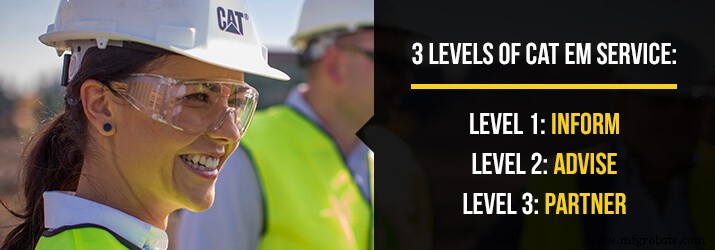
There are three levels of Cat EM Services you can select from. Each comes with its own available VisionLink and Product Link assurances:
- Level 1: Inform. Creates data-driven reports on your Cat equipment from installed machine-monitoring software.
- Level 2: Advise. Consult with trained data experts on how to use metrics and reports for best equipment practices and job-site management.
- Level 3: Partner. Work with experts for long-term consultative and customized equipment solutions.
MacAllister Machinery’s Free Equipment Inspections
Besides our extended warranties, predictive and preventative maintenance, and field and in-shop service packages, MacAllister Machinery comes with another competitive advantage — equipment inspections at no extra charge.
MacAllister’s free equipment inspections boost the protection of your heavy equipment. With years under their belts, factory-certified technicians perform assessments of your machines. They know the ins and outs of Cat and allied equipment. They deliver complete diagnostics and component appraisals that don’t cut corners or keep you in the dark, letting you focus on your job site.
After all, these are your machines, your time and your money. Free equipment inspections put all these variables to best use.
Proper Operator Training for Heavy Equipment
Proper job-site management means proper machine handling. It should be a key part of your site duties, training operators on safety and security. This will only increase the productivity of your operations, keep projects on schedule and reduce the risk of crew injuries.
Dedicated operators save time and money on repairs. They’re less likely to mishandle a machine at any point across its lifespan, meaning fewer system malfunctions. Other benefits to properly trained operators include:
- Task Delegation. All jobs and work processes run smoother. Employees are more productive, as everyone on site grasps who’s responsible for what task, on what machine.
- Machine Accountability. Your fleet is in the best possible hands. It has the most knowledgeable and trustworthy operators available on the market.
- Frontline Reporters. Your machine operators know the equipment best. They give valuable, one-of-a-kind insight into all mechanical workings. They make sure all machines are reliable, fuel efficient and dependable.
MacAllister Machinery offers instructional training and operator safety tutorials throughout Indiana. These can be included in customer value agreements. This training sharpens machine fluency across your crew. It deepens the understanding of operator manuals and provides real-life safety experience. The training also offers site controls and pre-and post-operation machine maintenance. We can also work operator tests and demonstrations into MacAllister tutorials.
The Price of Neglecting Your Heavy Equipment
Overlooking routine, comprehensive machine servicing will only hurt you in the long run. Neglecting or ignoring machine maintenance is risky business. For the safety of your crew, you can’t shirk your responsibility. The effectiveness of your project timelines, the quality of your work and your reputation are at stake. We don’t say these things lightly. Maintaining and servicing your machines is the sign of a competent and compliant manager — plus a cost-effective one.
Take into account these heavy machinery servicing statistics. See for yourself how beneficial regular maintenance is for your bottom line:
- Preventative maintenance lowers the risk of extensive system-failure repairs.
- Productive machinery eases total labor costs. It also decreases material inventory and extra part storage while increasing the volume and output of job-site work.
- Reduces unexpected machine downtime or unplanned outages in over 80 percent of cases. This is a major variable in project timelines or budgets adhering to projections.
- Maintenance costs on equipment decrease in direct relationship to production loss decreases.
- Improves the trade-in or resale value of machinery.
- On-time project deliverables in the 90th percentile for managers who adopt preventative maintenance. This starts with related cycle-time reductions. Compare this to only 19.5 percent on-time deliverables for those without heavy equipment check-ups.
Find Heavy Equipment Service in Indiana and Michigan
From routine inspections to ordering parts to repairs and service, MacAllister Machinery offers the best assistance you can find. Our seven locations throughout Indiana and Michigan service your equipment. We carry an outstanding dealer rating in the state. Our list of competitive maintenance advantages is hard to match.
Consider a free equipment inspection with our experts today. Find your nearest MacAllister location to see how we can partner together, providing you the best equipment maintenance and support in the industry.
Equipment Maintenance and Repair
- 5 Clear Indicators Your 3D Printing Service Bureau Needs Workflow Software
- 3 Key Indicators That Your Packaging Equipment Is Ready to Sell
- Why Prompt Repair of Your Test Equipment Is Essential for Business Continuity
- 10 Key Indicators That Your ERP System Needs an Upgrade
- 5 Clear Indicators Your Construction Equipment Requires Immediate Repair
- Essential Fabrication Equipment Every Metal Workshop Should Have
- Heavy Equipment Maintenance: Proven Dos & Don’ts for Longevity
- Proven Strategies to Maximize Returns on Your Heavy Machinery Sale
- How to Select the Ideal Insurance Coverage for Your Heavy Equipment
- Expert Heavy Machinery Field Service & On‑Site Repairs – Get Back to Work Faster