



Comprehensive Guide to Heavy Equipment Maintenance: Boost Reliability, Safety, and ROI
Heavy‑duty machines represent a significant capital investment and are integral to your operation’s success. A structured maintenance program is essential to keep these assets performing at peak efficiency, reduce downtime, and safeguard your workforce.
In the sections below, we’ll walk you through the core considerations for maintaining heavy equipment and how to design a maintenance system that aligns with your unique operational needs.
Let’s dive in.
What Is Included Under Heavy Equipment?
Heavy equipment refers to purpose‑built machinery designed for specific tasks or task clusters. The category spans several industries and includes:
- Earth‑moving gear such as excavators, scrapers, and bulldozers
- Construction vehicles like cranes and modular transporters
- Forestry machines, e.g., chippers and stump pullers
- Heavy‑load semi‑trucks and trailers
- Agricultural implements such as tractors and combine harvesters
- Railway rolling stock
Modern heavy equipment is typically equipped with sophisticated hydraulics, pneumatics, and electronic control systems, underscoring the importance of a focused maintenance strategy.
The Value of Proactive Maintenance
Investing in preventive maintenance pays dividends over reactive repairs, which can be up to three to ten times more expensive in the long run.
Key benefits include:
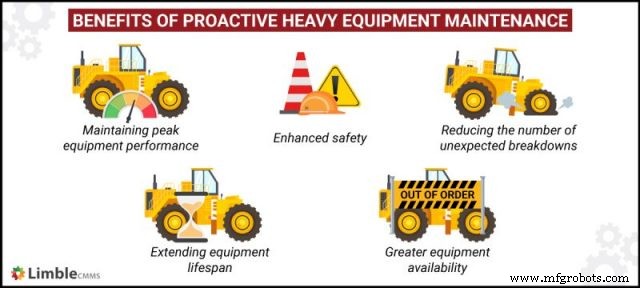
Enhanced Safety
Employers have a legal duty of care. A robust maintenance plan reduces the risk of equipment failure that could lead to injuries or fatalities, thereby protecting both staff and your organization from regulatory scrutiny.
Peak Performance
Minor issues such as improperly seated bypass valves, leaking hydraulics, or fouled heat‑exchangers quietly erode efficiency. Addressing these promptly preserves operational capacity and extends component life.
Reduced Unplanned Downtime
Unexpected outages erode revenue, damage client trust, and strain staff morale. Emergency repairs can cost 2–3 times more than scheduled work due to expedited shipping, after‑hour labor, and the need for backup equipment. Planned maintenance mitigates these risks.
Extended Asset Lifespan
Adhering to OEM‑recommended service intervals maximises the design life of each machine, spreading capital costs over a longer period and improving return on investment.
Higher Equipment Availability
Since most heavy equipment is billed hourly, downtime directly translates to lost income. A reliable maintenance schedule keeps machines running, reduces spill‑over costs, and enhances fleet utilisation.
Building a Proactive Maintenance Program
The following steps outline how to create a program that delivers measurable value.
Step 1: Select a Pilot Asset
Begin with a single machine that meets at least one of these criteria:
- Its performance is critical to daily operations
- It requires frequent servicing
- It has a history of breakdowns
Implement the full program on this asset before scaling to the fleet.
Step 2: Capture Baseline Performance
Historical data on operating cost, efficiency, fault logs, availability, and spare usage provides a benchmark for measuring improvement. Collect this information before the program takes effect.
Step 3: Assemble Essential Data
- OEM maintenance schedules and recommended intervals
- Regulatory mandates for your jurisdiction (e.g., lifting equipment, emissions monitoring)
- Additional tasks required by aftermarket components or company procedures (e.g., GPS guidance systems, hydraulic oil testing)
Step 4: Manage Spares, Consumables, and Tooling
Ensure that required parts, fluids, and specialised tools are available in inventory or at the job site before maintenance begins. Calibration of specialised equipment should be scheduled into the maintenance calendar.
Step 5: Choose a Management System
A modern Computerised Maintenance Management System (CMMS) automates task scheduling, work order creation, and data capture. Manual systems are error‑prone and hard to scale. For a deeper dive, see our CMMS guide (PDF available).
Step 6: Draft Maintenance Schedules
Align tasks with cycles, hours, miles, calendar dates, or a mix. Condition‑monitoring data can further refine intervals. Advanced approaches include Reliability‑Centred Maintenance (RCM) or Risk‑Based Maintenance (RBM).
Step 7: Monitor, Adjust, and Optimize
Initial schedules will evolve. Spread workload across periods, adjust frequencies based on wear trends, and keep the plan flexible to operational demands.
Step 8: Scale Across the Fleet
Once the pilot demonstrates ROI, replicate the template fleet‑wide using your CMMS to streamline data entry and scheduling.
Fine‑Tuning Your Maintenance Program
Leverage Checklists
Standardised SOPs and checklists ensure consistent task completion and help capture observations that inform future maintenance.
Maintain Defect Logs
Place a defect log in every cab. Operators record leaks, wear, or other anomalies, which maintenance teams review to identify trends. Example: 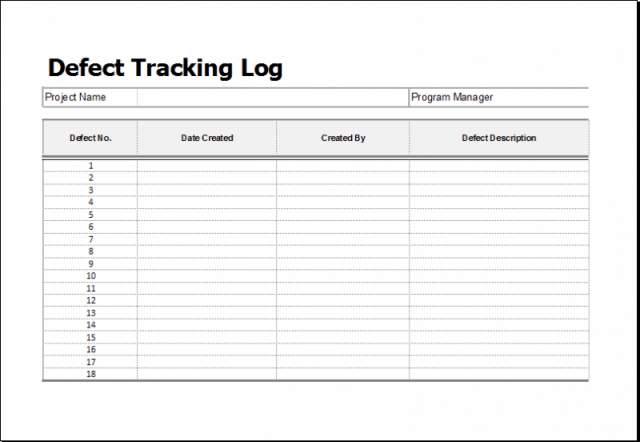
Develop Service Packs
Pre‑package required seals, lubricants, and fasteners under a single part number for each task. This streamlines field work and reduces search time.
Track Work Traceability
Record technician name, time spent, and parts used. This data underpins accurate cost calculations, maintenance planning, and accountability.
Centralise Service Information
Keep all service manuals, SOPs, and tooling in a single accessible location. A CMMS can serve as an inventory hub for tools and spare parts.
Collect Maintenance Metrics
Track metrics such as MTBF, MTTR, and equipment utilisation to forecast future needs and spot parts that under‑perform.
Outsourcing Maintenance: Pros, Cons, and Best Practices
Choosing between in‑house and third‑party maintenance depends on expertise, resources, and risk appetite.
Key Considerations
- Do you consider maintenance a core competency?
- Do you need specialised tools or skills?
- Can you transfer risk to a specialised provider via SLAs?
- Do you have sufficient on‑site facilities?
- Will outsourcing reduce overall cost of ownership?
Retain Ownership of Data
When outsourcing, ensure that maintenance data remains under your control. Preferably, contractors use your CMMS, granting you direct access to work orders, parts usage, and time logs.
Design a Tailored SLA
Include availability targets, safety compliance, and data reporting obligations. A well‑crafted SLA protects your interests and aligns incentives.
Look Beyond Price
Competence, compliance, and cultural fit often outweigh a lower bid. The ROI from higher uptime and reduced inventory can far exceed cost savings from a cheaper contractor.
Takeaway
While reactive maintenance remains an option for some, the majority of operators now recognise the long‑term cost savings and safety benefits of a proactive program. Start with a pilot, harness a CMMS, and you’ll see tangible improvements in revenue, uptime, and equipment life.
Interested in a solution? Request a demo or begin a month‑long free trial of Limble CMMS today.
Equipment Maintenance and Repair
- Manufacturing KPI Mastery: 20 Proven Metrics to Drive Efficiency & Profit
- Condition‑Based Maintenance: The Definitive Guide to Predictive Asset Care
- 5 Proven Maintenance Practices to Maximize Heavy Machinery Performance
- Your Comprehensive Guide to Expert Property Maintenance
- Maximizing Machinery Longevity: Professional Heavy Equipment Repair & Maintenance Guide
- How to Build a Robust Equipment Maintenance Program to Cut Downtime
- Industrial Equipment Service & Maintenance: Comprehensive Guide
- Ultimate Guide to Proactive Replacement of Heavy Equipment Parts
- Keep Your Heavy Equipment Running Smoothly During Winter
- The Critical Role of Heavy Equipment Maintenance in Industrial Success