



Your Comprehensive Guide to Expert Property Maintenance
A safe and functional environment is essential for a high quality of life.
As a property owner, you may wonder what steps are necessary to ensure your property meets those standards. The first step is to understand the fundamentals of property maintenance.
Read on as we:
- define what property maintenance encompasses
- outline the International Property Maintenance Code (IPMC)
- contrast commercial maintenance services with building an in‑house team
- share four practical tips for keeping your property in pristine condition
What Is Property Maintenance?
Property maintenance is the systematic process of preserving a residential or hospitality building—and its surrounding environment—in optimal condition through targeted upkeep activities.
Essential tasks include:
- Cleaning internal and external common areas, drains, gutters, corridors, etc.
- Rodent control and removal
- Gardening and landscaping
- Waste segregation and disposal
- Servicing, repairing, and replacing mechanical and electrical systems such as lighting, HVAC, water supply, and heating
- Safety inspections—routine checks of mechanical/electrical systems, fire suppression equipment, and overall premises safety
Effective maintenance benefits occupants and owners alike. Occupants return to a tidy, functional space, while owners protect their investment and mitigate liability risks.
Clearly delineating tenant versus landlord responsibilities—especially in rentals—is best practice. For example, light‑bulb replacement is often a tenant task, but larger repairs belong to the owner.
Adhering to the International Property Maintenance Code (IPMC)
Relying on a structured code prevents careless maintenance that can jeopardise safety and value. The IPMC sets minimum standards for existing buildings, covering structural exterior, plumbing, mechanical, electrical, sanitary, and fire‑suppression systems.
IPMC chapters include (image below):
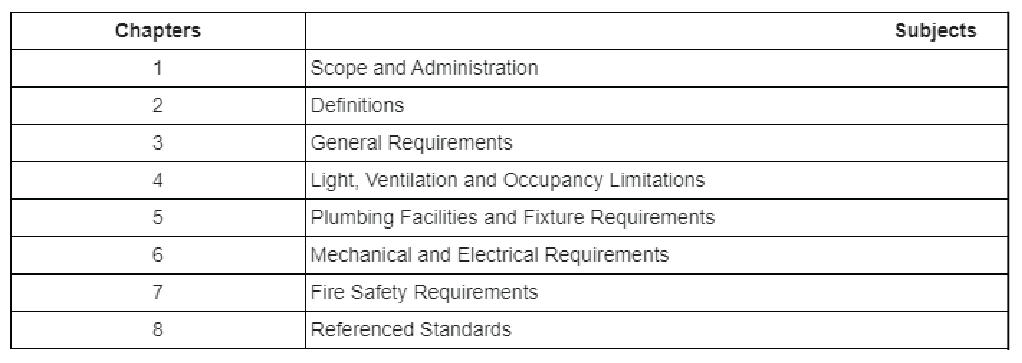
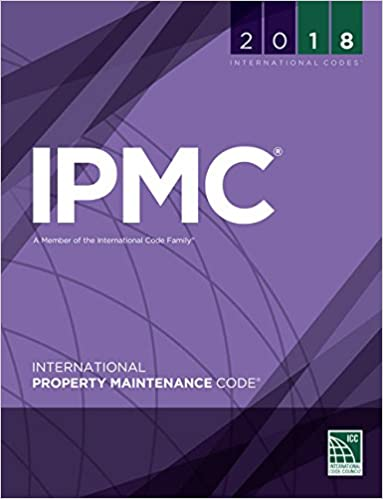
It is updated every three years and is available for adoption worldwide. For full details, consult the IPMC official publication.
Commercial Maintenance Services vs. In‑House Teams
Choosing between outsourcing to a professional team and building an in‑house department is pivotal. Both options have distinct advantages and challenges.
Hiring Professional Maintenance Services
Professional companies bring a proven, structured approach:
- Preventative Planning & Scheduling
They develop systematic checklists, document all work, recommend upgrades, and manage vendors. - Financial Reporting
They create budgets and provide monthly expense reports. - Tenant Communication
They filter tenant requests, handling routine issues and escalating only critical matters. - Regulatory Compliance
They stay current on local codes—including the IPMC—and ensure ongoing compliance.
Reduce Reactive Maintenance by 73.2%
See how Red Hawk achieved this with Limble
Read Our Case Study
Building an In‑House Maintenance Team
Owning the team gives you direct oversight and flexibility, but requires careful planning.
- Define Skillsets & Team Size—list required tasks (cleaning, HVAC, electrical, landscaping) to determine roles.
- Calculate shift hours and staffing levels; larger properties may need a facility manager or supervisor.
- Hire deliberately—thorough interviews and verification of qualifications are essential. Consider a recruitment agency for vetting.
- Outsource specialized roles that are not cost‑effective to keep in‑house (e.g., elevator technicians).
The Pros & Cons of Each Approach
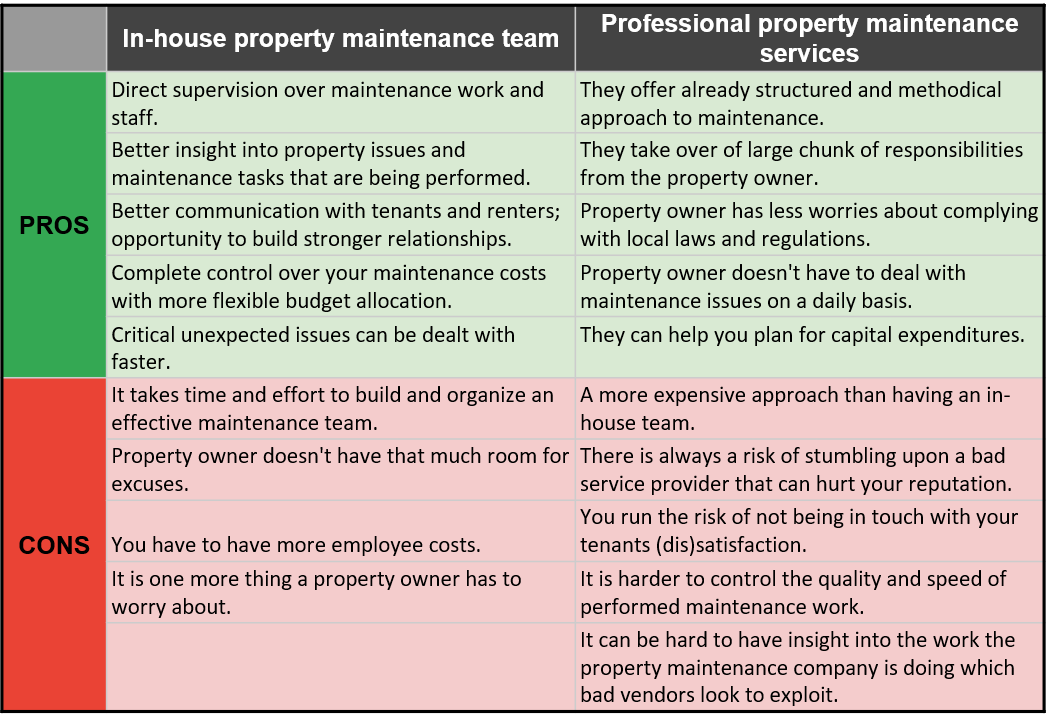
Regardless of the path you choose, track key performance indicators (KPIs) to align maintenance activities with your objectives.
Four Practical Tips for Peak Property Condition
Beyond the basics, these strategies help you sustain optimal performance:
#1 Prioritize Maintenance Funding
It’s tempting to cut maintenance budgets, but doing so accelerates asset wear and creates safety risks. Allocate 2–4% of the property’s replacement value annually to operating and capital maintenance. Research shows every dollar invested in upkeep saves five dollars in future repairs.
#2 Use Durable Components
Invest in high‑quality replacement parts—fans, belts, HVAC components, lighting, pumps. Though upfront costs may be higher, they reduce repair frequency and extend system life.
#3 Automate Maintenance Management
Manual tracking in large, multi‑unit properties is inefficient. A computerized maintenance management system (CMMS) streamlines scheduling, documentation, safety tracking, and cost control. Learn more in our guide on CMMS Systems.
A CMMS like Limble also provides oversight of outsourced technicians by granting them controlled access and assigning work orders directly.
#4 Conduct Regular Facility Condition Assessments
Regular audits generate baseline data on asset performance and highlight safety hazards for prompt action. These assessments inform future improvements and ensure compliance.
Key Takeaways
For residential owners and managers, property maintenance is not optional—most jurisdictions mandate it. Beyond legal compliance, the benefits—protecting asset value, ensuring tenant satisfaction, and preventing liability—are substantial.
Whether you outsource or build an in‑house team, consistent, well‑executed maintenance is essential. If you’re considering a CMMS to elevate your maintenance program, we’re ready to help.
1 Comments
-
FASASI MUTIUN ABIOLA KEHINDE July 15, 2021, 11:58 am
this is fantastic
Reply
Equipment Maintenance and Repair
- Manufacturing KPI Mastery: 20 Proven Metrics to Drive Efficiency & Profit
- Condition‑Based Maintenance: The Definitive Guide to Predictive Asset Care
- Comprehensive Guide to Heavy Equipment Maintenance: Boost Reliability, Safety, and ROI
- Total Preventive Maintenance: A Practical Guide to Boost Efficiency & Reliability
- The Comprehensive Guide to Golf Course Maintenance
- Routine Maintenance: A Practical Guide to Extending Asset Life
- Industrial Maintenance: Strategies, Careers, and Best Practices for Asset Reliability
- Corrective Maintenance Mastery: Strategies, Benefits, and Practical Examples
- Condition‑Based Maintenance Explained: A Practical Guide for Reliable Asset Management
- The Definitive Handbook on Stainless Steel: Composition, Types, and Care