



Industrial Maintenance: Strategies, Careers, and Best Practices for Asset Reliability
Industrial maintenance is the backbone of any high‑volume manufacturing or processing facility. Without a dedicated team, equipment downtime rises, production schedules collapse, and safety incidents increase. While maintenance budgets often face scrutiny, the cost of unmanaged asset failures far outweighs proactive upkeep.
In this article we cover:
- What industrial maintenance actually means
- Career paths and the skills required to thrive in the field
- How to streamline maintenance operations for greater efficiency and cost control
The goal is to help you save time, money, and frustration by applying proven maintenance principles.
What is Industrial Maintenance?
Industrial maintenance—often called plant maintenance—focuses on keeping every piece of equipment operating at peak performance. It blends technical proficiency with cost‑management: ensuring that repair expenses never exceed the revenue generated by the asset.
Key elements include:
- Preventive interventions that halt wear before it turns into downtime
- Performance monitoring to predict failures and schedule repairs strategically
- Data‑driven KPI tracking that aligns maintenance outcomes with business objectives
To keep maintenance costs in check, establish clear KPIs and adopt the appropriate mix of maintenance strategies—often supported by a mobile CMMS for real‑time visibility.
Common Industrial Maintenance Careers
Search results for "full‑time industrial maintenance jobs" reveal a spectrum of roles. Basic qualifications typically include:
- Manual dexterity and mechanical aptitude
- Adherence to safety protocols and written instructions
- Willingness to work overtime or on-call when needed
- Basic computer literacy for work‑order systems or CMMS platforms
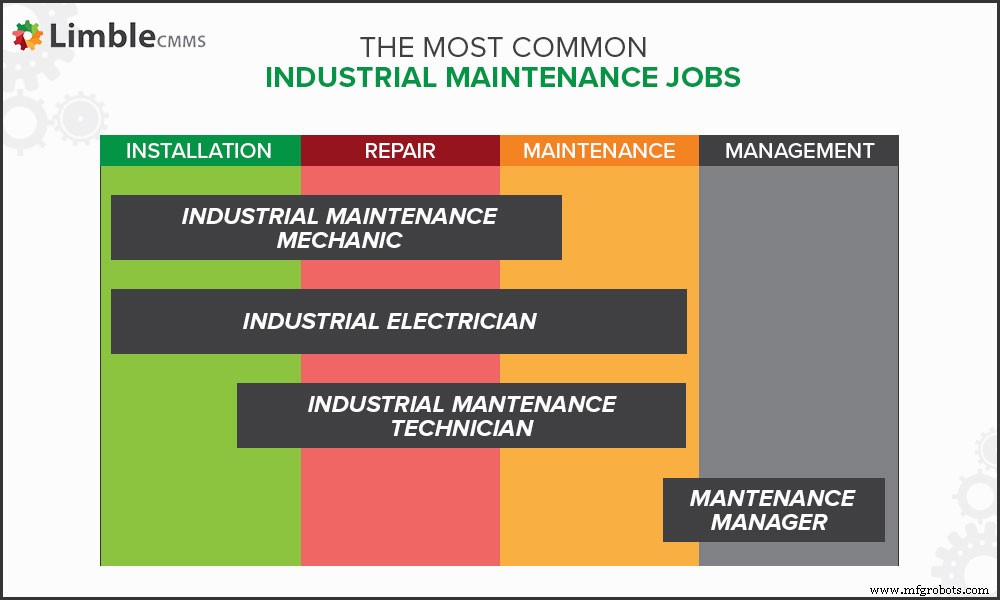
Below is a snapshot of the most common positions.
Industrial Maintenance Mechanic
Entry‑level, often high‑school graduates or apprentices, mechanics handle installation, routine repair, and preventive maintenance across mechanical, electrical, hydraulic, and pneumatic systems. Typical tasks:
- Execute scheduled preventive maintenance
- Diagnose and repair mechanical and electrical faults
- Install new equipment and weld or fabricate replacement parts
- Disassemble machines for adjustment and calibration
Career progression usually involves formal training or college programs that enhance technical expertise and job title.
Industrial Maintenance Technician
Technicians possess deeper specialization—often in a single equipment category or industry. Responsibilities include:
- Performing preventive maintenance on all facility assets
- Closing work orders on time while maintaining quality standards
- Responding to emergency repairs and on‑call duties
- Interpreting blueprints, schematics, and service manuals
- Conducting mechanical troubleshooting and diagnostics
Industrial Electrician
Focused on electrical systems, these professionals handle installation, repair, and maintenance of all plant electrical infrastructure:
- Install new electrical panels and circuits
- Update and verify electrical schematics
- Troubleshoot faults in motors, drives, and control panels
- Maintain existing electrical equipment to prevent outages
Maintenance Manager
Beyond technical tasks, managers oversee people, budgets, and processes. Key duties encompass:
- Coordinate maintenance schedules and workforce allocation
- Ensure compliance with company policy and OSHA regulations
- Maintain industry‑specific regulatory standards
- Control budgets, forecast inventory needs, and negotiate spare‑part pricing
- Design and roll out proactive maintenance programs
- Select and manage subcontractors for specialized work
- Identify technology or process upgrades that drive productivity and cost savings
Training and Skill Development
Industrial facilities house a broad array of assets—hydraulics, pneumatics, heavy machinery, and precision instruments—requiring technicians to master diverse skill sets. While no single professional can be an expert in every area, continual learning is essential. Apprenticeships, on‑the‑job training, and specialized certifications (e.g., HVAC, PLC programming, welding) are common pathways.
Industry partners such as Madison College offer structured programs that blend classroom theory with hands‑on practice, preparing technicians for real‑world challenges.
Industries Relying on Industrial Maintenance
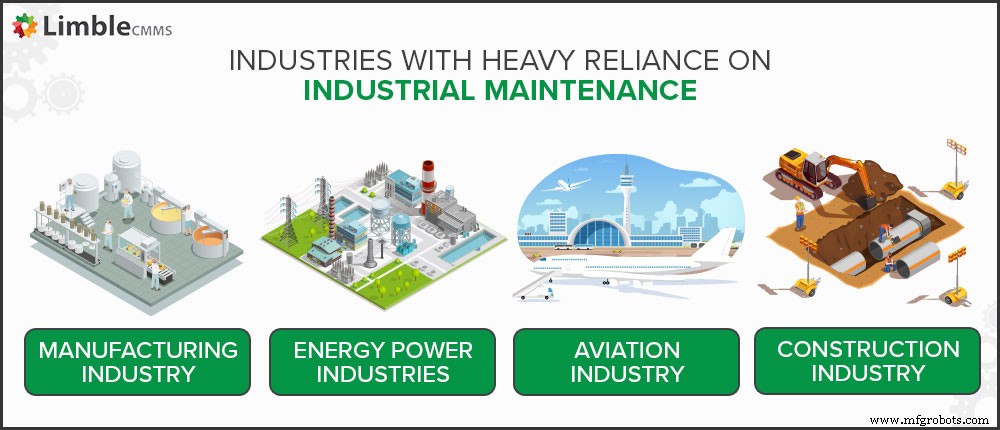
Heavy equipment and high capital expenditure dominate sectors such as:
- Manufacturing
- Energy (oil, gas, mining, electric power)
- Aviation
- Construction
- Automotive
These industries share two common traits:
- They operate large, expensive machinery.
- Maintenance budgets represent a significant portion of operating costs.
Maintenance Strategies
Choosing the right blend of strategies depends on assets, internal resources, and business goals.
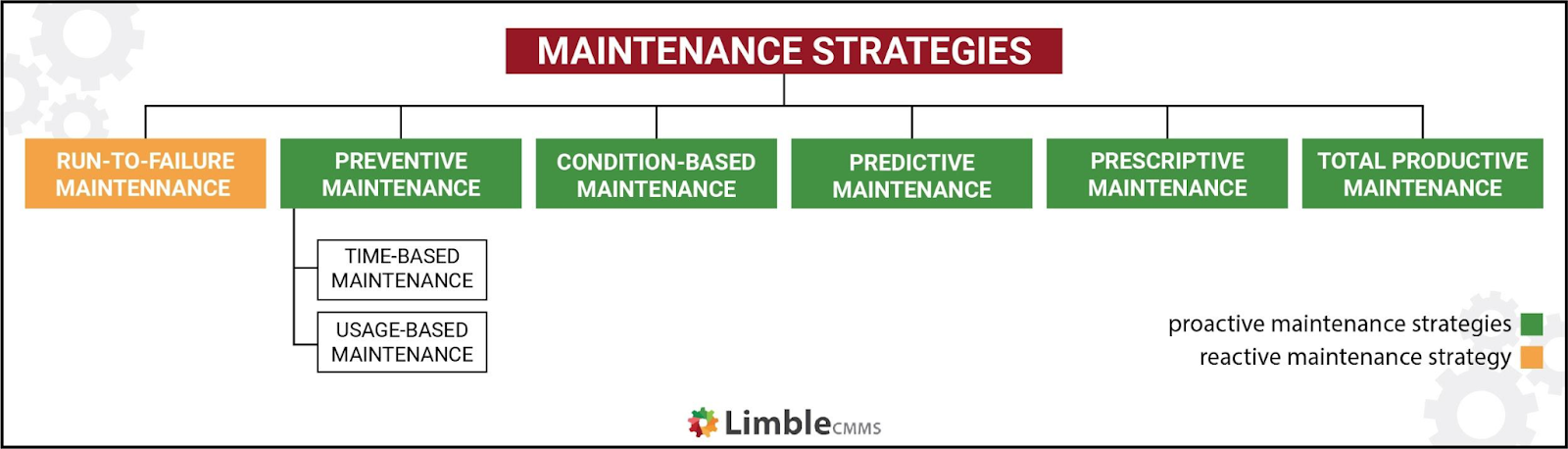
- Preventive Maintenance (PM): Scheduled interventions that prevent wear and tear.
- Run‑to‑Failure (RTF): Acceptable for low‑critical, low‑cost equipment; relies on tolerance for sporadic downtime.
- Condition‑Based Maintenance (CBM): Uses vibration, ultrasonic, infrared, and other non‑destructive tests to schedule work based on real‑time condition.
- Predictive Maintenance (PdM): Combines CBM data with historical performance to forecast failures.
- Prescriptive Maintenance (RxM): Leverages AI and machine learning to not only predict but also recommend optimal corrective actions.
For a deeper dive, see our guide on selecting the right maintenance strategy.
Four Best Practices for Industrial Maintenance Excellence
1. Implement a Proactive Maintenance Program
Shift focus from reactive fixes to preventive and predictive actions. This reduces unplanned downtime and extends asset life.
2. Deploy Mobile CMMS Solutions
Modern maintenance operations rely on real‑time data. A mobile CMMS—such as Limble—offers:
- Remote work‑order scheduling and tracking
- Inventory alerts for parts and consumables
- Comprehensive asset history with photos, manuals, and health metrics
- Instant data capture on the shop floor to ensure accurate documentation
- Customizable reports that drive data‑based decisions
- Full customization to match unique operational workflows
For newcomers, this guide explains CMMS fundamentals.
3. Define Clear Operating Procedures
Consistency is critical. Develop and enforce:
- Standard Operating Procedures (SOPs) for routine tasks
- Emergency Operating Procedures (EOPs) for critical incidents
- Preventive Maintenance Checklists tailored to each asset
- OSHA‑aligned safety protocols (lockout‑tagout, PPE, process safety management)
Procedures support but do not replace hands‑on training; both are essential for a resilient maintenance culture.
4. Set, Measure, and Improve
Objectives without metrics are merely aspirational. Track KPIs such as MTTR, MTBF, planned versus unplanned maintenance, and downtime. Use your CMMS to generate real‑time reports that inform continuous improvement.
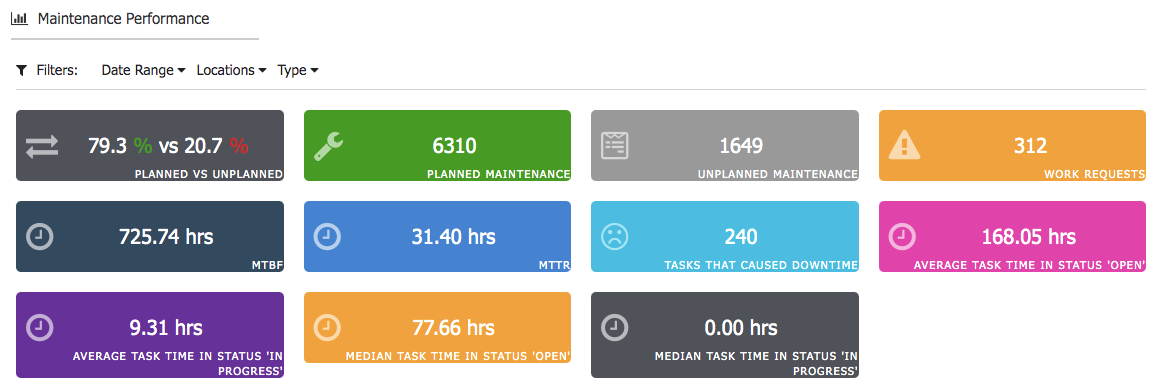
Limble automatically calculates these KPIs, enabling managers to pinpoint performance gaps and adjust resource allocation accordingly.
Industry Resources
- Plant Services: Curated news, case studies, and industry reports.
- Manufacturing.net: Educational content across aerospace, energy, automotive, and industrial operations.
- Reliability FM: Podcasts featuring top experts on reliability and maintenance.
- Limble CMMS Blog: Regular articles on best practices, technology trends, and facility management.
The Future of Industrial Maintenance
The field is evolving rapidly, driven by predictive analytics, Industry 4.0, 5G connectivity, and automation. Rather than being displaced, maintenance professionals will see their roles deepen, incorporating data science and AI insights into decision‑making.
Even as machines become smarter, the need for skilled technicians, managers, and strategists remains. Embracing modern tools—mobile CMMS, predictive algorithms, and digital twins—will position your organization ahead of the curve.
Ready to modernize your maintenance program? Contact us for a tailored solution, schedule a demo, or start a 30‑day free trial today.
Equipment Maintenance and Repair
- Industrial Maintenance Staffing Solutions for Peak Efficiency
- Industrial Maintenance Mechanics: Enhancing Facility Performance & Profitability
- A Practical Guide to Building a Robust Predictive Maintenance Program
- How to Build Effective Preventive Maintenance Checklists: A Practical Guide
- Industrial Generator Maintenance: Expert Guide & Checklist
- Elevate Your Bottom Line with World‑Class Industrial Lubrication
- Condition‑Based Maintenance Explained: A Practical Guide for Reliable Asset Management
- Industrial Equipment Service & Maintenance: Comprehensive Guide
- Choosing the Right Industrial Brakes for High-Heat, High-Pressure Equipment
- Essential Maintenance Benchmarking: A Step-by-Step Guide