



Industrial Generator Maintenance: Expert Guide & Checklist
Consistent, high‑quality power is the lifeblood of industrial operations. Any interruption can halt production and generate costly downtime. To safeguard against power disruptions, most facilities rely on industrial generators—equipment that demands diligent care.
In the sections below, we outline why regular generator maintenance matters and detail the key components that require attention. We also provide practical checklists to help you build effective maintenance schedules.
The importance of generator maintenance
Industrial generators serve as the safety net against unreliable grid power. Even though they are often activated only during outages, they must be ready to deliver seamless power when the moment arrives.
A failure to start or run at the right time represents a critical breach of that safety net. Beyond lost production, a malfunctioning generator can pose serious safety hazards and damage expensive equipment.
For example, a 2016 explosion at a Texas oil refinery caused an employee injury and forced a production halt. Such incidents underscore the need for rigorous upkeep.
Routine maintenance for equipment that is seldom used is easy to overlook, yet it is essential for reliability and safety.
Types of industrial generators
Industrial generators come in various configurations, distinguished by size, power output, fuel type, and mobility.
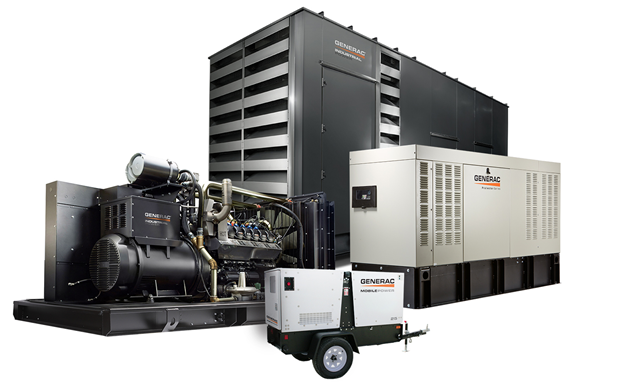
Industrial generators. Source: Clifford Power
Common categories include:
- Diesel / Natural Gas / Petroleum – the most widely used fuels, with heavy oil and propane as secondary options.
- Portable Generators – compact units designed for easy relocation, supplying modest power output.
- Inverter Generators – variable‑speed units that automatically adjust output, reducing noise and fuel consumption.
Other classifications exist, but the above suffice for most maintenance discussions.
Critical generator components
Understanding the primary parts of a generator is the first step toward effective maintenance.
Alternator
The alternator converts mechanical energy into electricity. It consists of a stator, rotor, and carbon brushes. Excessive rotor speed can lead to catastrophic failures, while coil breakdown and brush wear are common degradation points.
Inspect the alternator regularly for signs of overheating, unusual vibrations, or wear.
Fuel system
The fuel system ensures a steady supply to the engine. Leaks and blockages in cut‑off valves are the most frequent issues and can have explosive consequences.
Engine
The internal‑combustion engine produces the mechanical power that drives the alternator. A decline in engine efficiency directly translates to reduced generator output.
Lubricant
All moving parts rely on proper lubrication. Contaminated oil increases friction and accelerates wear. Change oil regularly to maintain performance.
Voltage regulator
Voltage regulators stabilize output despite variations in engine speed, ensuring that industrial processes receive steady power.
Cooling and exhaust systems
Effective cooling prevents overheating, while a well‑maintained exhaust system expels combustion by‑products. Failure in either can trigger shutdowns or damage.
Battery
Modern generators use batteries to start and self‑charge. A weak battery means the generator may fail to start during a critical outage.
Creating a generator maintenance schedule
Begin with the OEM’s recommended maintenance plan, then refine it based on your facility’s operating conditions and environmental factors. Use a work‑order system to enforce the schedule.
Develop detailed checklists and SOPs for recurring tasks. Mobile CMMS platforms, such as Limble, allow you to attach procedures to preventive maintenance (PM) jobs and access them on the go, ensuring compliance with the highest standards.
Industrial generator maintenance checklists
Maintenance tasks vary by generator type, but many activities are universal. The following checklists provide a baseline for weekly, monthly, and annual inspections.
Weekly checklist
- Inspect the exterior for damage or debris.
- Check the fuel system for leaks.
- Verify oil level before each start; for continuous operation, monitor oil at regular intervals; for rarely used units, check weekly.
- Run a 30‑minute load test if the generator has been idle.
- Replace oil after 100 operating hours.
Monthly checklist
- Inspect exhaust for blockages.
- Test cables and battery for continuity and charge.
- Verify ventilation; if a coolant is present, confirm the level and temperature.
- Perform an extended load test (≥ 1 hour) to validate performance.
- Clean the unit and surrounding area.
- Replace starter plug and air filter.
Annual checklist
- Replace oil, oil filter, air filter, and coolant.
- Check and top up lubricants.
- Test the transfer switch for faultless operation.
- Inspect the entire electrical system, including the battery.
- Verify auto‑start settings and conduct a full load test to ensure the unit can meet peak demand.
If you employ condition monitoring, vibration analysis and predictive algorithms can refine your maintenance intervals.
Final thoughts
Industrial generators are the silent guardians of production continuity. Neglecting their upkeep can lead to catastrophic failures, costly downtime, and safety incidents.
By integrating OEM guidance, operational data, and systematic checklists, you can establish a reliable maintenance framework. Leveraging CMMS and SOPs guarantees that every task is executed on time and to specification.
Equipment Maintenance and Repair
- Industrial Maintenance Staffing Solutions for Peak Efficiency
- Industrial Maintenance Mechanics: Enhancing Facility Performance & Profitability
- Total Preventive Maintenance: A Practical Guide to Boost Efficiency & Reliability
- Routine Maintenance: A Practical Guide to Extending Asset Life
- Industrial Maintenance: Strategies, Careers, and Best Practices for Asset Reliability
- Elevate Your Bottom Line with World‑Class Industrial Lubrication
- Standby Generators: Essential Maintenance Planning for Reliable Power
- Industrial Equipment Service & Maintenance: Comprehensive Guide
- Expert Tips for Reliable Industrial Backup Generator Maintenance
- The Complete Industrial Generator Rental Guide: Power Solutions for Business and Events