



Achieving Sustainable Maintenance Success: Short‑Term Wins vs. Long‑Term Processes
I recently visited a plant in South America for an assessment. Over the past two to three years, the team had implemented several initiatives, yet their production lines remained far from stable reliability, hovering in the high 70 % range for Overall Equipment Effectiveness (OEE).
The business consultant guiding the facility had emphasized “low‑hanging fruit” and rapid wins to deliver immediate financial impact. Quick fixes sound appealing, and the mill did see pockets of success. However, an exclusive focus on short‑term gains can trap maintenance organizations in a reactive cycle.
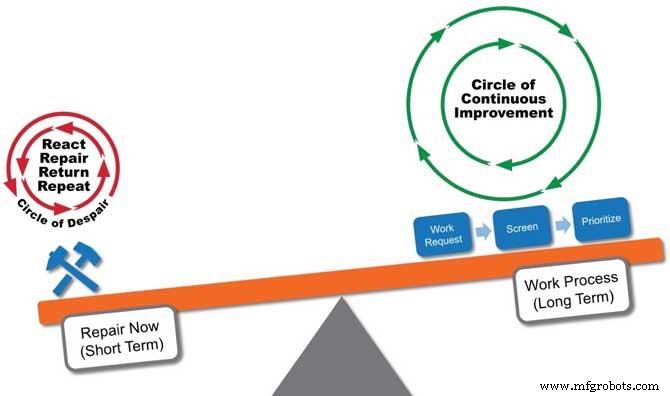
Should we chase short‑term results or build lasting processes?
Reactive maintenance is the hallmark of many struggling organizations: problems that arose yesterday or today receive priority, leaving no room for job planning or scheduling. Repairs are often rushed, executed without the proper tools, materials, or detailed instructions, which leads to rework and further loss of reliability. At IDCON, we refer to this as the “circle of despair.”
When told to pursue quick results, most facilities will pick a handful of critical assets, clear the known backlog, and add overtime or external contractors. This strategy delivers visible improvements—especially when paired with basic preventive‑maintenance (PM) troubleshooting on the most critical equipment. We frequently employ this approach to demonstrate early wins and prove the viability of a reliability program.
Yet, without a solid work‑process foundation, the equipment’s condition reverts to its prior state and the mill is back at square one. The tissue‑mill example illustrates this: modest gains were eroded because no sustainable process was in place.
Parallel to the short‑term fixes, the plant must institutionalize a basic work‑process framework that includes:
- Failure prevention—through proper lubrication, operating practices, alignment, precision installation, and other proactive measures.
- Work‑management cycle—inspection, planning, scheduling, and execution.
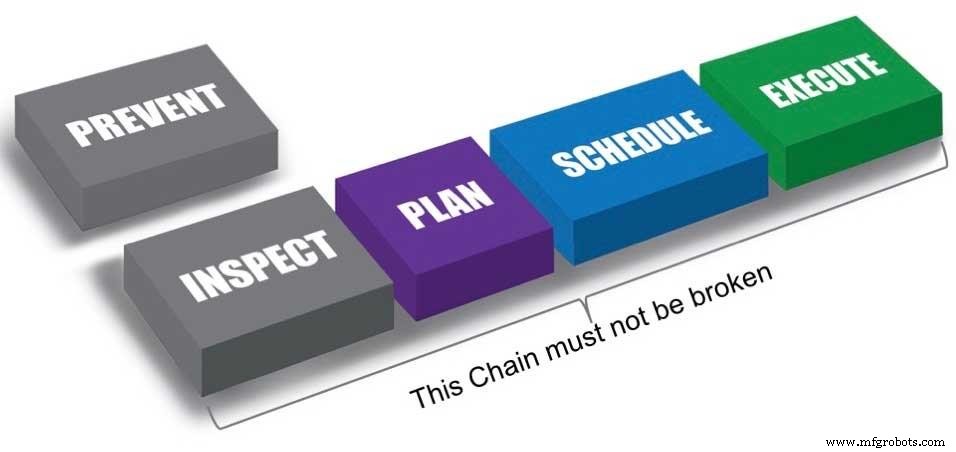
Short‑term wins are valuable, but long‑term success hinges on a disciplined work‑process.
Had the mill combined rapid fixes with the implementation of these processes, they would likely have achieved a stable OEE in the low 90 % range.
Quick wins energize reliability projects, but they must be coupled with institutionalized work‑management practices to secure lasting results.
About the author:
Torbjörn (Tor) Idhammar is president of reliability and maintenance management consulting at IDCON Inc. Contact Tor at 800‑849‑2041 or e‑mail info@idcon.com.
Management Consultants in Reliability and Maintenance – IDCON
Equipment Maintenance and Repair
- Preventive Maintenance: A Comprehensive Guide to Reliability, Cost Savings, and Equipment Longevity
- Why Reliability and Maintenance Initiatives Often Fail – A Hedgehog vs. Fox Analysis
- Joint Reward Systems: Driving Collaboration and Results Across Plant Departments
- Harnessing a Clear Vision to Drive Maintenance & Reliability Success
- Transforming a Mail‑Processing Plant: Teamwork Drives Lower Absences and Higher Quality
- Industrial Generator Maintenance: Expert Guide & Checklist
- Total Preventive Maintenance: A Practical Guide to Boost Efficiency & Reliability
- Routine Maintenance: A Practical Guide to Extending Asset Life
- Reset Your Cat D Series Skid Steer Loader Service Reminder Light – Quick Video Guide
- Preventative Truck Maintenance: Long-Term Benefits That Drive Performance and Save Costs