



How to Persuade Top Management to Invest in Maintenance
Maintenance professionals often find it challenging to convince senior leaders of the strategic value of their work. In this article, I share common obstacles and proven tactics that have helped teams secure budget and support across industries.
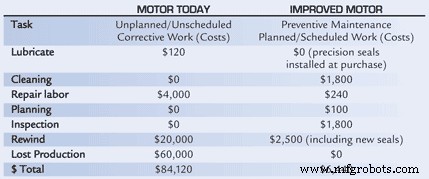
Table 1. A 10‑year business plan for a typical motor versus a high‑performance motor.
Reframing the Problem
In maintenance, the word “maintenance” should encompass more than just repairs. For those new to the field, it often means fixing broken equipment as quickly as possible. The real deliverable of a competent maintenance department is equipment reliability. When reliability is the focus, maintenance activities are scheduled, documented, and executed with precision—shaft alignment to one‑thousandth of an inch, equipment balancing to 1.0 G, and lubricants filtered to 3 microns. In contrast, a repair‑oriented approach is ad‑hoc and lacks the rigor needed to sustain performance.
Advice 1: Frame your discussions around selling “equipment reliability” rather than “repairs.”
Starting with the Budget
A process plant I consulted for allocated a maintenance budget of $14 million—down from $14.5 million the previous year—without a clear assessment of actual plant needs. The decision rested on the assumption that maintenance costs would naturally decline over time, a premise that rarely holds without data.
Every maintenance manager should develop a five‑year plan that lists major, high‑cost projects and distributes them evenly across the planning horizon. Presenting this plan to plant and corporate leaders demonstrates foresight and aligns expectations. With a focus on reliability, budget variations are normal, but the overall trend should be downward as preventive measures reduce the need for costly interventions.
Each fiscal year, construct a detailed, zero‑based budget that reflects the plant’s specific needs. A realistic, trustworthy budget emerges only when built from scratch and grounded in measurable data.
Advice 2: Build a five‑year maintenance roadmap and generate an annual budget from zero each year to present to management.
Be Specific
When communicating with non‑technical stakeholders, specificity breeds credibility. A supervisor once advocated for motor inspection and cleaning. While operations agreed in principle, no action was taken because the argument lacked concrete details. By collaborating to create a ten‑year cost comparison for a critical motor—illustrated in Table 1—management understood the tangible benefits and approved the maintenance activities.
Specificity anchors benefits and costs, turning abstract concepts into actionable decisions.
Advice 3: Provide concrete data and case studies to illustrate the financial impact of your initiatives.
What Does Reliability Cost Your Plant?
To build a compelling business case, translate reliability improvements into monetary terms. Determine the cost of downtime for each machine, line, or the entire plant. Once quantified, you can convert downtime savings from maintenance language into dollars that resonate with executives.
Although downtime costs may vary with production schedules, they can always be estimated and tracked. Use these figures to demonstrate the return on investment of reliability programs.
Advice 4: Calculate downtime costs and link reliability gains directly to financial savings.
Equipment Maintenance and Repair
- 7 Key Advantages of Computerized Maintenance Management Systems (CMMS)
- Mastering Maintenance Inventory Management: Strategies to Cut Costs and Boost Reliability
- Maintenance Management 101: How CMMS Drives Efficiency, Cost Control, and Asset Longevity
- 7 Critical Maintenance Management Mistakes You Must Avoid
- 12 Pillars of Effective Reliability Management
- Mastering Information Management to Boost Maintenance Performance
- Streamline Facility Management with QR Code Integration
- The Definitive Handbook of Maintenance Management: A Practical Guide for Leaders
- 8 Proven Strategies to Slash Maintenance Management Costs
- Mastering Maintenance Management: Boost Efficiency & Control Costs