



High-Performance Maintenance at CCM Tecate: A Proven TPM Success Story
In recent years, Total Productive Maintenance (TPM) has faced skepticism in U.S. manufacturing circles.
A 2006 study by The Manufacturing Research Center found that only 38 % of U.S. manufacturers reported actively implementing TPM. Of those, 37 % admitted they were not achieving the expected progress, 27 % said progress was minimal, and a mere 8 % rated their results as "excellent."
Among firms that had not yet adopted TPM, 24 % viewed it as "not important at the present time," 12 % claimed they had already completed it, 19 % planned to begin next year, 37 % considered future adoption, and 8 % were unfamiliar with the concept.
Recent surveys reinforce these findings: 27 % of respondents listed TPM as a current business initiative, yet only 6 % claimed full operational deployment; only 5 % described TPM as their plant’s core maintenance philosophy.
Clearly, TPM’s reputation in the United States is mixed.
However, the issue may lie less in TPM itself and more in how it is applied. Many plants and companies equate "implementing TPM" with:
- a routine machine cleaning and repainting program;
- basic lubrication and maintenance tasks assigned to operators;
- a strategy for "putting people to good use;"
- a justification for cutting maintenance staff.
These narrow interpretations diverge sharply from the original intent of the Japanese Institute for Plant Maintenance, which defined TPM in 1971 as "a path to better manufacturing, with a constant focus on the creation of value."
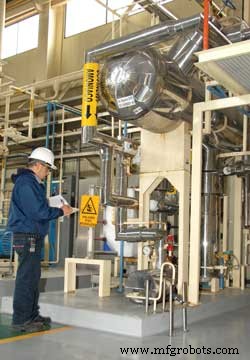
Production operators such as Pedro Garcia play a key role in MAD. Photos by Oswaldo Lopez
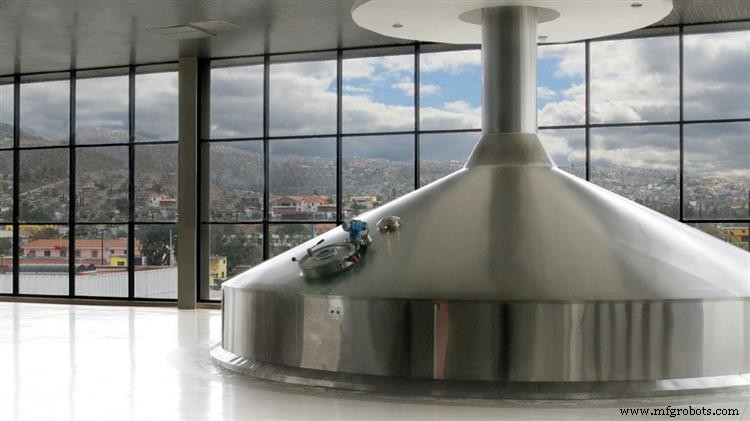
The modern, highly effective translation of TPM is embodied by Cervecería Cuauhtemoc Moctezuma (CCM), one of Latin America’s largest brewers. Known internally as Mantenimiento Alto Desempeño (MAD) or High‑Performance Maintenance, CCM’s six plants in Mexico demonstrate TPM’s full potential. The Tecate brewery, located just south of the U.S. border on the Baja California peninsula, offers the best illustration.
CCM Tecate produces six flagship brands—Tecate, Tecate Light, Dos Equis Lager, Dos Equis Amber, Carta Blanca and Sol—by applying MAD/TPM across every production step. The core principles are:
- clean, inspect, lubricate, and control contamination;
- engineer and maintain best practices;
- focus on value‑adding tasks;
- design for reliability and maintainability;
- continuously improve equipment and processes;
- detect failures, solve problems, and conduct root‑cause analysis;
- develop employees’ skills, abilities, and careers;
- ensure all stakeholders share a common language;
- implement predictive maintenance;
- conduct formal assessments to gauge program maturity.
"It means we are all responsible for guaranteeing the total effectiveness of the equipment—maintenance, production, top management, human resources…everyone," says plant maintenance manager Manuel Sanchez.
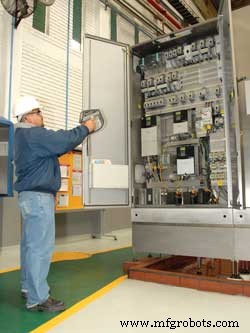
Alberto Diaz scans an electrical cabinet with an infrared camera.
For CCM, MAD is an all‑encompassing commitment to reliability, productivity, safety, environmental stewardship, and profitability.
"MAD does not mean ‘crazy’. MAD means ‘smart’," Sanchez explains.
Comprende? You will.
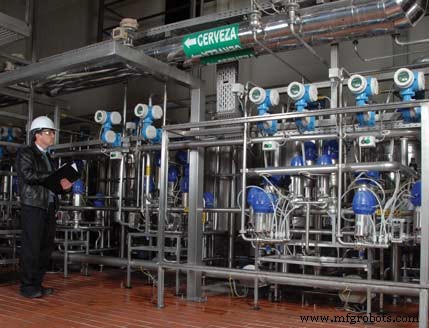
Plant maintenance manager Manuel Sanchez strives to impact the total effectiveness of equipment.
A CLEAN SLATE
Mad emerged as an improvement tool for CCM several years after a pivotal union contract restructuring in 1998. The new agreement broadened the responsibilities of hourly workers, shifting operators from single‑machine, single‑task roles. This change was not tied to TPM but created the conditions for its successful adoption.
Following the shift, veteran workers left, leaving a younger workforce. CCM Tecate now boasts an average plant age of 33 years and a maintenance crew average age of 27, with an average tenure of 10 years.
In 2000, CCM leadership integrated the Japanese Institute’s TPM philosophy into MAD, piloting the program at the Monterrey headquarters and expanding it to Tecate, Guadalajara, Navojoa, Toluca, and Orizaba by 2001.
Each plant initially approached TPM cautiously, risking a sub‑optimal implementation. Sanchez’s persistence and communication skills dismantled resistance, convincing plant leaders that maintenance activities were integral to equipment operation and would streamline operator tasks, improve efficiency, and elevate key performance indicators.
Similar strategies were applied across brewing, filling, and packaging lines.
Changes extended beyond production, redefining the maintenance organization.
"Ten years ago, performance was good, but it was strictly focused on preventive maintenance. We had no maintenance engineering, limited planning, and no proactive approach to equipment acquisition or continuous improvement," says Sanchez.
Today, CCM’s maintenance organization is organized into three interconnected functions.
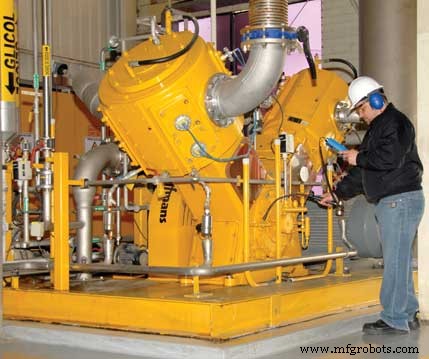
Carlos Valdez uses ultrasound equipment to check the health of an asset.
Maintenance Engineering analyzes, develops, and refines asset care plans, leads root‑cause investigations, and translates findings into reliability enhancements.
Maintenance Planning orchestrates efficient work‑order scheduling, assembling kits with all necessary parts and instructions, and focuses on the "what, where, and how" of maintenance while scheduling addresses the "who and when."
Maintenance Execution applies technical skills to perform well‑designed maintenance activities, using analytical techniques to uncover root causes and feed back improvements.
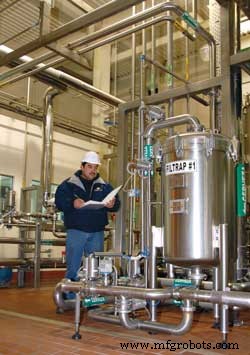
A Tecate plant worker writes down instrument readings.
AT CCM, OEE IS ETE
In his role as maintenance manager, Sanchez leads an 80‑person team that drives total equipment effectiveness (ETE) and supports the six pillars of MAD.
ETE, or overall equipment effectiveness, is measured in two ways at CCM:
- ETE Planta: plant availability × plant performance × plant quality;
- ETE Total: the three components above multiplied by plant capacity utilization (accounting for demand).
"ETE lies at the heart of the MAD philosophy," Sanchez notes. "All maintenance and operations activities influence its components."
Daily work revolves around six pillars—CCM’s building blocks of maintenance and reliability excellence—that aim to:
- Improve basic equipment conditions through operations and maintenance;
- Detect and diagnose problems and improvement opportunities;
- Optimize and reduce maintenance;
- Apply engineering and continuous improvement to equipment;
- Increase process flexibility;
- Enhance safety and environmental stewardship;
- Provide a clear explanation of the six pillars.
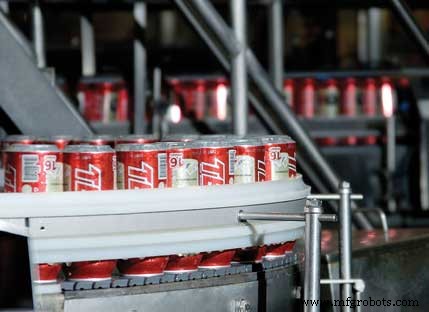
The plant runs 24/7 to produce 4.6 million cases of beer each month.
PILLARS OF STRENGTH
Maintenance Management System is the first pillar. It establishes best maintenance and reliability practices, focuses on value‑adding tasks, and builds a system for world‑class maintenance.
This pillar delineates the three maintenance functions and provides guidelines for effective planned maintenance. Planning is led by three full‑time staffers and generated through the company’s SAP system, which is fully optimized for work‑order and machine history management.
Just‑in‑time procurement of MRO products through strategic distribution partners and 100 % kitting of all planned work orders streamline the job‑to‑completion process, reducing inventory and cost.
"We want each function to focus on value‑adding tasks, not non‑value‑added ones," says MAD coordinator Edgard Espinoza. "We eliminate the need for mechanics to search for parts, making the process efficient."
Improvement of Equipment and Processes is the second pillar. It provides tools to analyze failures, solve problems, and launch formal improvement projects.
Teams are trained in Pareto analysis, kaizen, root‑cause analysis, FMEA, and the 5‑why method to assess impact, urgency, and severity of failures. Projects are completed by maintenance teams or individuals.
"Projects improve equipment and company results," says Alberto Diaz, a predictive maintenance technician dubbed "the coordinator of solutions for chronic problems."
Since 2003, the maintenance department has completed 100 projects, including 43 in 2007. Employees can track project status via the intranet.
Successful projects are sustainable and achieve improved productivity, quality, safety, and cost reductions.
Early Administration of Equipment is the third pillar. It emphasizes proactive maintainability and reliability in new equipment.
“Traditionally, early‑stage problems arise from suppliers or installation,” says maintenance engineer Adolfo Esquer. “Our cross‑functional team, led by maintenance engineering, collaborates with OEMs to design equipment that meets our reliability and maintainability specifications.”
“We dedicate resources to identify potential problems before the equipment enters the plant, saving more on the back end,” Sanchez explains. Project details feed into the CMMS for future purchases.
Develop the Skills and Abilities of Personnel is the fourth pillar. MAD prioritizes technical, diagnostic, and problem‑solving skill development for operators and maintenance staff.
Over 80 courses cover topics such as pump maintenance, bearings, boiler operation, failure detection, instrumentation/controls, and mechanical fundamentals. Employees undergo assessments to identify training needs and career advancement. The training platform, SICAP (Sistema de Capacitación de Personal), hosts course content.
In 2007, Tecate employees averaged four courses totaling 79 hours.
"We’re leveraging our workforce to its full potential through these courses," Sanchez notes.
Training also includes One‑Point Lessons—visual, one‑to‑two‑page manuals that give operators concise, actionable knowledge.
Autonomous Maintenance is the fifth pillar. It equips operators with safe cleaning, inspection, and lubrication (CIL) procedures, eliminating contamination sources.
Operators receive training in inspection techniques tailored to their equipment, learn proper lubrication practices, and use checklist sheets that outline daily CIL tasks and allow for comments on abnormalities.
Operators also lead improvement projects in their work areas. Every two months, the plant highlights projects that impact productivity, reliability, quality, or safety. An annual awards program recognizes the best ideas.
Assurance of Practices is the sixth pillar. CCM conducts internal audits every two months and a comprehensive annual audit led by corporate assessors. The audit uses a model developed by the Japan Institute of Plant Management, evaluating progress across 140 categories derived from the MAD pillars.
Scores range from 0–1 (preparation), 1–2 (development), 2–3 (consolidation), 3–4 (stabilization), and 4–5 (excellence). The overall score indicates program maturity and growth.
CCM Tecate’s audit scores progressed from 1.9 in 2003 to 4.03 in 2007, reaching the "excellence" level. At this stage, incremental gains become increasingly challenging, focusing on sustaining high performance.
CHEERS TO CCM TECATE
Company: Cervecería Cuauhtemoc Moctezuma, a division of FEMSA, the largest beverage company in Latin America.
Focus plant: CCM Tecate brewery in Tecate, Mexico. Founded in 1944, the plant spans nearly 800,000 sq ft on a 6.4‑acre property and operates 24/7.
Plant employment: Approximately 400 employees, including 80 in maintenance (60 technicians, 20 salaried staff). Hourly workers are members of the Confederación Nacional de Sindicatos de México union.
Plant products: Six beer brands—Tecate, Tecate Light, Dos Equis Lager, Dos Equis Amber, Carta Blanca, Sol. Monthly production: 390,000 hectoliters (4.6 million cases, 10.3 million gallons). 55 % of output is sold in Mexico, 45 % internationally.
FYI: Over 30,000 tourists visit the brewery annually. The Tecate brand launched in 1954.
A SOUND INVESTMENT
Predictive maintenance (PdM) has become a cornerstone of CCM Tecate’s success. Integrating PdM into MAD aligns it with all six pillars, ensuring proper use of resources, continuous improvement, and measurable results.
The PdM program currently includes vibration analysis, infrared thermography, oil analysis, and ultrasound.
"Predictive maintenance is an investment in reliability," says Diaz, who oversees the program with Carlos Valdez.
Vibration analysis monitors 1,137 electric motors using DLI Engineering’s Watchman DCX data collectors and ExpertALERT software for high‑power motors, and Pruftechnik AG’s Vibrotip collectors for smaller motors.
Infrared thermography uses Raytek’s ThermoView Ti30 thermal imager on routine routes, identifying 222 hot spots over three years.
Oil analysis employs SKF’s OilCheck TMEH 1 handheld instrument for quick checks, with extensive lab testing by Mobil and Lubrication Engineers for critical equipment. This approach has significantly reduced lubrication consumption, shifting from calendar‑based to condition‑based oil changes.
Ultrasonic analysis detects leaks in compressed air, CO₂, and steam pipes, and identifies electrical arcing and bearing vibration using SDT North America’s 170M Digital Detector. These measures cut energy usage and costs.
"We’re extending equipment life and reducing corrective and preventive maintenance through PdM," Diaz reports.
Eliminating unnecessary preventive maintenance has saved 2,600 man‑hours—90 % of bearing PMs and 100 % of motor PMs—allowing reallocation of resources to higher‑value activities.
CCM TECATE MAKES THE MOST OF A YOUNG WORKFORCE
Production and maintenance workers at CCM Tecate average around 30 years old. Sanchez notes that while experience varies, the workforce’s tech‑savvy nature and energy drive organizational change.
MAKING A DIFFERENCE
Whether called MAD or TPM, CCM Tecate’s High‑Performance Maintenance has delivered measurable results:
- ETE Planta (traditional OEE) rose 6.48 points in two years (from 69.77 % in Jan 2006 to 76.25 % in Dec 2007);
- ETE Total (OEE + demand) increased 17.06 points (from 23.79 % in Jan 2006 to 40.85 % in Dec 2007);
- Volume grew 35 % since 2001 (2.97 billion hectoliters in 2001 to 4.0 billion in 2007);
- Maintenance cost per unit dropped 26 % over three years (22.72 pesos per hectolitre in 2004 to 16.92 in 2007);
- Energy consumption per hectolitre fell 11 % (7.8 kWh in 2003 to 6.97 kWh in 2007);
- Downtime declined over 33 % (from 15 % to 5‑10 %);
- Capital investment totaled $50 million over six years—an endorsement of TPM’s value.
"Top managers recognize MAD as a powerful philosophy that delivers results," Sanchez states. "It’s more than culture; it’s tangible performance gains."
Future plans include expanding Reliability‑Centered Maintenance, improving spare‑parts inventory strategies, and broadening PdM to motor circuit analysis, bearing lubrication monitoring, and best‑practice lubrication programs.
Comprende?
For those who feel TPM initiatives have lost their way, the solution is to return to the original vision—an enduring path to better manufacturing, focused on value creation.
EVERYONE SPEAKS THE SAME LANGUAGE
Cervecería Cuauhtemoc Moctezuma emphasizes operator training to understand equipment components, enabling operators to communicate issues precisely to technicians and improving collaboration.
ARE YOU A TRANSLATOR?
Match Spanish maintenance terms to their English translations below. Answers are available on the CCM article on ReliablePlant.com.
Aceite Availability
Ahorros Reliability
Bombas Screwdriver
Causa raíz Oil
Confiabilidad Maintenance
Destornillador Machines
Disponibilidad Engineering
Equipos Bearings
Ingeniería Cleaning
Limpieza Safety
Mantenimiento Root cause
Máquinas Equipment
Rodamientos Savings
Seguridad Pumps
Answers: Aceite (Oil); Ahorros (Savings); Bombas (Pumps); Causa raíz (Root cause); Confiabilidad (Reliability); Destornillador (Screwdriver); Disponibilidad (Availability); Equipos (Equipment); Ingeniería (Engineering); Limpieza (Cleaning); Mantenimiento (Maintenance); Máquinas (Machines); Rodamientos (Bearings); Seguridad (Safety).
THIRSTY FOR MORE?
According to Drew: Reliable Plant columnist Drew Troyer identifies seven primary reasons why TPM initiatives fail.
According to Toyota: TPM is a foundational element of the Toyota Production System, as explained by David McBride in this article.
Equipment Maintenance and Repair
- Mastering Total Productive Maintenance: A Practical Guide to Zero Downtime and Peak Efficiency
- Implementing Total Productive Maintenance (TPM): A Proven 12-Step Blueprint for Zero Breakdowns
- Vodcast: Mastering Total Productive Maintenance (TPM) – A Lean Manufacturing Primer
- Predictive Maintenance Case Study: Real-World Vibration, Infrared, Oil, and Motor Current Analysis
- Implementing Total Productive Maintenance: A Hands‑On Cleaning Case Study
- Unveiling TPM’s Hidden Challenges: A Case Study on Empowerment, Accountability, and Process Integrity
- Total Productive Maintenance (TPM): Boost Production, Safety, and Quality
- Mastering Total Productive Maintenance: A Step‑by‑Step Guide for Plant Leaders
- Total Productive Maintenance: A Proven Performance Lever
- Total Productive Maintenance (TPM): A Comprehensive Guide to Boosting Equipment Reliability