



Unveiling TPM’s Hidden Challenges: A Case Study on Empowerment, Accountability, and Process Integrity
During a recent Maintenance Excellence Roundtable on the West Coast, industry leaders gathered to review achievements and set future goals. Robert Williamson’s presentation, known as the “White Glove Story,” highlighted a powerful yet troubling example of workforce empowerment that has since become a cautionary tale in the world of Total Productive Maintenance (TPM).
In a mid‑size manufacturing plant, several production lines churned out identical products. Each line had an operator and a shared maintenance technician. Operators were responsible for running the machines, while technicians performed routine maintenance and, occasionally, adjustments.
Mike, the operator on Line 3, and Pat, the maintenance technician, were key figures in this story. Mike operated the equipment, and Pat, besides routine maintenance, spent considerable time on bench projects. Pat grew frustrated because he could handle many minor maintenance tasks, while Mike struggled to complete his bench projects and frequently worked overtime, missing his son’s after‑school activities.
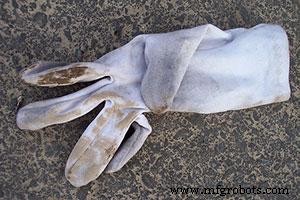
Quality standards required all personnel to wear white gloves. One day, while observing Pat’s corrective work, Mike requested training. Both agreed that Pat had the capability to perform those tasks. Over time, this collaboration boosted Line 3’s output and reduced Pat’s overtime, but it also introduced a subtle shift in responsibilities.
Plant manager Mark noticed the sudden production surge and the smudges found during final inspections. He asked operations superintendent Don for an explanation. Don was unaware of the informal arrangement, so Mark ordered an industrial engineer (IE) to investigate.
The IE quietly observed Line 3 and concluded that Mike was effectively doing maintenance while Pat focused on bench work. Mark reacted strongly, emphasizing that maintenance should be handled by technicians and operators should only run the machines.
Following Mark’s directive, production fell below other lines, Pat’s attendance suffered, and Mike resisted overtime. Undeterred, Mike and Pat devised a workaround: Mike would use two sets of gloves—one for maintenance tasks and another for regular operation—thereby keeping production numbers high while appearing compliant.
However, the practice attracted scrutiny when the stockroom issued a requisition for gloves. The buyer noticed unusual usage patterns and reported them to the director. Mark dismissed the concern as a distraction, but the new quality inspector, Ispy, took action.
Ispy discovered that gloves were left in an open bin near the break room, allowing employees to swap soiled gloves for clean ones during breaks. She meticulously inspected each glove, confirming that all were equally worn. She then used in‑plant cameras to observe the lines and confronted Mike, who denied any misconduct.
In the subsequent staff meeting, Ispy’s findings triggered an emotional response from Don and an outburst from Mark. The plant’s leadership decided to rotate Pat into shop work to curb the issue. Unfortunately, this reorganization disrupted production and, once the incident became public during Don’s town‑hall meeting, the plant’s output dipped further.
Despite these setbacks, Mark sought solutions. He attended a TPM and Total Quality Manufacturing conference and invited the keynote speaker to his plant’s off‑site meeting in the Poconos. The session sparked a discussion on redesigning work processes and integrating TPM principles across all lines. Mark seized the opportunity to announce a plant‑wide initiative, citing the Pat‑Mike episode as a learning point.
This case illustrates the delicate balance between empowering employees and maintaining accountability. It also underscores the importance of transparency, clear role definitions, and continuous monitoring in TPM programs.
Ultimately, the key to true industry leadership lies in nurturing the dignity of every worker—unlocking their creativity, passion, and sense of accomplishment. World‑class leadership embraces the “fifth discipline” of self‑mastery and systems thinking, ensuring that discretionary effort is directed toward shared goals rather than individual shortcuts.
How could this entire episode have been handled to harness the full discretionary effort of all employees and position the plant as a true industry leader?
Equipment Maintenance and Repair
- Mastering Total Productive Maintenance: A Practical Guide to Zero Downtime and Peak Efficiency
- Implementing Total Productive Maintenance (TPM): A Proven 12-Step Blueprint for Zero Breakdowns
- High-Performance Maintenance at CCM Tecate: A Proven TPM Success Story
- Vodcast: Mastering Total Productive Maintenance (TPM) – A Lean Manufacturing Primer
- Implementing Total Productive Maintenance: A Hands‑On Cleaning Case Study
- The 10‑Second Indicator That Reveals Your Maintenance Program’s Health
- CN Tower Maintenance: Inside the Engineering Behind Toronto’s Iconic Landmark
- How a CMMS Drives Successful Total Productive Maintenance Implementation
- Predictive Maintenance Evolution: From Reactive Failures to Proactive Success
- Unlocking Total Productive Maintenance: Core Principles & Tangible Benefits