



Quintessential Asset Management: Building a Path to Reliability-Centered Maintenance
Modern asset‑management solutions are in the spotlight, yet many companies mistakenly believe that reliability‑centered maintenance (RCM) and condition‑based maintenance (CBM) can be purchased and implemented overnight. The reality is far more nuanced. To truly gauge where your organization stands and where it needs to go, we need a comprehensive, culture‑driven framework—Quintessential Asset Management (QAM).
QAM is the integration of culture, processes, and technology that enables an enterprise to maintain its equipment efficiently and sustainably, maximizing profitability while managing risk. It is the fifth element that binds the traditional four—equipment, people, processes, and data—into a resilient, asset‑centric organization.
Unlike ad‑hoc maintenance programs that falter during slow periods, QAM requires disciplined, long‑term commitment. During downturns, experienced personnel should focus on value‑added initiatives that lay the groundwork for future performance gains, rather than merely reacting to breakdowns.
Below are the five developmental stages most organizations traverse on their journey to QAM, culminating in the full implementation of RCM.
Level 1 – Disruptive / Reactive
At this nascent stage, maintenance is entirely reactive. There is no historical data, and technicians perform ad‑hoc repairs. Failures quickly erode production and, if unmanaged, can threaten business viability.
Level 2 – Folders and Spreadsheets
Companies begin hiring dedicated maintenance staff and document operations in basic spreadsheets. Calendar‑based preventive maintenance (PM) schedules are introduced, and equipment history starts to accumulate. This phase often satisfies industry quality standards but rarely delivers measurable ROI.
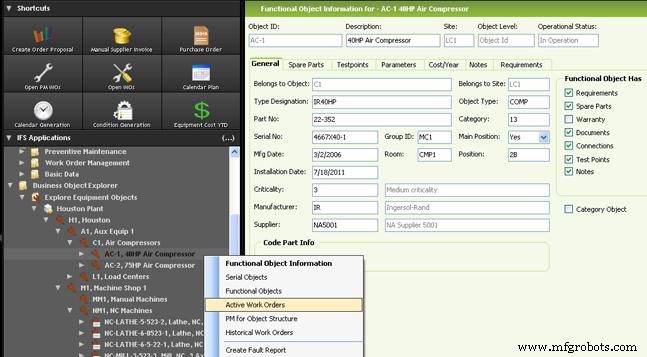
The screenshot illustrates a hierarchical equipment structure with scalable work‑order screens. While functional, this early interface can be simplified to focus only on essential fields and tabs.
Level 3 – Basic CMMS
Organizations procure a Computerized Maintenance Management System (CMMS) and assign a project team to evaluate cost and implementation strategies. Successful adoption hinges on disciplined data entry and gradual system evolution, rather than attempting to capture every possible field at launch.
Key considerations during this phase include:
- Vendor longevity and a clear product‑improvement roadmap.
- Scalability to accommodate future KPI dashboards and real‑time data feeds.
- Intuitive input and navigation to minimize technician burden.
- Effective equipment structures for cost roll‑up visibility.
- Comprehensive fault‑reporting with optional detailed follow‑up.
Early implementation also offers an opportune moment to introduce low‑cost condition monitoring tools—oil sampling and infrared thermography—providing the data foundation for KPI development.
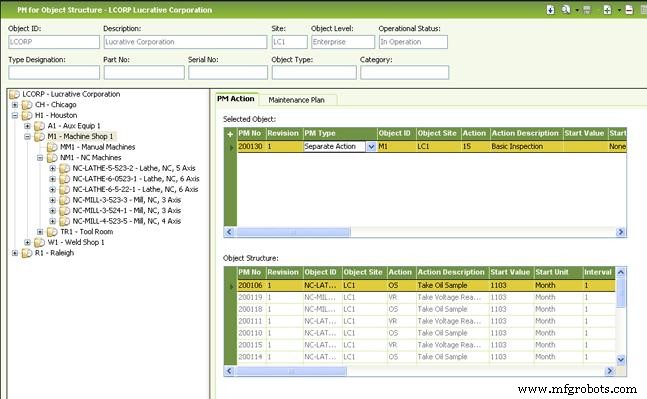
The image demonstrates built‑in navigation that links preventive maintenance schedules to specific equipment objects, supporting both calendar‑based and condition‑based triggers.
Level 4 – Integrated CMMS
At this stage, the maintenance team evaluates integration with Enterprise Resource Planning (ERP), Supervisory Control and Data Acquisition (SCADA), and project‑management systems. Direct interfaces reduce duplicate data entry and provide a single source of truth across the enterprise.
Benefits include:
- Streamlined purchase orders and material requisitions.
- Real‑time monitoring feeds from SCADA via OPC or similar protocols.
- Project‑management integration that maps equipment deliveries directly into the CMMS.
- Cradle‑to‑grave asset lifecycle management, from engineering to decommissioning.
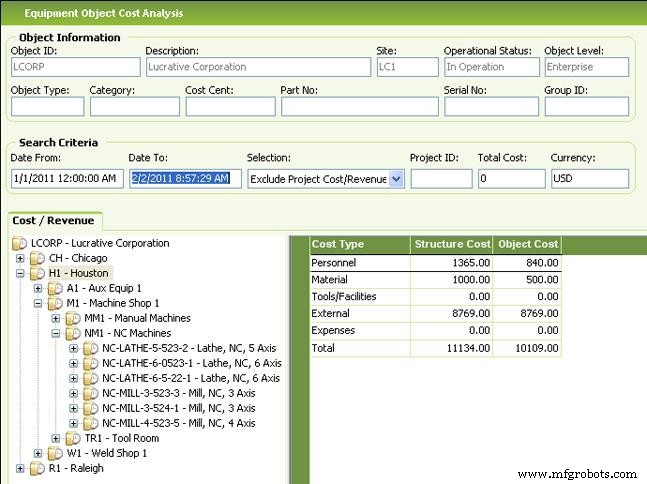
The Equipment Object Cost screen provides instant cost analysis at the facility and equipment levels, eliminating the need for extensive reporting.
Condition‑Based Maintenance
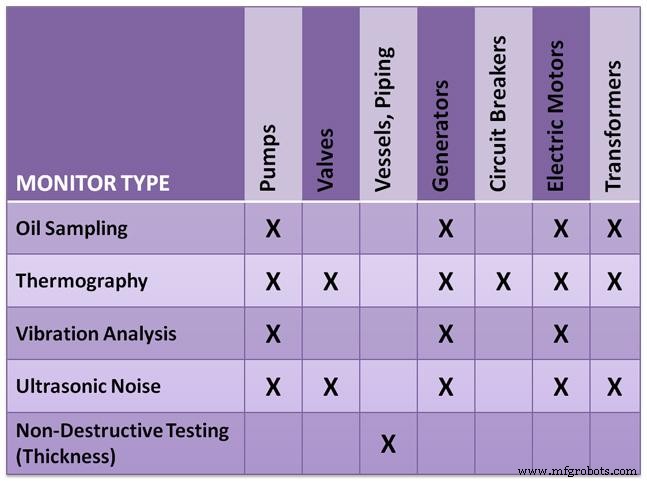
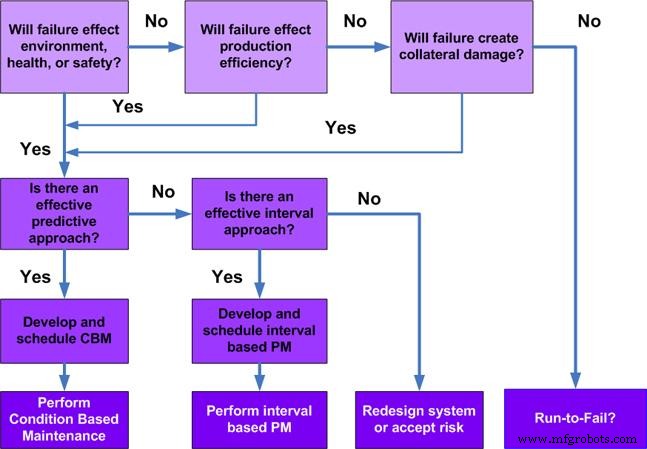
Condition‑based strategies—oil sampling, infrared thermography, vibration analysis, ultrasonic testing, and non‑destructive testing—should be evaluated for cost‑effectiveness before implementation. The CMMS must simply store the data; specialized analysis should be handled by experts to avoid the “one‑size‑fits‑all” trap.
Level 5 – Quintessential Asset Management
At the pinnacle, QAM enables full RCM deployment. Organizations can accurately identify critical equipment, set data‑driven maintenance priorities, and make informed run‑to‑failure or replacement decisions.
Real‑time dashboards and KPI monitoring empower rapid decision‑making. The integration of IFS Maintenance work orders with IFS Projects demonstrates how installations, upgrades, and expansions can be planned, executed, and cost‑tracked in a single, unified workflow.
 IFS Maintenance work orders seamlessly integrate with IFS Projects, allowing cost tracking from work order to equipment and direct delivery of new assets into the equipment structure.
QAM is less about buzzwords and more about culture, disciplined processes, and strategic use of technology. Vision, people, dedication, and discipline are the pillars that transform a maintenance program into a reliable, profit‑driving asset‑management system.
About the Author
Jerry Browning, a business consultant for IFS North America, leverages 25+ years of maintenance and asset‑management experience. With academic credentials in electronics and electrical engineering from Ohio University and the University of Houston, and service in the U.S. Navy’s AEGIS program, Jerry guides clients to maximize the value of IFS applications in maintenance, enterprise asset management, and asset lifecycle management.
Equipment Maintenance and Repair
- Four Key Trends Powering Digital Transformation in Asset Management
- Modernizing Facilities Management: Key Trends for a 40% Construction Growth
- Reliability & Asset Management: Foundations for Production Excellence
- Strategic Asset Management: Unlocking Sustainable Operational Excellence
- Strategic Asset Management: Driving Uptime, Cutting Costs, and Boosting Profits
- 5 Critical Risks That Undermine Asset Management Success
- Why Maintenance & Asset Management Software Is Essential Now
- Master Maintenance Management: Boost Efficiency & Cut Costs
- Prescriptive Maintenance: The Proactive Solution for Superior Asset Management
- The Key Software for Streamlined Maintenance Management