



Strategic Asset Management: Unlocking Sustainable Operational Excellence
We invite you to explore Strategic Asset Management (SAM), an integrated framework that unlocks maximum value from plant assets. Drawing on proven results from numerous clients, SAM fuses a clear philosophy, actionable plans, and cross‑functional engagement to deliver performance that surpasses conventional manufacturing practices.
Any effective model for guiding action must satisfy several key criteria:
- Simplicity: Powerful ideas are straightforward. Complexity erodes understanding and forgetfulness, weakening guiding principles.
- Intuitive: The underlying logic should be evident without a manual.
- Utility: The model must perform consistently when applied.
- Completeness: All critical success elements are incorporated.
Our experience with SAM confirms that it meets these standards. Your judgment, however, remains essential.
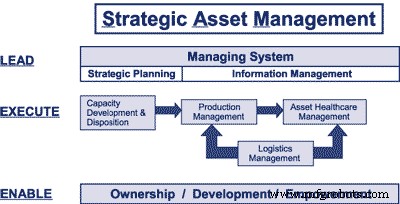
Figure 1 – The SAM Model
SAM’s foundation rests on three pillars of success: Lead, Execute, and Enable.
LEAD
Leadership in a manufacturing environment transcends charismatic influence; it is about establishing a unified purpose and consistent action across all functions—marketing, technology, finance, HR, execution, and equipment. The LEAD element of SAM comprises the Managing System, Strategic Planning, and Information Management.
Managing System
A disciplined, aligned approach underpins every great achievement. Key components include:
- Top‑down cascading goals: Company‑level profitability targets translate into plant volume and mix goals, unit availability and quality objectives, operator production and surveillance metrics, and ultimately craftsman equipment‑condition targets.
- Plan–Do–Review: Every action, from emergency maintenance to scheduled work, must undergo a rigorous review to assess effectiveness and uncover equipment insights.
- Measurement systems: Pairing lagging outcome metrics with leading process indicators empowers workers to drive improvement.
- Reward systems: Incentives must reinforce proactive behavior. Rewarding breakdowns or cost‑over‑quality sacrifices undermines preventive maintenance.
- Roles, responsibilities, and accountabilities: Clear expectations eliminate blame games and cultivate courage to act proactively.
- Feedback: Honest, non‑punitive feedback is essential for continuous improvement.
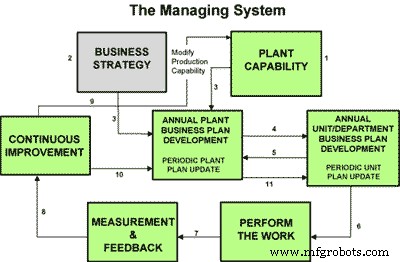
Figure 2 – The Managing System
Strategic Planning
Plants often grapple with competing initiatives that feel unmanageable. SAM’s strategic planning distills these into a single, company‑wide improvement plan with executive buy‑in.
The resulting multi‑year plan aligns everyone—from senior leadership to frontline staff—by articulating a compelling business case and practical actions. The eight essential elements are:
- Benchmarking the function: Establish current performance baselines.
- Developing a vision for future operations: Use tools like the Execution Triangles (Production, Logistics, Asset Healthcare) to shape a realistic, aspirational roadmap.
- Identifying gaps: Pinpoint where current capabilities fall short of the vision.
- Defining strategies to close gaps: Choose solutions that address multiple deficiencies—e.g., a distributed control system can enhance quality, mix, changeovers, and condition monitoring.
- Projecting implementation initiatives: Combine complementary projects—such as integrating safety improvements with scheduling—to create synergistic effects.
- Developing the implementation plan: Allocate realistic resources, coach behaviors, and set success metrics.
- Crafting the business case: Consolidate initiatives to avoid double‑counting and ensure clear ROI.
- Establishing governance: Embed the plan into the annual cycle and link accountability across the Managing System.
Information Management
Most plants now operate an ERP system, yet early adoption often yields frustration. The key lies in aligning the system (processes and procedures) with the tool (e.g., SAP PM). When work methods are reflected in the tool, the resulting synergy delivers actionable insights.
Following the strategic plan, SAMI designs one or more execution functions, ensuring seamless integration between tools and processes.
EXECUTE
Four core functions—Capacity Development, Production Management, Logistics, and Asset Healthcare—drive functional excellence. When executed with rigor, they unlock significant value.
- Capacity Development: Align engineering and project management to secure robust design, construction, and production readiness.
- Production Management: The engine of value creation, demanding disciplined execution.
- Logistics: Materials, purchasing, and flow—critical to sustaining production and asset health.
- Asset Healthcare Management: Beyond maintenance, it optimizes risk and value across the enterprise.
We have validated improvement models for each area, notably the SAMI Asset Healthcare Triangle, now fully integrated into SAM.
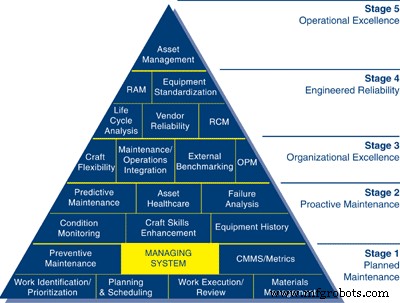
Figure 3 – The SAMI Asset Healthcare Triangle
For deeper insight into the Production and Logistics triangles and their maturity matrices, visit www.samicorp.com.
ENABLE
Change rarely follows from documentation and training alone. Human behavior demands relevance, ownership, and sustained commitment.
Typical corporate initiatives—safety, reliability, Six Sigma, Lean, supply‑chain rationalization—can overwhelm production teams if imposed without context. Effective change must resonate with plant floor realities.
Key criteria for lasting change:
- Intellectual relevance: The initiative must logically promise productivity gains.
- Plant‑level ownership: Workers collectively decide how the change unfolds.
- Visible commitment: Senior leaders tie career outcomes to success; proven models from comparable plants are demonstrated; leadership consensus is clear; results are publicly tracked; critical line personnel are dedicated.
Ownership
Before initiating work, SAMI confirms that leadership at the appropriate level has unified support. Proceeding without consensus risks failure.
Worker Consensus
Our assessment process engages the broadest possible workforce, gathering real‑world issues and ideas. This dialogue often reveals shared aspirations—productivity, safety, competitiveness—bridging the gap between leadership and frontline.
Designing a Workable Process and Passionate Owners
We assemble a diverse design team—typically 8–10 part‑time members from all job families—to craft a detailed, context‑specific workflow. The result is a highly functional process and a passionate, empowered workforce ready to adopt it.
Client‑Driven Implementation
Change is embraced only when peers champion it. Outsiders serve as supporters, not drivers. Our consultants facilitate the transition while the plant owns the change.
Development
Reactive roles (e.g., component replacer, expeditor) evolve into proactive ones—troubleshooter, proactive worker, defect eliminator—through targeted coaching, testing, and customized development programs.
Empowerment
True empowerment stems from a disciplined system that equips workers to excel. It is the outcome of clear processes, ongoing coaching, and performance metrics—not a one‑size‑fits‑all training spree.
Results
Leadership alignment around a strategic vision often yields the most profound impact, translating into measurable financial gains. SAMI clients have realized over $100 million in benefits within a short timeframe, as illustrated in the following cost/benefit analysis.
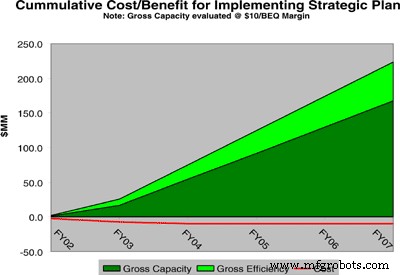
Figure 4 – SAM Cost/Benefit Analysis
SUMMARY
Strategic Asset Management is the systematic engine that turns operational aspirations into reality. By marrying logical best practices with disciplined execution and empowered people, SAM delivers functional excellence, cohesive leadership, and sustained financial performance.
Embark on the journey with the right model and unlock your plant’s full potential.
Equipment Maintenance and Repair
- How Live TV Will Transform: The Computing‑Driven Future of Broadcast
- Why Facility Management Drives Industrial Success
- Strategic Asset Management: Driving Uptime, Cutting Costs, and Boosting Profits
- Understanding PAS 55: The Global Standard for Asset Management Excellence
- 5 Critical Risks That Undermine Asset Management Success
- Quintessential Asset Management: Building a Path to Reliability-Centered Maintenance
- Powering the Future: Innovative Energy Management for Manufacturers
- Enterprise Asset Management (EAM): Boost Reliability & ROI in Manufacturing
- Asset Management Explained: Optimizing Asset Value and Compliance
- 4D Printing: Revolutionizing Additive Manufacturing for Adaptive Solutions