



Building a High-Performance Maintenance Plan: A Practical Guide
Developing a maintenance plan is straightforward, but crafting one that truly drives reliability and efficiency is an art that requires deep insight into the entire maintenance ecosystem.
This article dissects the key elements that separate a routine maintenance schedule from a robust, results‑oriented program.
Defining the Key Terms
Across industries, maintenance terminology can vary widely. For clarity, this guide adopts the following definitions, which align with best practice frameworks such as RCM and ISO 55000.
- Maintenance policy – The overarching policy that governs all equipment and site‑wide practices.
- Maintenance strategy – The tactical plan reviewed every 1–2 years to keep it aligned with business goals.
- Maintenance program – The comprehensive set of tasks for a specific equipment system or work center.
- Maintenance checklist – A detailed list of preventive or predictive tasks, automatically generated as work orders.
- Maintenance plan (short‑term) – A curated bundle of checklists and ad‑hoc work orders scheduled for a single maintenance period (e.g., a week or shift).
The Maintenance Information Loop
Figure 1 illustrates the cyclical flow of information within a Computerized Maintenance Management System (CMMS). Each stage feeds into the next, ensuring data integrity and continuous improvement.
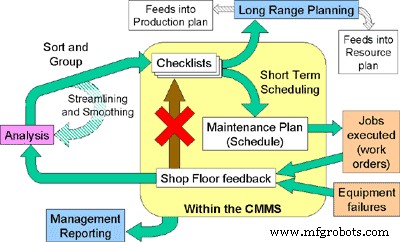
Figure 1 – Maintenance Information Loop
Key steps include:
- RCM or equivalent analysis to identify critical maintenance tasks.
- Creation of task lists, which are then grouped into checklists.
- Scheduling of those checklists into a work‑order plan for shop floor execution.
- Collection of execution data and failure reports back into the CMMS.
- Analysis of that data to refine checklists and strategy, closing the loop.
Directly editing checklists based on shop‑floor feedback without re‑running the analysis can erode program integrity. All amendments should trace back to the original RCM study to maintain scientific rigor.
Insights from RCM Analysis
While a full RCM walkthrough is beyond this article’s scope, the following table captures the essential inputs that shape an effective maintenance program.
Table 1 – Core RCM Data
| RCM Element | Additional Detail |
|---|---|
| Functions, failure modes, and effects | Equipment hierarchy to component level |
| Root cause identification | Critical for selecting corrective actions |
| Analytical tool output | Failure effect category & task selection |
| Task frequency, duration, and craft requirements | Key for workload estimation |
| Operational status marker | Running vs. stopped |
Properly capturing root causes ensures maintenance actions target the underlying problem rather than merely addressing symptoms. For instance, a seized gearbox might stem from lubrication failure, wear, or misalignment—each requiring a distinct preventive strategy.
Sorting and Grouping Maintenance Checklists
After analysis, tasks are organized into checklists based on shared criteria such as craft, frequency, safety priority, and operating state. This logical grouping streamlines scheduling and resource allocation.
Smoothing the PM Workload
A well‑designed preventive maintenance schedule distributes effort evenly across work shifts, preventing bottlenecks and ensuring crews remain productive. Figure 2 demonstrates how tasks can be staggered while still meeting required frequencies.
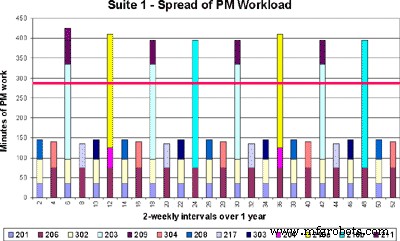
Figure 2 – Smoothing the PM Workload
Typical guidance for continuous‑process environments is to keep any single checklist’s workload below 80 % of available shift time, allowing flexibility for corrective work that surfaces during inspections.
Short‑Term Scheduling of Planned Maintenance
Long‑term horizon planning sets the stage, but day‑to‑day scheduling requires granular detail. Modern CMMS platforms like Maximo generate new work orders nightly, often 30 days ahead of the target start date.
These orders must be prioritized and distributed across maintenance crews to avoid overload. Figure 3 shows a sample weekly schedule that balances task complexity, urgency, and crew capacity.
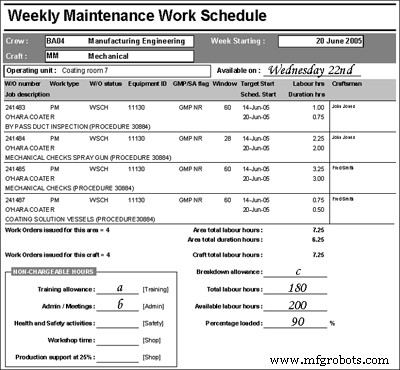
Figure 3 – Example of Weekly Maintenance Work Schedule
While many CMMS tools provide raw data, integrating that data into a spreadsheet or BI tool often yields richer visual insights. If your CMMS lacks robust reporting, exporting a flat file for manipulation is a practical workaround.
Long‑Range Maintenance Planning
Proactive long‑term planning—typically 18–24 months ahead—provides production schedulers with a clear picture of upcoming maintenance windows. This foresight mitigates the “maintenance begged for” scenario that can disrupt production targets.
Table 2 outlines a typical long‑range plan format. Data are extracted from Maximo, filtered, and aggregated in a spreadsheet to produce weekly forecasts by craft type and work center.
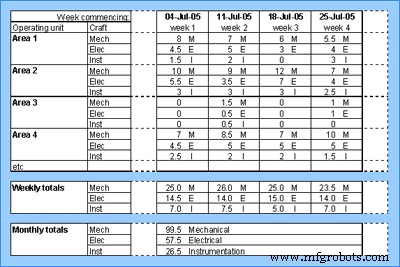
Table 2 – Example Layout of Long‑Range Maintenance Plan
These forecasts enable production planners to slot maintenance into the production calendar weeks in advance, while final dates are negotiated one or two weeks before execution.
Long‑Range Labor Planning
To match workforce capacity with forecasted workload, a monthly labor‑vs‑workload graph is constructed for each craft group over an 18–24 month horizon.
Key inputs include:
- Preventive maintenance hours from the CMMS.
- Breakdown and corrective allowances (rolling 12‑month average).
- Project work and non‑production activities.
- Leave, sickness, and overtime considerations.
Figure 4 shows how workload (blue line) is compared to labor capacity (green line). When the blue line climbs above green, the schedule must be adjusted or additional staff hired.
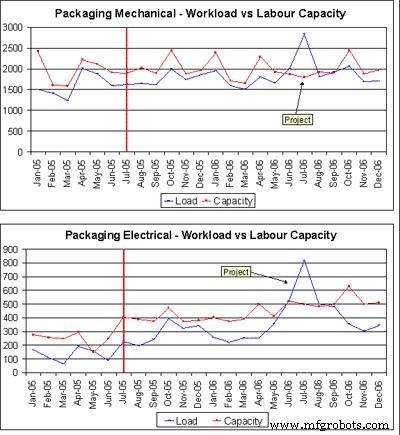
Figure 4 – Workload vs. Labor‑Capacity Graphs
Feedback and Reporting
Execution data and failure reports flow back into the CMMS and are summarized in weekly reliability dashboards (Figure 5). Reliability engineers review these dashboards to pinpoint trends and decide on corrective actions.
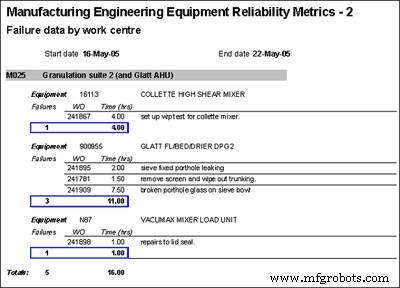
Figure 5 – Example Weekly Failures Report
The accompanying decision tree (Figure 6) guides engineers through root‑cause analysis, ensuring any checklist amendments are routed through the original RCM study before implementation.
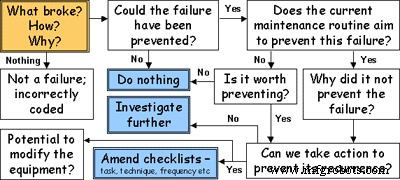
Figure 6 – “What Broke” Decision Algorithm
Real‑World Impact
When a maintenance program is properly engineered, performance metrics reflect that investment. The following examples illustrate typical gains:
- Consistent >95 % adherence to the planned maintenance schedule across all teams.
- Month‑over‑month reduction in failure incidents, with Mean Time Between Failures (MTBF) improving steadily.
- Machine availability exceeding 90 % in critical work centers after a targeted RCM‑driven overhaul.
These results stem from higher‑quality preventive routines, precise planning, and data‑driven decision making.
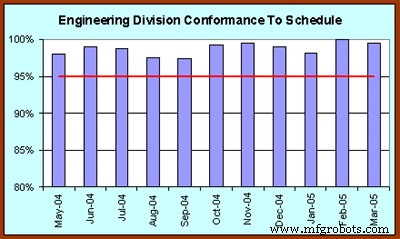
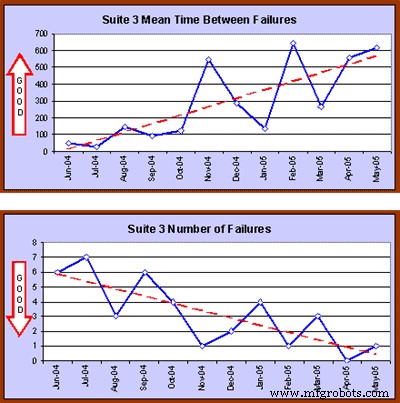
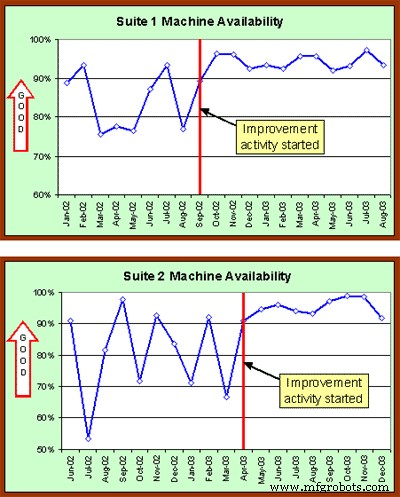
Figure 7 – Sample Graphs Showing Maintenance Program Benefits
Equipment Maintenance and Repair
- Maximizing the Impact of Condition‑Based Maintenance: A Practical Guide
- Mastering Maintenance Planning: From Reactive Fixes to Proactive Success
- Harnessing Reactive Maintenance: When It Drives Cost Savings
- 12 Pillars of Effective Reliability Management
- Bombardier Unveils Optimized Maintenance Schedule for CSeries Aircraft
- 50 Proven Strategies to Build a High‑Performance Maintenance Program
- Build a High-Impact Maintenance Training Program: A Practical Guide
- Designing an Effective Maintenance Plan: Key Components & Best Practices
- How to Create a Comprehensive Preventive Maintenance Plan
- Prevent Equipment Failures: How Proactive Maintenance Cuts Downtime