



Build a High-Impact Maintenance Training Program: A Practical Guide

In today’s fast‑moving industrial landscape, a company’s most valuable asset is its people. Success hinges on a workforce that blends leadership, technical expertise, and hands‑on experience—from executives to floor technicians.
However, many maintenance departments struggle to attract and retain skilled talent. With technology evolving rapidly, ongoing training is no longer optional; it’s essential. According to Deloitte, the U.S. manufacturing sector may face a shortage of 2.1 million skilled workers by 2030.
Well‑structured maintenance training programs can bridge this gap, upskilling existing staff and accelerating new hires. Below is a roadmap to designing a program that delivers measurable results.
Why Invest in Maintenance Training?
Effective maintenance is the frontline defense against downtime, productivity loss, safety incidents, and costly disruptions. Proper training yields:
- Lowered downtime: Faster, more reliable repairs and preventive care reduce both planned and unplanned outages.
- Enhanced safety: Skilled crews mitigate hazards, ensuring compliance with OSHA and reducing fines.
- Operational flexibility: A versatile team can shift roles as needed, smoothing scheduling and resource allocation.
- Boosted morale: Confidence and career progression drive engagement and retention.
An ideal technician combines experience, technical knowledge, and problem‑solving. A robust training program builds the latter two.
Key Characteristics of a Successful Program
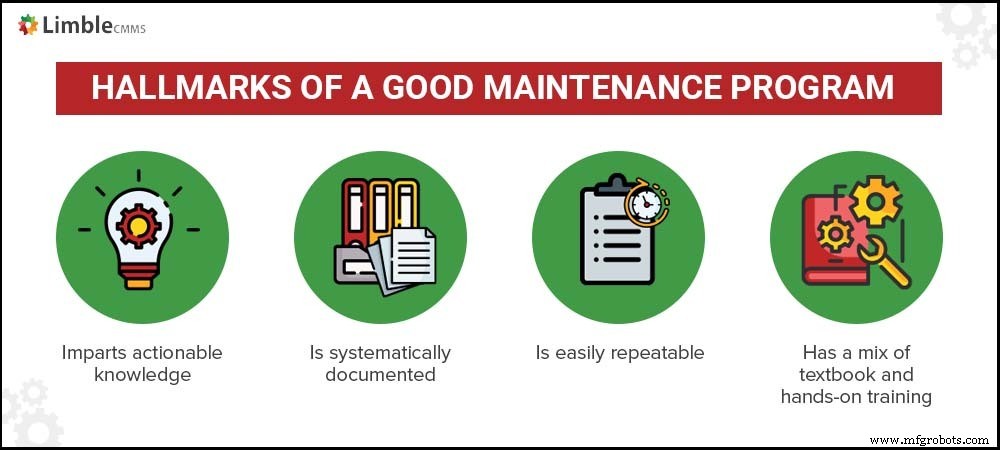
While program specifics vary by industry, the following constants apply:
- Actionable skill development: Combine theoretical knowledge with hands‑on practice to enable rapid response to equipment failures.
- Systematic documentation: Record curricula, procedures, and best practices so training remains consistent regardless of staff turnover.
- Ongoing commitment: Training should span weeks or months, with annual refreshers for new hires and existing staff.
- Expert instruction: Leverage experienced technicians, industry consultants, and accredited training providers.
Core Elements of Industrial Maintenance Training
Regardless of sector, foundational topics include:
- Safety and hazard awareness
- Lockout/tagout protocols
- Shutdown/startup procedures
- Role‑specific qualifications
Specialized tracks may cover electrical systems, HVAC, facility maintenance, rigging, welding, waste treatment, plumbing, electronics, mechanical drives, motor controls, and more.
Training Modalities
The “Introduction‑Practice‑Verification” framework—combining classroom theory, practical exercises, and rigorous assessment—remains the gold standard. A balanced program blends:
- On‑the‑Job Training (OJT): Direct hands‑on learning on the plant floor, the most effective method for mechanical and troubleshooting skills.
- Academic Partnerships: Technical schools and colleges can provide structured classroom content, but curricula must align with on‑site realities.
- Workshops: In‑house or contractor‑led sessions focused on niche topics, often supplemented by OEM training for new equipment.
- Online Courses: Self‑paced video modules and documentation from reputable platforms (e.g., 360 Training, TPC Training, Vector Solutions) support knowledge acquisition.
- AR/VR Training: Immersive simulations let technicians practice complex procedures without disrupting production—ideal for delicate or hazardous tasks.
- Virtual Classrooms: Live video sessions enable remote expertise delivery, a valuable asset during travel restrictions or workforce dispersal.
Steps to Launch Your Program
1. Build a Business Case
Secure executive support by linking training outcomes to KPIs: uptime, MTTR, safety incidents, and maintenance costs. Use skill assessments, time‑studies, and safety audits to identify gaps.
2. Design a Structured Syllabus
Incorporate standards from OSHA, vendor guidelines, industry associations, and academic curricula. Ensure the syllabus is modular, documented, and repeatable.
3. Plan and Deploy Training
Batch employees to avoid operational disruptions. Prioritize roles that directly impact critical equipment. Combine OJT, workshops, and online modules over several weeks.
4. Measure Effectiveness
Track metrics such as MTTR, breakdown frequency, and safety incident rates before and after training. Use CMMS data to generate actionable reports and refine the curriculum.
5. Recognize and Reward Participants
Offer certifications, career advancement, or salary adjustments to reinforce commitment and sustain motivation.
Leveraging Limble CMMS for Training Success
Planning
Use Limble’s drag‑and‑drop calendar to schedule training without derailing routine maintenance. Allocate tools and parts through the CMMS resource planner.
Execution
Track real‑time equipment, tool usage, and training progress. Access manuals, SOPs, and schematics directly within the platform.
Post‑Training Evaluation
Store SOPs and checklists in Limble for consistent field application. Employ the custom report builder to monitor key training outcomes and ROI.
Try Limble CMMS today:
- Start a free 30‑day trial
- Request a demo
- Explore the self‑demo
Investing in the Future
Although in‑house training demands upfront resources, the long‑term gains—reduced downtime, improved safety, and a more adaptable workforce—outweigh the costs. Embrace training as a strategic investment in your organization’s resilience.
Equipment Maintenance and Repair
- Maximizing the Impact of Condition‑Based Maintenance: A Practical Guide
- Mastering Preventive Maintenance: Strategies to Optimize Your PM Program
- Mastering Maintenance Planning: From Reactive Fixes to Proactive Success
- Implementing an Effective Electric Motor Acceptance Testing Program
- Penske Earns ASE Certification for Comprehensive Vehicle Maintenance Training Program
- Developing a Robust Electrical Maintenance Program: A Practical Guide
- Mastering Multi-Technology Condition Monitoring for Large Mining Operations
- 50 Proven Strategies to Build a High‑Performance Maintenance Program
- Designing a Reliable Electrical Maintenance Program to Boost Safety & Production
- 8 Essential Tips for a Successful Preventive Maintenance Program