



Eight‑Step Blueprint for a Robust Preventive Maintenance Program
Looking to launch a preventive maintenance (PM) program but unsure where to begin? This eight‑step guide delivers a proven framework that transforms reactive maintenance into a strategic, data‑driven advantage.
Table of Contents
- What Is a Preventive Maintenance Program?
- What Does Preventive Maintenance Look Like?
- How to Build a Great Preventive Maintenance Plan
- The Bottom Line on Building a PM Program
What Is a Preventive Maintenance Program?
A preventive maintenance program is a structured set of processes, guidelines, and tools that enable an organization to perform routine maintenance before failures occur, while optimizing time and cost. It blends clear objectives, accountable roles, and measurable outcomes into a single, actionable strategy.
For facilities trapped in a reactive cycle, a PM plan offers a roadmap to eliminate unplanned downtime, reduce maintenance backlog, and improve overall reliability. By defining goals, responsibilities, and timelines, every team member understands what success looks like and how to sustain it.
What Does Preventive Maintenance Look Like?
Preventive maintenance involves scheduled work on equipment that is still operating, triggered by time or usage metrics—such as a 100‑hour service interval. The objective is to increase reliability, cut downtime, and optimize labor and material costs.
Facilities that shift from reactive to preventive maintenance experience a dramatic drop in unexpected failures and associated costs.
Transitioning requires a clear schedule, disciplined execution, and continuous improvement. Successful programs demonstrate measurable reductions in downtime, fewer safety incidents, and lower maintenance spend.
Learn How to Build a Balanced Maintenance Strategy
Explore industry‑backed best practices and tools that align with your specific assets, workforce, and budget.
Eight Steps to an Effective Preventive Maintenance Program
Every facility is unique, but these eight core elements form a repeatable blueprint that drives efficiency and sustainability.
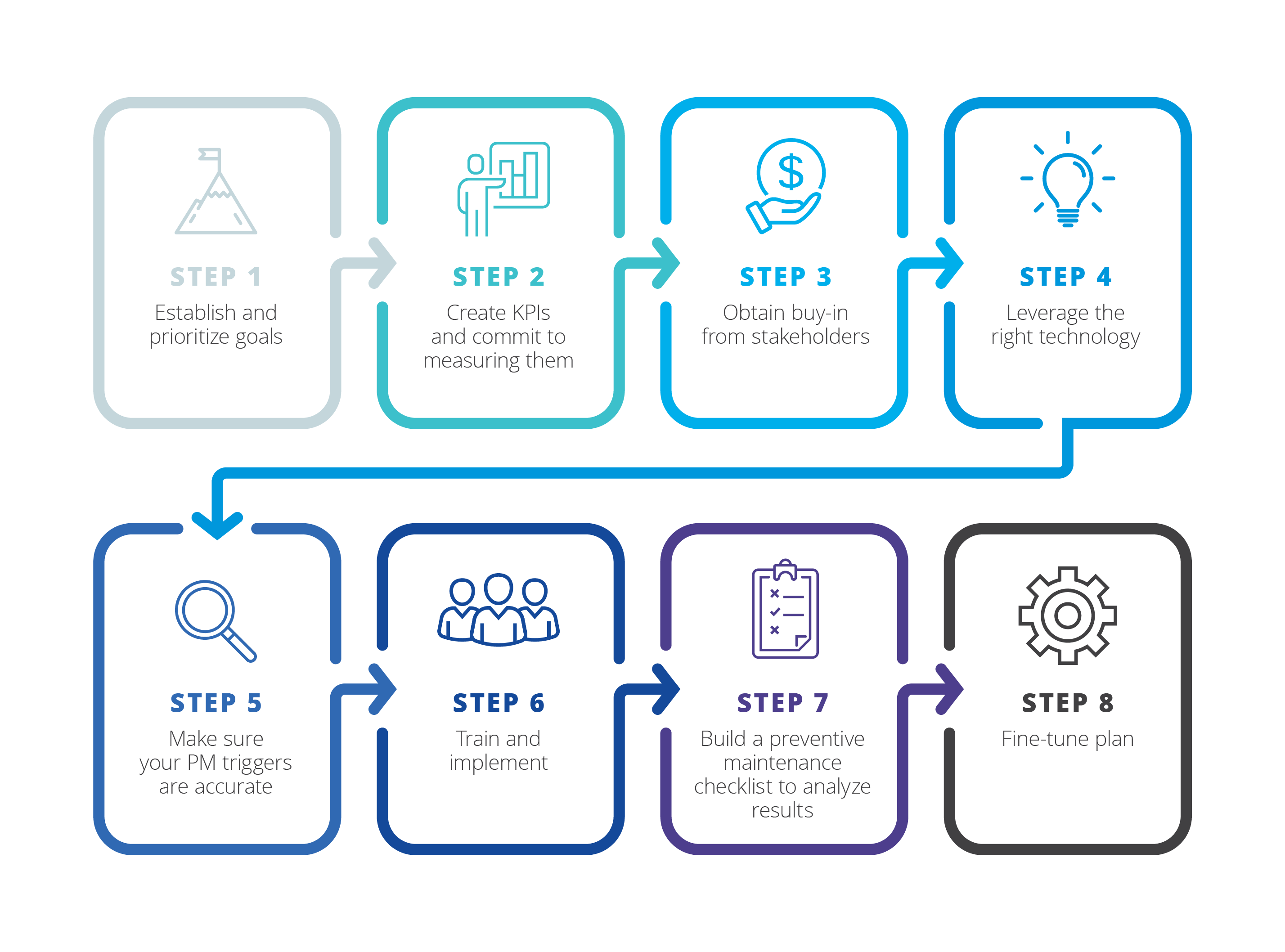
1. Establish and Prioritize Goals
Begin by documenting what you aim to achieve—whether it’s reducing downtime, boosting reliability, or cutting costs. Rank these objectives so resources can be allocated to the highest impact areas first.
2. Create KPIs and Commit to Measuring Them
Translate goals into concrete metrics such as:
- Scheduled maintenance compliance (%)
- Planned maintenance percentage
- Overall equipment effectiveness (OEE)
- Mean time between failures (MTBF)
Establish a repeatable data‑capture process so you can monitor performance, identify trends, and drive continuous improvement.
3. Obtain Buy‑In from Stakeholders
Success depends on the entire team—from technicians to reliability engineers—working together. Conduct workshops to align on goals, responsibilities, and expected benefits, fostering a culture of ownership.
4. Leverage the Right Technology
A modern Computer‑Aided Maintenance Management System (CMMS) or Enterprise Asset Management (EAM) platform is essential. Choose a solution that matches your team’s skill level, budget, and data security needs while offering intuitive scheduling, inventory tracking, and reporting.
5. Ensure Accurate PM Triggers
Triggers—whether time‑based, usage‑based, or condition‑based—must reflect manufacturer recommendations, asset history, and operational criticality. Automate alerts and mobile notifications to prevent missed tasks.
6. Train and Implement
Provide hands‑on training for new tools and procedures. Consider a pilot run on a single plant area or asset group to refine workflows before full rollout.
7. Build a Checklist to Analyze Results
Maintain a dynamic checklist that tracks KPIs such as MTTR, planned maintenance percentage, and MTBF. Compare current data against baseline benchmarks to pinpoint improvement opportunities.
8. Fine‑Tune the Plan
Continuous refinement is vital. Use sensor data, work‑order notes, and team feedback to adjust triggers, procedures, and resource allocations. Encourage open forums for technicians and engineers to suggest enhancements.
The Bottom Line on Building a Preventive Maintenance Program
A robust PM program isn’t a one‑off project—it’s an evolving strategy that demands clear goals, measurable KPIs, stakeholder alignment, the right technology, thorough training, and relentless analysis. When executed well, it can slash unplanned downtime by up to 30% and significantly lower maintenance costs, making it a realistic, high‑value investment for any operation.
Equipment Maintenance and Repair
- 10 Proven Strategies for an Effective Preventive Maintenance Program
- Comprehensive Maintenance Contingency Planning for Manufacturers: Boost Resilience & Reduce Downtime
- A Practical Guide to Building a Robust Predictive Maintenance Program
- 50 Proven Strategies to Build a High‑Performance Maintenance Program
- Total Preventive Maintenance: A Practical Guide to Boost Efficiency & Reliability
- How to Create a Comprehensive Preventive Maintenance Plan
- Mastering Preventive Maintenance: Boost Equipment Lifespan & ROI in Manufacturing
- Maximize Safety and ROI: The Essential Guide to Preventive Maintenance for Industrial Equipment
- 9 Proven Steps to Build a Robust Preventive Maintenance Program
- 8 Essential Tips for a Successful Preventive Maintenance Program