



How Live TV Will Transform: The Computing‑Driven Future of Broadcast
Live television’s next chapter is being written by the way viewers expect to experience content, not merely how they access it. The shift is from enhancing traditional broadcasts to creating entirely new, immersive event experiences powered by advanced computing and the Industrial Internet of Things (IIoT).
Filmmaking offers a parallel story. Early pioneers like George Lucas used computers as a tool to enhance live‑action footage. A small team, backed by Steve Jobs, founded Pixar on the belief that software and computing power could create feature films—an idea that culminated in Toy Story two decades ago.
After 16 years of research for one of the world’s largest sports rights holders, I see a similar tipping point in live sports production. The most progressive broadcasters still focus on enhancement, but the technology now exists to capture 3‑D worlds, record real‑time live action, and create entirely new event experiences using that compute power.
Applying IIoT to live TV broadcast unlocks this potential; ignoring it could lead the industry into a Kodak moment as Apple, Google, and Amazon enter the space with cloud‑centric ecosystems.
The Future of Live Event Experiences
Live sports will be the first arena to showcase this shift, but the implications ripple across the entire broadcast ecosystem. New competitors will offer differentiated experiences that redefine the commercial foundations of linear TV, opening fresh opportunities for rights holders and platform providers.
The real‑time capture of 3‑D worlds allows viewers to watch major events from any perspective—live, cinematic, or from any location and resolution. Anyone can control the narrative: direct the camera, follow a story, personalize or share the view, lean back or lean forward, watch live or time‑shifted, across mobile, tablet, game console, TV, cinema, or VR. This is possible only through computing, and it aligns with the capabilities of modern end‑user devices—touch screens, gyros, controllers, and voice interaction.
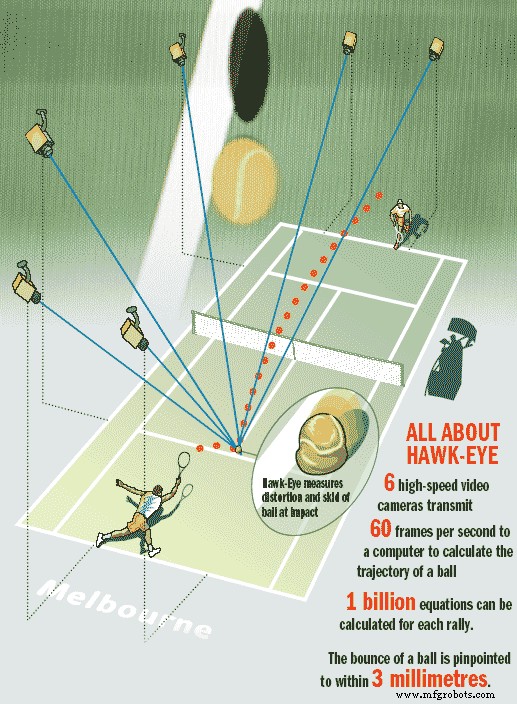
These new live event experiences will uniquely target modern devices and user expectations, offering converged content acquisition for a diverged audience.
Current Industry Direction
Broadcast TV has traditionally focused on picture quality: HD, 4K, 8K, HDR, WCG, and HFR. Increasing communication speeds will also be necessary to support these formats.
Industry bodies are turning to IT networking hardware, leveraging R&D from other sectors, while broadcast has historically developed its own single‑purpose appliances.
Bandwidth is driving COTS (Commercial Off‑The‑Shelf) IT adoption in TV broadcast—rather than compute. Yet new experiences require compute.
The TV industry is falling behind the pace of IT networking R&D. This gap mirrors IBM’s description of the “next paradigm in computing—data‑centric systems”[5].
Data‑centric, system‑of‑systems thinking is missing from the industry’s standardisation agenda but is essential for the future of live TV production. The current approach relies on human image interpretation, communication, and control.
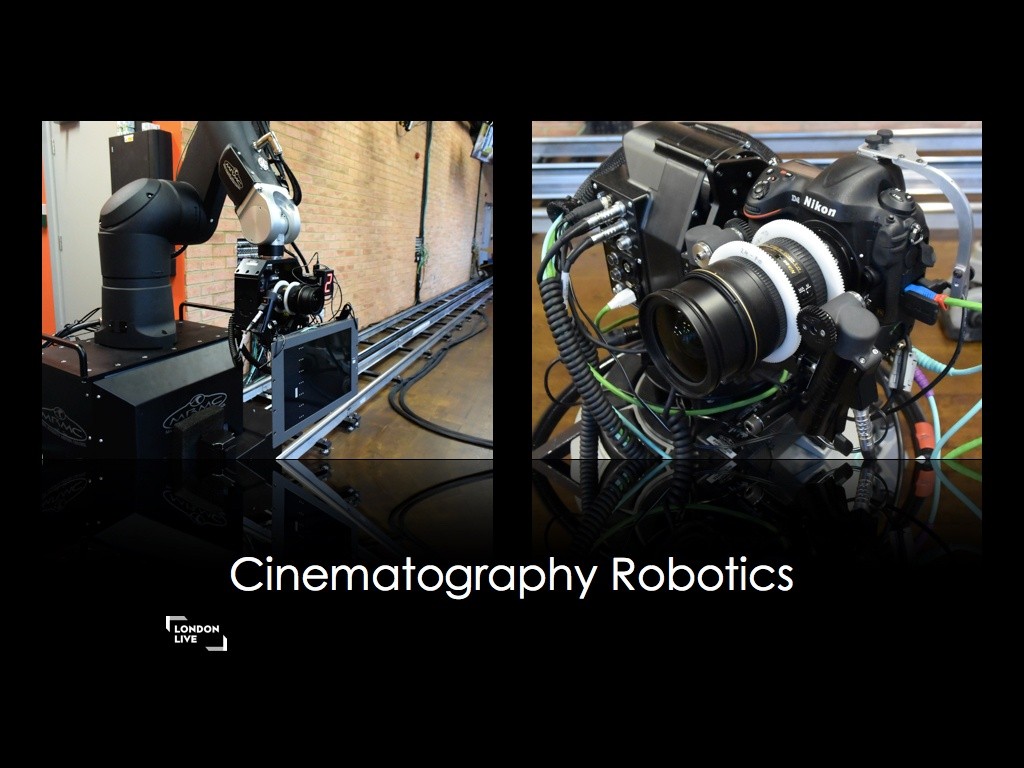
Our research at London Live suggests that a standardised middleware, the Data Distribution Service (DDS), provides the right mix of data‑centric, open‑standard, real‑time communication. DDS can carry not just information but individual frames—each uniquely identified for analysis, correlation, and manipulation. London Live is building a fully reactive TV studio environment around this open standard.
TV’s Kodak Moment?
The full implications of a computing‑based future are still unfolding, and some analysts warn that TV broadcast could face a Kodak moment[6].
Failing to address future user experience requirements risks locking the industry into restrictive standardisation that limits potential.
Mapping 3‑D worlds is the direction of evolving experiences. Ari Emanuel, co‑CEO of William Morris Endeavor (WME) and IMG, notes that “the future of media and entertainment is not going to be a flat screen. OTOY is building the content pipeline for the next generation of movies and computer graphics, where immersion and presence will be a key axis of the creative process.”[7]
Is that the trajectory for live TV broadcast?
In 2014, GE Chairman and CEO Jeff Immelt remarked: “If you went to bed last night as an industrial company, you’re going to wake up this morning as a software and analytics company.”[8]
The major risk is that the TV industry’s shift to a software future is based on foundations that assume human interpretation of images—foundations that do not scale. Proprietary broadcast systems streamline human processes but do not transform them, and the current IT adoption approach faces the same risk.
New Competitors
If broadcasters do not innovate, Apple, Amazon, and Google will fill the gap.
The key asset shifts from terrestrial, cable, or satellite transmission to cloud‑based ecosystems. Competitors build end‑to‑end experiences: user devices (they design), OS and app software (they write), and core data centres (they own). The differentiator is intellectual property that shapes the total experience, with all content types layered on top.
Live TV’s future is compute‑centric, and live TV communication must become data‑centric to unlock new consumer experiences.
Footnotes
- [1] President of Pixar Animation and Disney Animation, Ed Catmull, Creativity Inc. Overcoming the unseen forces that stand in the way of true inspiration
- [2] North River Ventures Broadcast TV: Dead Man Walking & Profiting From the Cloud Membranes Part Four (3m50s) – I believe that applying compute to live event capture will be the industry tipping point, perhaps as “spatial media services.”
- [3] Other live events, including global news, will follow.
- [4] EBU Technical Report TR‑028
- [5] IBM Research: Data‑centric systems
- [6] North River Ventures Broadcast TV: Dead Man Walking & Profiting From the Cloud Membranes Part Four (3m50s)
- [7] OTOY: The next generation of movies and computer graphics
- [8] Third “Minds + Machines” Summit (video) & GE Data, Robotics, Sensors
Internet of Things Technology
- Industry 4.0: Materialise’s Blueprint for the Networked Factory
- Collaboration: The Path to the Factory of the Future
- Strategic Asset Management: Unlocking Sustainable Operational Excellence
- The Future of Data Centers: Trends, Tech, and Sustainability
- Robotic Welding: Shaping the Future of Metal Fabrication
- Factory of the Future: Mastering Industry 4.0 and Smart Manufacturing
- How 3D Printing Will Transform Manufacturing in the Next Decade
- How 3D Printing is Revolutionizing Modern Manufacturing
- Shaping Tomorrow: Innovations Driving CNC Machining's Future
- 4D Printing: Revolutionizing Additive Manufacturing for Adaptive Solutions