



Understanding PAS 55: The Global Standard for Asset Management Excellence
PAS 55 is the industry‑recognised standard that sets the benchmark for managing physical assets throughout their lifecycle. If you’ve come across the term but aren’t sure what it means for your organization, this article breaks it down and explains how you can start applying its principles today.
In 2004 the British Standards Institute (BSI), together with the Institute of Asset Management, released Publicly Available Specification 55 Parts 1 and 2. This was the first internationally recognised specification for asset management, providing a common language and framework for organizations worldwide.
According to the BSI website, PAS 55 is divided into two complementary parts:
- Part 1 – Specification for the Optimised Management of Physical Infrastructure Assets
- Part 2 – Guidelines for the Application of PAS 55‑1
Part 1 defines the requirements for an asset‑management system that covers the acquisition, operation, maintenance and disposal of physical assets across their entire life cycles. It acknowledges that effective management of physical assets is inseparable from the management of related assets—human, financial, informational and reputational—which influence asset performance and organisational outcomes.
Implementing PAS 55 demonstrates a high level of professionalism and maturity in whole‑life cycle asset management. It helps organisations to:
- Establish a sustainable, performance‑driven asset‑management system
- Implement, maintain and continually improve that system
- Align asset strategy with corporate policy and strategic goals
- Show compliance to internal and external stakeholders
- Pursue third‑party certification or registration of the asset‑management system
- Make an informed self‑declaration of compliance with PAS 55
PAS 55‑1 describes asset management as “the systematic and coordinated activities and practices through which an organisation optimally and sustainably manages its assets and asset systems, their associated performance, risks and expenditures over their life cycles for the purpose of achieving its organisational strategic plan” (BSI, 2010).
In 2008 the specification was updated, and by June 2010 a New Work Item Proposal on Asset Management was approved at an ISO preliminary meeting. This led to the formation of ISO Planning Committee 251, charged with developing an ISO standard that would expand the scope beyond physical assets to include all organisational assets. The goal is to create a business‑centric standard that prescribes what to do, not how to do it, and ultimately enables organisations to self‑declare conformity.
For reliability and maintenance professionals, this shift means partnering across the enterprise—especially with IT—to design information systems that support best‑practice asset management. Understanding marketing, production and operational metrics will allow you to integrate physical asset management seamlessly into the broader organisational strategy, driving maximum asset utilisation and return on net assets while reducing total cost of ownership.
In short, PAS 55 is not new to those versed in reliability and operational excellence; it simply codifies common sense into a standard that can be widely adopted. As Ron Moore noted in his 2004 book, “Making Common Sense Common Practice,” PAS 55 provides the structure to turn that sense into routine practice.
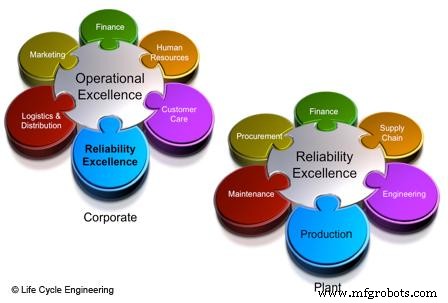
Figure 1. PAS 55‑1:2008 – Specification for the Optimised Management of Physical Assets
Works cited
- British Standards Institution. (2010, November 12). PAS 55‑1:2008. Retrieved November 12, 2010, from BSI SHOP.
- Moore, Ron. (2004). Making Common Sense Common Practice. Elsevier: Butterworth‑Heinemann.
This article first appeared in the Life Cycle Engineering newsletter RxToday.
About the author:
Mike Poland, CMRP, is the director of Life Cycle Engineering’s Asset Management Services group. With more than 25 years of engineering and maintenance experience, Mike specialises in reliability processes and systems engineering, focusing on defect detection, root‑cause analysis and risk‑based inspections. His approach to risk‑based asset management eliminates limiting factors for clients, enhancing asset utilisation and reducing total cost of ownership. Mike can be reached at mpoland@LCE.com. For more information on Life Cycle Engineering, visit www.LCE.com.
Equipment Maintenance and Repair
- Thermosets vs. Thermoplastics: Understanding Their Key Differences and Applications
- Strategic Asset Management: Unlocking Sustainable Operational Excellence
- Strategic Asset Management: Driving Uptime, Cutting Costs, and Boosting Profits
- 5 Critical Risks That Undermine Asset Management Success
- Quintessential Asset Management: Building a Path to Reliability-Centered Maintenance
- Industrial Internet: Revolutionizing Asset Management Through Connectivity, Analytics, and User Experience
- Why Maintenance & Asset Management Software Is Essential Now
- Fixed Asset Management 101: Maximizing Asset Value for Sustainable Growth
- Enterprise Asset Management (EAM): Boost Reliability & ROI in Manufacturing
- Prescriptive Maintenance: The Proactive Solution for Superior Asset Management