



Thermosets vs. Thermoplastics: Understanding Their Key Differences and Applications
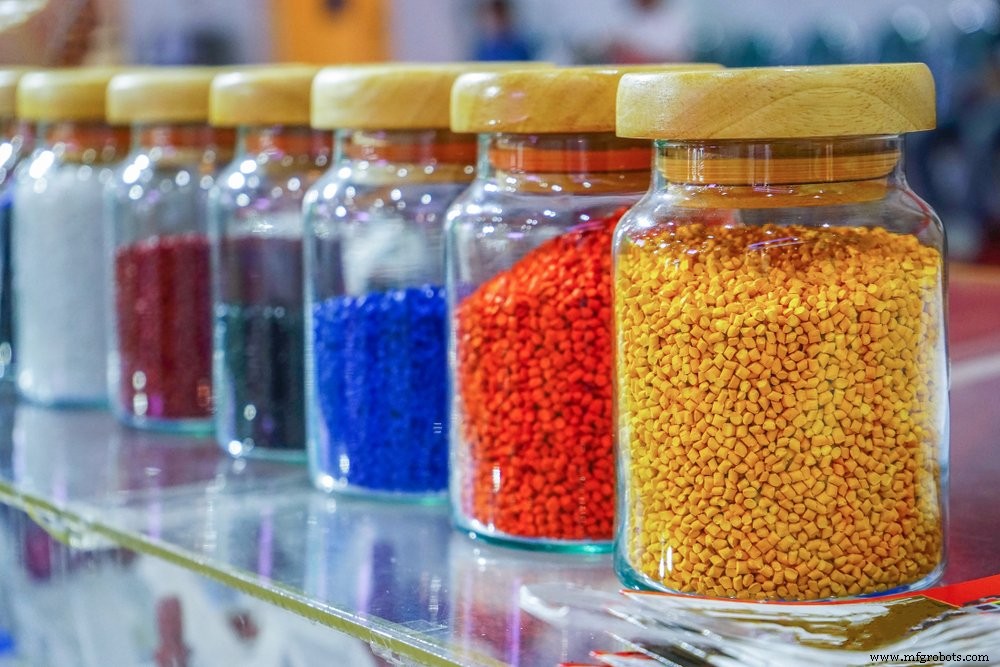
Despite their shared “thermo” prefix, thermosets and thermoplastics are fundamentally distinct materials. Both respond to heat, but they diverge in structure, performance, and the industries they serve. Understanding these differences is essential for selecting the right polymer for any application.
Core Differences
Think of thermosets and thermoplastics like popcorn and chocolate. Popcorn pops once and can’t be turned back into a kernel, whereas chocolate can be melted and re‑shaped repeatedly. That analogy captures the essence of how each class behaves under heat.
Key distinctions include:
- Thermosets: Cured into a rigid, covalently cross‑linked network. They exhibit excellent dimensional stability, chemical resistance, and high‑temperature performance, but are not recyclable.
- Thermoplastics: Polymers that soften when heated and solidify upon cooling, enabling multiple melt‑recycle cycles. They offer superior moldability and a wide range of surface finishes but can be less chemically resistant.
Common thermoset families include epoxy resins, polyurethanes, and vulcanized rubber, while thermoplastics encompass polyethylene, polypropylene, and nylon.
Industry Applications
Thermosets excel in high‑stress, high‑temperature environments such as:
- Appliance housings and heat‑exposed components, thanks to their resistance to microbial growth and chemical attack.
- Electrical insulation and cable jacketing, where dimensional stability is critical.
Thermoplastics, by contrast, thrive in:
- Packaging films and flexible containers, where their ability to shrink and conform under heat is valuable.
- Aerospace and automotive parts, where lightweight, high‑impact strength is required.
- Consumer goods, toys, and everyday products, leveraging easy re‑shaping and a variety of finishes.
Customization Through Compounding
While base polymers provide a foundation, many manufacturers, including Mar‑Bal, enhance properties through custom compounding. For instance, a UL‑listed thermoset can be formulated to add dimensional stability, anti‑corrosion resistance, or improved dielectric performance. This tailored approach expands the material’s suitability across sectors and often becomes a competitive differentiator.
As the industry’s gold standard for molded products, thermosets and thermoplastics remain essential to modern manufacturing. Their distinct characteristics enable engineers to design solutions that meet specific performance, safety, and sustainability criteria.
Need help selecting or engineering the right polymer for your project? Contact Mar‑Bal today. We specialize in injection, compression, and transfer molding and can deliver custom formulations that align with your exact specifications.
Composite material
- Top Collaboration Apps for Remote Teams: Boost Productivity and Security
- Thermoset Composites Are Not Dead: Their Enduring Value in Modern Engineering
- Understanding PAS 55: The Global Standard for Asset Management Excellence
- Discover CONNEX™: The Premier Supply Chain Networking Platform for Manufacturers
- AC vs DC Generators: Key Differences Explained
- DC vs. AC Motors: Key Differences and Choosing the Right One for Your Application
- Molded vs. Sintered Friction Materials: Key Differences Explained
- Discover Agile Manufacturing & Leading Software Solutions for Production Excellence
- Thermosets vs Thermoplastics: Key Differences for CNC Machining Success
- Thermoplastics vs. Thermosets: Key Differences Explained for Material Selection