



Condition‑Based Maintenance: The Definitive Guide to Predictive Asset Care
Condition‑based maintenance (CBM) is a data‑driven approach that monitors asset health in real time, triggering interventions only when measurable deterioration is detected.
What Is Condition‑Based Maintenance?
Unlike traditional preventive maintenance—where schedules are set by calendar or mileage—CBM relies on live indicators to decide when a component needs service. The goal is to spot impending failures early, so maintenance can be scheduled proactively before performance drops or equipment shuts down unexpectedly.
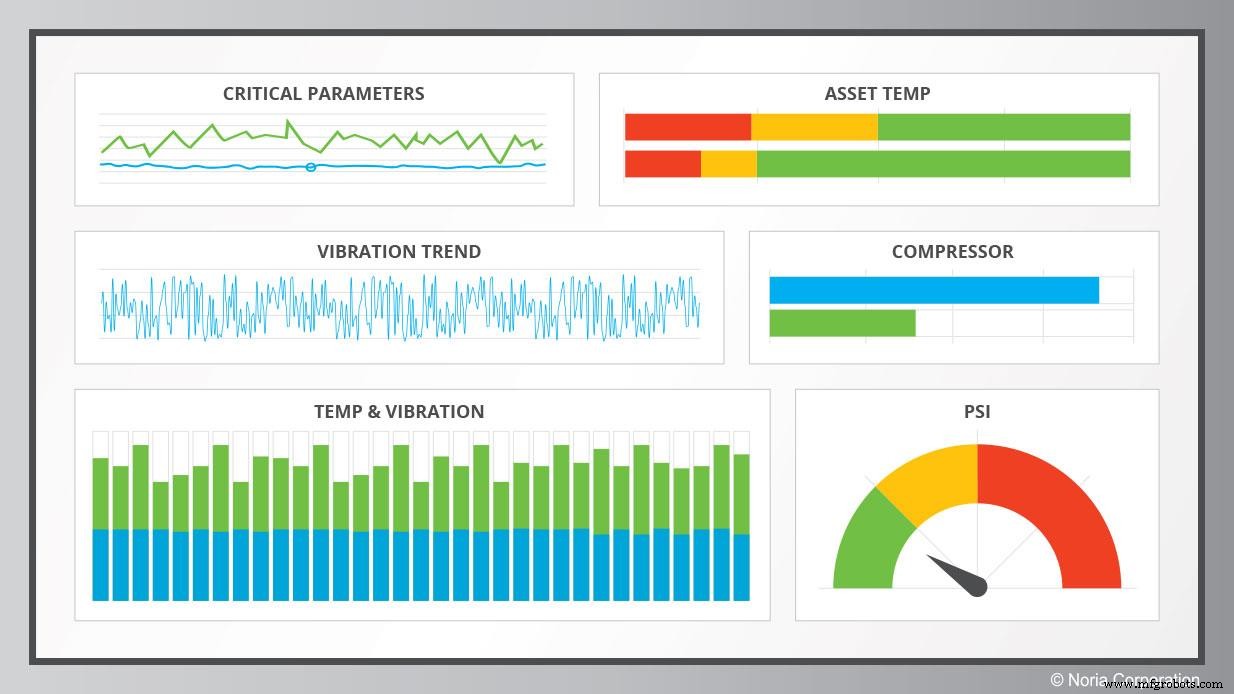
Real‑time data is typically gathered via sensors or spot inspections. For example, vibration sensors on rotating machinery detect increasing amplitude as bearings slip or shafts misalign. When the vibration crosses a pre‑defined threshold, the system alerts the maintenance team.
CBM is most effective when the asset meets two key criteria:
- Measurable condition: The machine’s performance must be quantifiable; otherwise, changes cannot be detected.
- Predictive window: There must be sufficient lead time between a detectable change and a critical failure to allow scheduled intervention.
Additionally, asset criticality should guide implementation. A structured criticality analysis ranks equipment by failure likelihood and operational impact, ensuring that the highest ROI comes from monitoring the most critical assets first.
Finally, the quality of the data‑analysis pipeline determines success. Accurate collection, timely processing, and expert interpretation of the data are essential for making informed maintenance decisions.
Types of Condition‑Based Monitoring
One of CBM’s biggest strengths is its non‑intrusive nature—data is captured while equipment runs normally. Common monitoring techniques include:
- Vibration Analysis – Measures vibration levels and frequencies to detect imbalance, bearing wear, looseness, resonance, or shaft damage. For instance, an unbalanced fan blade will produce a vibration spike once per revolution.
- Infrared Thermography – Uses thermal imaging to reveal hot spots in motors, bearings, or insulation. Spot thermographers, scanning systems, and imaging cameras are all employed depending on the asset’s size and accessibility.
- Ultrasonic Analysis – Captures high‑frequency sounds from machinery. Contact methods detect mechanical wear or electrical faults; airborne methods locate gas leaks or arcing that thermography might miss.
- Oil Analysis – Assesses oil viscosity, additive depletion, and contaminant levels, offering insight into wear patterns and potential internal damage.
- Electrical Analysis – Monitors incoming power quality and motor currents, flagging abnormal consumption that may signal overheating or impending failure.
- Pressure Analysis – Continuously tracks pressure in fluid or gas lines, enabling early detection of leaks or blockages.
Preparing to Deploy CBM
- Establish a Reliability‑Centered Foundation – CBM thrives when paired with Reliability‑Centered Maintenance (RCM). A solid RCM framework ensures that condition data is interpreted within the broader context of asset performance and operational goals.
- Engage Your Maintenance Team – Include technicians in the criticality assessment. Their frontline experience sharpens the analysis and builds ownership over the CBM program.
- Conduct a Criticality Analysis – Identify assets as critical, semi‑critical, or non‑critical. Focus monitoring on “bad actors” that frequently fail, then scale down to less critical equipment to avoid unnecessary checks.
- Implement a FRACAS System – A Failure Reporting, Analysis, and Corrective Action System validates that the monitoring data translates into real improvements and corrects any misaligned priorities.
Case Study: IAEA’s Transition to CBM
In 2007, the International Atomic Energy Agency (IAEA) shifted nuclear power plants from time‑based to condition‑based maintenance. Their guidance—Implementation Strategies for Condition‑Based Maintenance at Nuclear Power Plants—outlined component selection, monitoring methods, acceptance criteria, and integration with existing processes.
Key objectives included:
- Boost availability by reducing forced outages.
- Extend equipment life through targeted interventions.
- Detect issues as they arise, minimizing reassembly complications.
- Lower overall maintenance costs via fewer repairs, overtime, and spare parts.
IAEA’s strategy combined visual inspections with continuous monitoring—vibration, acoustic, motor, thermography, and tribology—across pressure boundaries, containment structures, turbine generators, and coolant pumps.
Success hinged on four pillars:
- Commitment – Staff and management must trust the technology and invest in training.
- Participation – Full engagement from all teams is essential.
- Holistic Approach – Apply CBM uniformly across all systems.
- Sustainability – Maintain training and equipment as personnel change.
Effective communication and structured training—covering conditions, methods, implementation, and evaluation—were critical to embed CBM into daily operations.
Common Challenges of CBM
- High Initial Investment – Sensors, retrofits, and analysis tools can be costly. A focused criticality analysis ensures the highest ROI.
- Skill Gap – Operators must learn to interpret sensor alerts and decide on corrective actions. Training incurs both time and monetary costs.
- Harsh Operating Environments – Extreme heat, humidity, or corrosive media can degrade sensors, leading to false readings.
- Unpredictable Maintenance Windows – Alerts may trigger repairs outside planned schedules, complicating budgeting and workforce allocation.
- Data Management – Continuous data streams require robust CMMS or analytics platforms, reliable connectivity, and sufficient cloud storage.
Benefits of Condition‑Based Monitoring
When implemented correctly, CBM delivers measurable advantages:
- Higher system reliability
- Increased productivity
- Lower maintenance expenditures
- Reduced downtime
- Faster problem diagnosis
- Shorter time between maintenance events
Organizations that invest in a well‑structured CBM program can achieve a strong ROI, keeping operations lean and competitive.
Equipment Maintenance and Repair
- Manufacturing KPI Mastery: 20 Proven Metrics to Drive Efficiency & Profit
- Comprehensive Guide to Heavy Equipment Maintenance: Boost Reliability, Safety, and ROI
- Total Preventive Maintenance: A Practical Guide to Boost Efficiency & Reliability
- The Comprehensive Guide to Golf Course Maintenance
- Your Comprehensive Guide to Expert Property Maintenance
- Routine Maintenance: A Practical Guide to Extending Asset Life
- Industrial Maintenance: Strategies, Careers, and Best Practices for Asset Reliability
- Corrective Maintenance Mastery: Strategies, Benefits, and Practical Examples
- Condition‑Based Maintenance Explained: A Practical Guide for Reliable Asset Management
- The Definitive Handbook on Stainless Steel: Composition, Types, and Care