



CAFM Explained: How Computer‑Aided Facility Management Optimizes Buildings
Managing a complex facility demands precision, real‑time data, and proactive maintenance. Computer‑Aided Facility Management (CAFM) software delivers exactly that—digitizing every aspect of facility operations so managers can focus on strategy rather than paperwork.
Below, we break down what CAFM actually does, its key capabilities, and how it stacks against related solutions such as CMMS, IWMS, and ERP.
What is CAFM?
CAFM stands for Computer‑Aided Facility Management. The name itself signals its purpose: to streamline facility tasks by centralizing data and automating routine processes. By blending business administration, behavioral science, architecture, and engineering, CAFM platforms provide a single, real‑time view of all assets, spaces, and operational metrics.
Think of a CAFM system as a comprehensive building‑management toolbox that covers every day operation—from space allocation to maintenance scheduling—while delivering actionable insights.
If you’re still unsure how CAFM works in practice, the following sections will detail its core features and real‑world impact.
Who Needs a CAFM System?
Any organization that runs a multifaceted facility—whether a corporate campus, university, healthcare complex, or industrial plant—stands to benefit from CAFM. Typical pain points include:
- Uncontrolled paperwork and ad‑hoc spreadsheets
- Inaccurate operational cost tracking
- Equipment failures and reactive repairs
- Under‑utilized space and assets
Many firms now employ dedicated CAFM administrators who handle the day‑to‑day workflow, freeing facility managers to focus on long‑term strategy.
Core Features of CAFM Software
While offerings vary, a high‑quality CAFM solution will include the following capabilities:
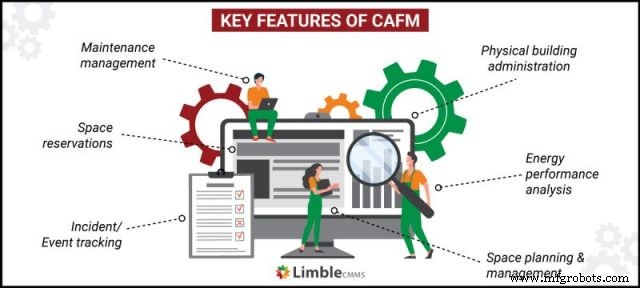
Space Planning & Management
Integrated floorplans, asset catalogs, and location data enable managers to visualize current utilization and forecast future needs. Advanced tools can even suggest optimal layouts and equipment placement to maximize workflow efficiency.
Maintenance Management
Schedule preventive checks, track maintenance history, and monitor asset health—all within one interface. This proactive approach reduces emergency repairs and extends asset life. For organizations requiring predictive analytics or detailed parts tracking, pairing CAFM with a CMMS can add depth.
Physical Building Administration
Many CAFM platforms connect to HVAC, lighting, access control, and other IoT devices, allowing remote monitoring and control. Real‑time sensor data keeps managers informed about system performance and alerts them to anomalies.
Space Reservations
Beyond internal planning, CAFM can manage external rentals—long‑term leases, short‑term bookings, and contract tracking—generating additional revenue streams.
Incident & Event Tracking
Every safety incident, complaint, or audit finding can be logged, categorized, and tracked over time. This repository supports compliance, risk management, and continuous improvement.
Energy Performance Analysis
By ingesting utility bills and meter data, CAFM benchmarks consumption against similar facilities. The insights help prioritize sustainability initiatives and identify cost‑saving opportunities.
Benefits of Using CAFM
Extended Asset Lifespan
Regular maintenance schedules and real‑time condition monitoring keep equipment in peak condition, boosting performance and reducing replacement frequency.
Enhanced Safety
Proactive upkeep reduces equipment failures—a leading cause of workplace accidents. With a robust incident database, managers can identify trends and refine safety protocols.
Unified Data Hub
All facility data—assets, spaces, projects, and finances—resides in one centralized platform. Custom dashboards and automated reports deliver instant insights, supporting smarter decision‑making.
Significant Cost Savings
Fewer breakdowns, optimized space utilization, and energy‑efficient operations translate into tangible budget relief.
CAFM vs. IWMS, CMMS, and EAM: Which Fits Your Needs?
The facility‑management landscape is littered with acronyms, but each serves a distinct purpose:
IWMS (Integrated Workplace Management System)
Essentially a CAFM on steroids, an IWMS adds robust real‑estate, project, environmental, mailroom, and visitor management features.
CMMS (Computerized Maintenance Management System)
Specialized in maintenance operations—work orders, inventory, vendor contracts, and cost tracking—CMMS is ideal for organizations where asset reliability is critical.
EAM/ERP
Enterprise Asset Management and ERP platforms focus on production assets, supply chain, and financial integration, often lacking deep facility‑specific tools.
Feature Comparison Snapshot
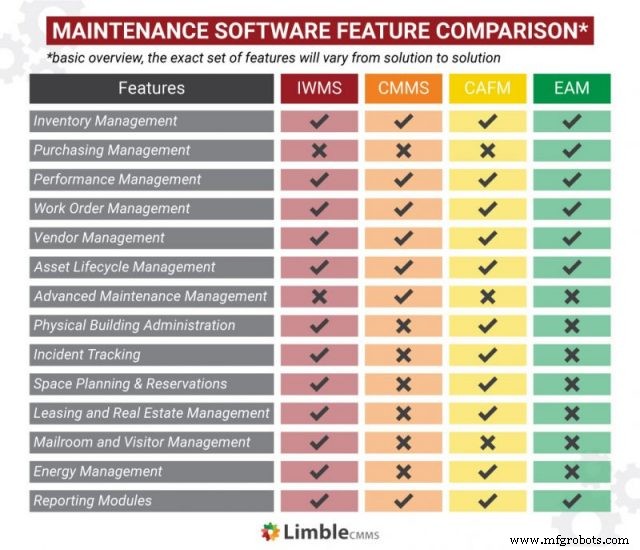
Before purchasing, assess your organization’s priorities: Are you looking for space optimization, maintenance control, or comprehensive workplace management? Cross‑reference vendor feature lists, then request demos or trials to gauge usability.
For a deeper dive into selecting maintenance software, see our detailed guide—link available on the site.
Choosing a Combination Is Often the Smartest Path
Rather than a binary choice, many facilities integrate a CMMS with their CAFM or ERP to cover all operational facets. For example, Limble CMMS can plug into SAP, creating a unified solution for manufacturers of any size.
The Future of Facility Management
Modern facility management extends beyond physical spaces to include cyber‑security, employee well‑being, and sustainability. Leveraging CAFM, CMMS, and complementary tools equips managers to deliver efficient, resilient, and compliant environments.
Equipment Maintenance and Repair
- Why Facility Management Drives Industrial Success
- Why Fiix Is Recognized as an Industry Innovator in CMMS
- Mastering CAD: The Ultimate Guide to Computer-Aided Design
- Business Process Management: Definition, Benefits, and Strategic Value
- Inventory Management Software: What It Is and Why It Matters
- Asset Management Explained: Optimizing Asset Value and Compliance
- Understanding Work Order Management Software: Key Benefits and How It Drives Efficiency
- Mobile Maintenance Software: Boosting Asset Management on the Go
- Key Features of Maintenance Management Software Every Business Needs
- Top Benefits of a Customized Maintenance Management System for Your Organization