



Grounds Maintenance Demystified: Comprehensive Services & Best Practices
Maintaining a property is more than keeping interiors spotless. The exterior landscape plays a critical role in safety, functionality, and curb appeal, making grounds maintenance an essential component of overall facility stewardship.
In the sections below you’ll learn:
- The full scope of grounds maintenance services.
- Which organizations rely on it the most.
- The core roles that make a grounds team effective.
- Where to locate reputable maintenance providers.
What Does Grounds Maintenance Cover?
Grounds maintenance encompasses a broad array of seasonal and year‑round tasks, all aimed at creating a pleasant, functional, and valuable outdoor environment. The three core objectives are:
- Enhancing the visitor experience through attractive landscaping.
- Ensuring safety and operability of outdoor spaces.
- Preserving—and potentially increasing—property value.
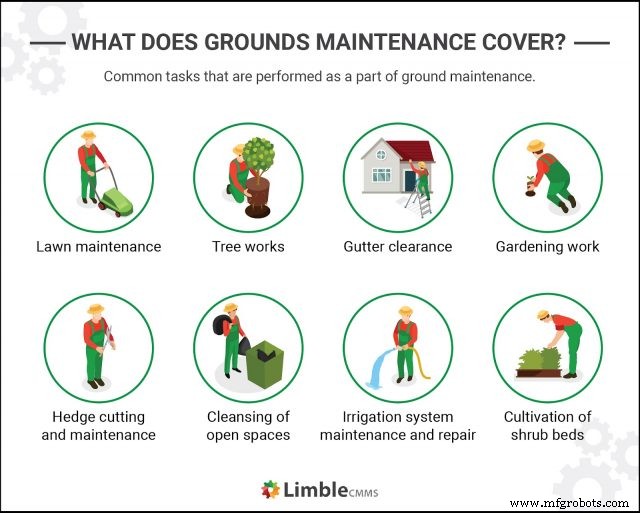
Typical duties include:
- Lawn care: mowing, scarifying, edging, aeration.
- Hedge trimming and maintenance.
- Tree work: planting, felling, pruning, and tree surgery.
- Installation of artificial turf.
- Fencing installation and repair.
- Gutter cleaning and maintenance.
- Pruning, weeding, and shrub bed cultivation.
- Gardening and integrated pest management.
- Irrigation system upkeep and repair.
- Snow removal and de‑icing.
- Site cleanliness: litter removal and bin servicing.
- Hard‑surface maintenance for sports courts and walkways.
While interior landscape maintenance (indoor gardens) is less common, it can also fall under a comprehensive grounds program.
Organizations That Require Grounds Maintenance
Any entity with an outdoor footprint will benefit from routine grounds care. Larger or high‑profile sites typically demand a more robust approach:
- Institutions with expansive grounds—schools, universities, resorts, large fitness centers.
- Locations where appearance drives revenue—apartment complexes, malls, theme parks, hotels, zoos, botanical gardens.
- Sports venues—golf courses, stadiums, arenas.
- Public spaces—city parks, cemeteries, memorial gardens.
These categories illustrate where consistent, professional grounds maintenance is most critical.
Key Roles in a Grounds Maintenance Team
While many positions are learned on the job, some employers seek formal qualifications in horticulture, landscape architecture, or arboriculture. Common roles include:
- Groundskeepers—responsible for lawn care, plant maintenance, snow removal, parking lot upkeep, fence care, and general equipment management.
- Greenskeepers—specialized groundskeepers for golf courses, adding tasks such as hole relocation, tee marker repair, and turf management.
- Landscaping Technicians—planting, fertilizing, mulching, trimming, and installing irrigation or lighting systems.
- Integrated Pest Management Specialists—apply herbicides, fungicides, insecticides, and manage soil health to prevent disease.
- Arborists—tree trimmers and pruners who use power tools to remove hazardous branches, treat tree health, and shape ornamental trees.
In practice, a single employee may perform several of these functions, especially on smaller sites. Larger facilities often assemble a mix of specialists, while still keeping cross‑trained staff to cover unexpected needs.
Outsourcing specialized tasks—such as advanced tree surgery or seasonal fertilization—remains a viable option for organizations that prefer not to maintain an in‑house team.
Choosing between an internal crew and a third‑party provider involves trade‑offs. Our recent guide on property maintenance breaks down the pros and cons of each model, and the same logic applies to grounds services. Below is a comparison adapted for grounds maintenance:
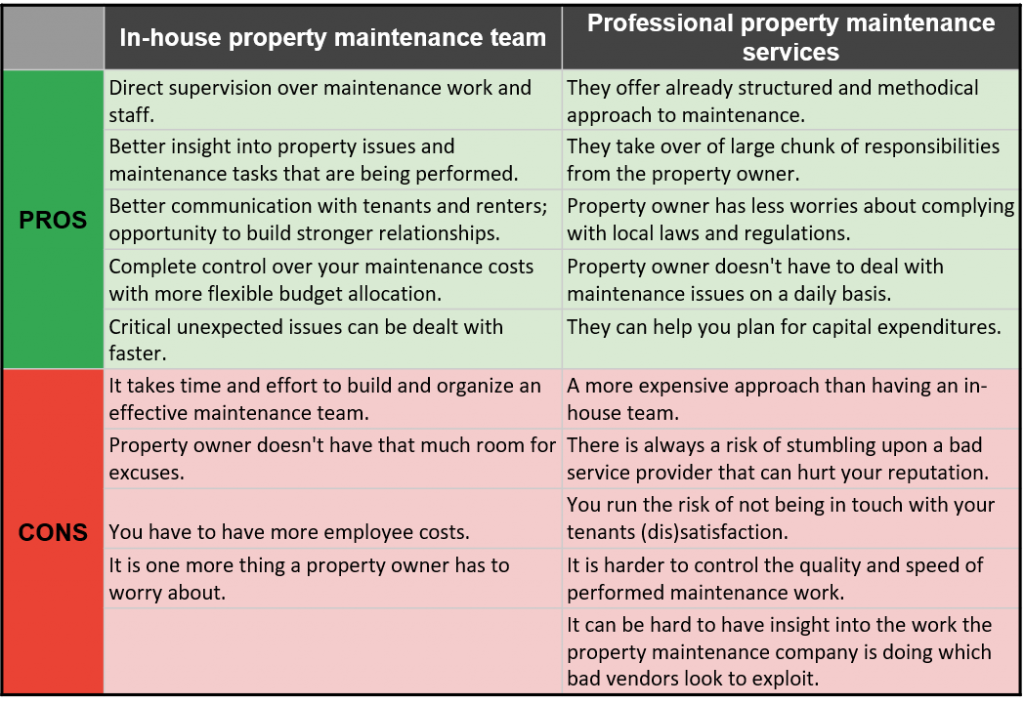
Internally staffed teams can leverage CMMS platforms to track work history, labor costs, and compliance, whereas outsourced services provide a focus on core business activities at the expense of granular oversight.
For more on CMMS, see our guide What Is a CMMS?.
Finding Reliable Grounds Maintenance Services
Facilities with extensive outdoor areas often opt for full outsourcing. While platforms like Thumbtack can surface local professionals, a targeted online search—e.g., “grounds maintenance company in [your city]”—yields vetted vendors. Networking with peers who already use such services can also uncover trusted partners.
Partnering with a reputable company ensures your grounds remain healthy, safe, and visually appealing, safeguarding your investment and enhancing the visitor experience.
Equipment Maintenance and Repair
- Reliability: The Comprehensive Guide to Asset Management
- Lean Manufacturing & Maintenance: How TPM Drives Waste Reduction
- Predictive Maintenance: The Complete Guide to Reducing Downtime and Maximizing ROI
- Plant Maintenance Demystified: Best Practices for Modern Industries
- Understanding Factory Maintenance: Ensuring Peak Industrial Performance
- Understanding Emergency Maintenance: Protecting People and Assets
- Predictive Maintenance Explained: How to Minimize Downtime and Maximize Asset Performance
- Understanding Corrective Maintenance: Its Impact on Facility Efficiency
- Preventive Maintenance: A Path to Higher Asset Availability & Lower Costs
- How Much Does CMMS Software Cost? A Practical Guide